
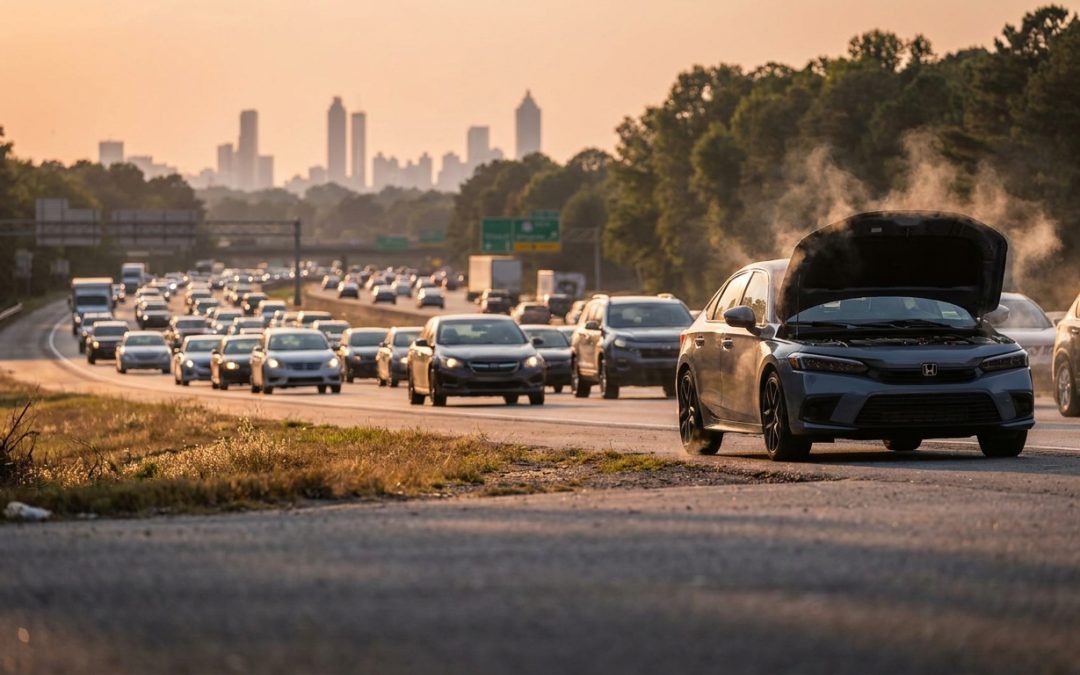
Georgia summers don’t just feel hot—they can be punishing for vehicles stuck in stop-and-go traffic on I-285, I-75, I-85, or crawling through surface streets where the heat radiates off the asphalt. When your car is moving at highway speeds, airflow helps the cooling system do its job. But in summer traffic, the engine creates heat while the car barely moves, the A/C is working overtime, and under-hood temperatures soar. The result is one of the most stressful scenarios for any cooling system: high load, low airflow, and relentless ambient heat.
Overheating isn’t just inconvenient. It can lead to warped cylinder heads, blown head gaskets, damaged radiators, melted hoses, and expensive repairs that often start with a simple warning light or a temperature gauge creeping upward. The good news is that most overheating incidents have clear causes and clear warning signs—especially in Georgia’s summer conditions. Understanding what’s happening under the hood can help you prevent breakdowns, protect your engine, and stay safe when traffic and heat collide.
Below, we’ll break down the most common reasons cars overheat in Georgia summer traffic, what symptoms to watch for, how to respond if it happens, and what you can do to prevent it—whether you drive a commuter sedan, a family SUV, or a work truck that lives in congestion.
1) Why Georgia Summer Traffic Is a Perfect Storm for Overheating
Overheating is rarely caused by “heat alone.” It’s usually a combination of environmental stress and a weak link in the cooling system. Georgia’s summer weather amplifies every small issue: a slightly low coolant level, a marginal radiator fan, a partially clogged radiator, or an aging thermostat that’s starting to stick. In cooler months, those same issues might never show up.
Traffic is the multiplier. At speed, your car pushes large volumes of air through the grille and across the radiator and A/C condenser. That airflow is basically “free cooling.” In stop-and-go traffic, the car loses that advantage and relies heavily on electric radiator fans, clean heat-exchanger fins, and proper coolant circulation. If any part of that chain is compromised, the temperature can climb quickly.
Georgia’s humidity matters too. High humidity reduces the efficiency of heat transfer compared with dry heat, and it increases the load on the A/C system. When the A/C is running hard, the condenser dumps additional heat in front of the radiator. That means the radiator has to cool engine coolant while also dealing with hotter air passing through the condenser first.
Heat soak: what happens when you’re barely moving
In heavy traffic, your engine bay experiences “heat soak,” where heat builds up faster than it can be carried away. You might notice this after idling for 15–30 minutes, like in a long backup near a construction zone or at a standstill after an accident. Under-hood temperatures rise, rubber hoses soften, plastic tanks expand, and weak seals can start to leak.
Heat soak is also why some cars overheat right after you exit the highway and hit a long stretch of stoplights. The engine is already hot from cruising, then airflow drops suddenly. If the cooling fan isn’t strong, or the radiator is partially restricted, the temperature gauge can climb within minutes.
Real-life Georgia scenario
A common example: you’re driving across metro Atlanta in late July with the A/C on max. Traffic slows to a crawl. After 10–20 minutes, you notice the A/C isn’t as cold at idle, and the temperature gauge creeps above normal. That combination—weak A/C at idle plus rising engine temps—often points to airflow issues (fan, fan control, blocked condenser/radiator fins) or low coolant.
Another scenario is towing a small trailer or carrying a full load of passengers and cargo. Extra weight increases engine load, which creates more heat. In summer traffic, that can push a marginal cooling system over the edge.
2) Cooling System Problems That Commonly Trigger Overheating
Your cooling system is a loop: coolant absorbs heat from the engine, circulates through the radiator where it releases heat, and repeats. A failure anywhere in that loop can cause overheating—especially when ambient temperatures are high and airflow is low.
Many overheating events in traffic are caused by basic maintenance issues: low coolant, old coolant, or small leaks that only show up under pressure. Georgia heat can expose those weaknesses quickly, and a “minor” leak can become a major problem when the system is hot and pressurized.
It’s also worth noting that modern engines run hotter than older designs for efficiency and emissions. That means there’s less margin for error. A cooling system that’s 80% effective may be fine in spring, but not in August traffic.
Low coolant level and hidden leaks
Low coolant is one of the most common causes of overheating. Coolant doesn’t get “used up,” so if the level is low, it usually means there’s a leak. Leaks can be obvious (puddles under the car) or subtle (slow seep at a hose clamp, radiator seam, water pump weep hole, or heater core). In summer, pressure increases and small leaks can worsen.
Actionable tip: when the engine is cold, check the coolant reservoir level against the “MIN/MAX” marks. If you’re topping off more than once, don’t ignore it—schedule a pressure test to find the leak before you end up overheating in traffic.
Thermostat issues (sticking closed or slow to open)
The thermostat regulates coolant flow based on temperature. If it sticks closed or opens late, coolant can’t circulate to the radiator effectively. In traffic, that restriction becomes critical because the engine is producing heat continuously while the radiator isn’t getting enough hot coolant to cool.
Symptoms can include temperature spikes that seem sudden, or a pattern where the gauge rises quickly at idle then drops again once you’re moving. A thermostat can fail intermittently, which makes the problem feel unpredictable—until it becomes consistent.
Water pump wear and circulation problems
The water pump moves coolant through the system. Over time, pump impellers can erode or slip, bearings can wear, and seals can leak. When a pump can’t circulate enough coolant at low RPM (idling in traffic), the engine may run hotter. Some vehicles have electric water pumps that can fail electronically, causing abrupt overheating.
Look for signs like coolant dripping near the front of the engine, a whining noise, or recurring overheating that doesn’t improve with a simple coolant top-off. If you’ve recently had a timing belt service (on vehicles where the water pump is replaced with the belt), confirm the pump was replaced with a quality part.
Radiator restrictions and old coolant
Radiators can clog internally from deposits, especially if coolant hasn’t been changed on schedule or if the wrong coolant type was used. Externally, Georgia bugs, pollen, and road debris can block airflow through the fins. Even a thin layer of debris can reduce cooling capacity in traffic.
Actionable tip: with the engine off and cool, inspect the radiator and A/C condenser fins through the grille. If they’re packed with debris, gentle cleaning (low-pressure water from the back side if accessible) can help. Avoid high-pressure washers that can bend fins and reduce airflow.

3) Airflow and Fan Failures: The #1 Traffic Overheating Trigger
When you’re sitting still, the radiator fan is your primary source of airflow. That’s why fan-related issues are so often behind overheating in traffic but not on the highway. If your car runs at normal temperature while driving but overheats at idle, the fan system should be high on your suspect list.
Modern vehicles may have one or two electric fans with multiple speeds, controlled by sensors, relays, and the engine computer. A failure in any of those components can reduce airflow, and the problem may only show up when the system commands high fan speed—often when the A/C is on and the outside temperature is high.
Because the A/C condenser sits in front of the radiator, weak airflow can also cause warm A/C at idle. That’s a useful clue: if the A/C is cold while moving but warm at stops, and the engine temp rises in traffic, think “fan or airflow.”
Common fan-related failures
Electric fan motors can wear out, especially in high-mileage vehicles. Sometimes they spin slowly, which looks “normal” at a glance but isn’t enough to cool in 95°F heat. Relays and fuses can fail, causing the fan not to run at all. Wiring connectors can corrode, and fan control modules can malfunction.
Some vehicles use a two-speed fan setup. In that case, low speed may still work, but high speed may fail. The car might stay cool on mild days and overheat only during the hottest afternoons in heavy traffic—exactly the pattern many Georgia drivers see.
How to spot a fan problem safely
If you’re comfortable doing a basic check, you can observe whether the fan runs when the engine is warm and the A/C is on. Park safely, keep hands and clothing away from moving parts, and never reach into the fan area. In many cars, turning on the A/C should command the fan to run. If the A/C is on and the fan never starts, that’s a red flag.
If the fan runs but the car still overheats, airflow may be restricted (debris) or the radiator may be internally clogged. A professional shop can verify fan speeds, temperature sensor readings, and command signals with scan tools.
Don’t overlook the condenser and radiator “sandwich”
In Georgia, it’s common for the narrow gap between the A/C condenser and radiator to trap leaves, pine straw, and road grit. From the front, everything can look clean, but airflow is blocked between the layers. This is especially common on vehicles parked under trees or driven on rural roads.
Actionable tip: during routine service, ask for a quick inspection of the condenser/radiator stack for debris. Cleaning that area can restore airflow and reduce both engine temperatures and A/C head pressure.
4) Engine Load, A/C Demand, and Driving Habits That Raise Temperatures
Even with a healthy cooling system, certain conditions push temperatures higher—especially in Georgia summer traffic. The engine produces more heat when it works harder, and the cooling system must reject that heat to the air. If you add A/C demand and hot ambient temperatures, your margin shrinks.
Traffic driving itself can be harder on the cooling system than many people realize. Repeated acceleration from a stop, creeping up hills, and long idle periods all create heat. If you’re in a larger vehicle, or you’re hauling passengers and cargo, the engine has to work harder to move the mass—especially when you’re constantly stopping and starting.
One of the most overlooked contributors is the A/C system. When the A/C is running, the condenser releases heat in front of the radiator. That increases the temperature of the air hitting the radiator and forces the cooling system to work harder. This is why some vehicles only overheat with the A/C on.
Stop-and-go hills and “hot spots” around Georgia
Overheating complaints often spike around areas with long backups and slight grades—where you’re crawling uphill at low speed. Even a mild incline increases load. Combine that with a full cabin, a trunk full of luggage, and A/C on max, and you’re generating a lot of heat with minimal airflow.
Real example: a family SUV creeping up an on-ramp merge in afternoon traffic can see coolant temps climb rapidly if the fan is weak or coolant is low. The driver might first notice the A/C turning less cold, then the gauge rising, then a warning chime.
Driving habits that help reduce heat in traffic
You can’t change the weather, but you can reduce strain. Leaving more following distance helps you maintain a steady crawl instead of repeated hard accelerations. If you’re stuck, avoid revving the engine unnecessarily. If your temperature starts to climb, turning off the A/C can reduce heat load and may help stabilize temperatures.
Another practical move: if you’re waiting for someone and plan to idle for a long time, consider shutting the engine off when safe and legal to do so. Modern starters and batteries are designed for frequent starts, and reducing idle time reduces heat soak.
When “normal” becomes too hot
Some drivers assume it’s normal for the gauge to creep up slightly in extreme heat. While small fluctuations can happen, the needle should generally stay stable once the engine is warmed up. If you see it climbing consistently in traffic, treat it as an early warning rather than waiting for the overheat light.
Acting early—before the engine actually overheats—can prevent the kind of damage that turns a manageable repair into an expensive engine job.
5) Tires, Heat, and Underestimated Contributors (Yes, They Matter)
Overheating is primarily a cooling-system issue, but tires and related factors can contribute indirectly—especially in Georgia summer traffic. When tires are underinflated, they create more rolling resistance. More resistance means the engine works harder to move the car, producing more heat. In stop-and-go conditions, that extra load can be enough to expose a cooling system that’s already on the edge.
In addition, tire problems can cause drivers to change their behavior—riding the brakes, accelerating harder to compensate for sluggishness, or stopping frequently to check a vibration. Those changes can add heat to the engine bay and increase overall stress during extreme weather.
While tires won’t typically be the sole cause of an overheating event, proper tire maintenance is a practical, low-cost way to reduce load and improve overall vehicle efficiency in summer.
Underinflation and rolling resistance in summer
It’s common to assume tires are “fine” if they look okay, but appearance isn’t a reliable indicator of pressure. Underinflated tires flex more, heat up more, and drag more. In traffic, that drag translates into extra engine effort during each acceleration from a stop.
Actionable tip: check tire pressure monthly and before long trips, using the door-jamb placard PSI—not the number molded into the tire sidewall. Do it when tires are cold (before driving or after the car has been parked for a few hours).
Alignment and worn tires can add strain
Poor alignment increases rolling resistance and can make the vehicle feel like it’s “fighting” the road. Worn, cupped, or uneven tires can also increase drag and vibration, which can lead to higher engine load and less efficient driving.
If you’ve noticed the steering wheel pulling, uneven tread wear, or increased road noise, an alignment check and tire inspection can help reduce unnecessary strain—especially during the hottest months.
Brake drag and wheel-end heat
Another underappreciated factor is brake drag—when a caliper sticks slightly and keeps a pad rubbing the rotor. This creates heat at the wheel and adds resistance. In traffic, where you’re constantly braking and accelerating, a dragging brake can significantly increase load and heat.
Real example: a driver notices a burning smell after a slow commute and later experiences higher-than-normal engine temps in traffic. A shop finds a sticking caliper causing constant drag. Fixing it reduces load and helps the car run cooler under the same conditions.
6) What to Do If Your Car Starts Overheating in Traffic (and How to Prevent It)
Knowing what causes overheating is important, but knowing how to respond in the moment can save your engine. Many drivers panic, keep driving, or crank the A/C harder—exactly what you don’t want. The goal is to reduce heat load, increase heat removal, and avoid engine damage.
Prevention is even better. A few simple checks before peak summer, combined with smart maintenance, can dramatically reduce the odds of overheating during Georgia’s hottest months.
Below are practical, step-by-step actions you can take both during an overheating event and as part of a summer readiness routine.
If the temperature gauge rises: immediate steps
At the first sign of rising temperature—gauge climbing above normal or an overheat warning—take action early. If you’re in traffic, turn off the A/C to reduce load. If safe, turn the heater on full hot with the fan on high. It sounds miserable in Georgia, but the heater core acts like a small radiator and can pull heat from the engine. This can buy you time to reach a safe place to stop.
If the gauge continues to climb, look for a safe shoulder, parking lot, or exit. Continuing to drive while overheating can warp engine components quickly. Once stopped, shift to park, keep the engine running briefly if it helps stabilize temps (some cars cool better with the pump circulating), but if the temperature keeps rising, shut the engine off.
Do not open the radiator cap when the engine is hot. The system is pressurized, and hot coolant can spray out and cause severe burns. Wait until the engine cools completely before checking coolant levels.
What to look for after you pull over
After the engine cools, check the coolant reservoir level. If it’s empty or very low, that’s a strong clue of a leak. Look for wet spots under the car and around hoses. If you have premixed coolant or the correct coolant and clean water available, you may be able to top off the reservoir to get to a shop—but if the car is actively leaking, you risk overheating again quickly.
Also note whether the radiator fan was running. If the fan never comes on, you may be dealing with a fan motor, relay, fuse, or sensor issue. If the fan runs but the car still overheats at idle, restrictions (radiator clog, debris) or circulation issues (thermostat, water pump) become more likely.
If you see steam, smell sweet coolant odor, or notice milky oil on the dipstick, stop driving and get professional help. Those can indicate a serious issue such as a blown hose, radiator failure, or head gasket problem.
Preventive maintenance checklist for Georgia summers
A summer-focused inspection can prevent most overheating problems. Consider these actionable steps before peak heat (late spring through early summer):
- Check coolant level monthly and inspect for leaks around hoses, radiator seams, and the water pump area.
- Verify coolant condition and service intervals. Old coolant loses corrosion protection and can contribute to deposits and clogs.
- Inspect radiator and condenser fins for debris; clean gently to restore airflow.
- Confirm radiator fan operation, especially if you’ve noticed A/C performance dropping at idle.
- Replace aging hoses and clamps proactively if they’re soft, swollen, cracked, or seep coolant.
- Check tire pressure using door-jamb specs to reduce rolling resistance and engine load.
- Address brake drag if you notice pulling, excess heat from a wheel, or burning smells after commuting.
Finally, if your vehicle has a history of running warm, consider having a shop perform a cooling system pressure test, thermostat test, and fan command test. These diagnostics are often cheaper than the repair bill that follows a full overheat event.
When to seek professional help immediately
Some overheating situations are not “drive it and see.” If the temperature gauge is in the red, the overheat light is on, the engine is knocking, or you see steam pouring from under the hood, shut it down and call for a tow. The cost of towing is usually far less than the cost of engine damage.
If overheating happens repeatedly—especially only in traffic—don’t settle for guesswork. A qualified technician can pinpoint whether the issue is airflow (fan/fins), circulation (thermostat/pump), or heat exchange (radiator), and confirm that the system is holding pressure.
Conclusion: Keep Your Cool in Georgia’s Hottest Commutes
Georgia summer traffic creates the toughest possible conditions for your cooling system: high ambient heat, low airflow, heavy A/C demand, and constant stop-and-go load. Most overheating incidents trace back to a handful of root causes—low coolant from a leak, a thermostat that isn’t regulating properly, a weak water pump, a restricted radiator, or (very commonly) a fan or airflow problem that only shows up at idle.
The best strategy is to treat small warning signs as early alerts. If your A/C gets warm at stops, if the temperature gauge creeps up in traffic, or if you’re topping off coolant more than once, address it before it becomes a breakdown on the shoulder. A quick inspection of coolant level and condition, fan operation, radiator/condenser cleanliness, and hose integrity can prevent the majority of summer overheating problems.
Key takeaways: keep coolant at the proper level, maintain airflow through the radiator stack, confirm fan performance, reduce engine load when possible, and don’t ignore tire pressure and brake drag that can add strain. With a little preparation, you can handle Georgia’s hottest traffic jams with far less risk—and keep your engine protected for the long haul.