
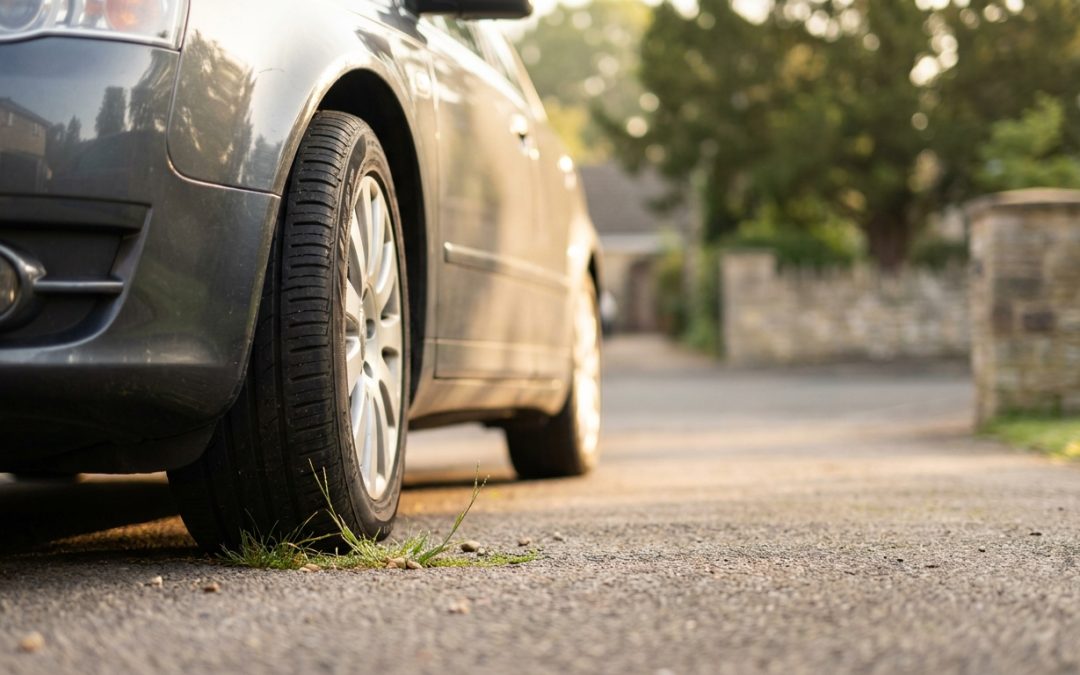
Leaving a car parked for weeks might feel harmless—after all, the vehicle isn’t racking up miles or hitting potholes. But tires don’t “pause” just because the car isn’t moving. While a vehicle sits, its tires continue to carry weight, lose air gradually, react to temperature changes, and age from the inside out. The result can range from minor vibration on your first drive to serious safety risks like cracking, internal damage, or even a blowout if the conditions are right.
If you’ve ever returned to a car after a few weeks and noticed it feels thumpy, pulls slightly, or the tire pressure light is on, you’ve seen the early signs. Understanding what happens to tires during storage—and what you can do about it—helps you avoid premature tire replacement and keeps your first drive back safe and smooth.
1) The biggest issue: weight + time = flat spotting
When a car sits, the same section of each tire remains pressed against the ground under the vehicle’s weight. Tires are engineered to flex and recover as they roll, but when the flex point stays in one place for days or weeks, the tire can develop a flattened area known as a flat spot. This is one of the most common “my car sat for weeks and now it rides rough” complaints.
There are two broad categories of flat spotting. Temporary (elastic) flat spotting happens when the tire’s rubber and internal materials deform slightly under load, especially in cooler temperatures. Once you drive for a few miles, the tire warms up, regains flexibility, and the vibration often fades. More severe (semi-permanent) flat spotting can occur if the car sits longer, the tires are underinflated, or the vehicle is heavier. In that case, the flat spot may not fully disappear, and you may feel ongoing vibration at certain speeds.
Flat spotting is more likely with low-profile performance tires, vehicles with stiff suspension, heavier cars (including EVs), and tires with less compliant sidewalls. It’s also more common when the car is parked on a hard surface like concrete in cold weather, because the rubber takes longer to relax and recover.
What it feels like on the first drive
Drivers often describe the sensation as a “thump-thump” or rhythmic vibration that’s most noticeable between 20–50 mph, sometimes smoothing out as speed increases or after 10–20 minutes of driving. If the flat spot is temporary, normal driving and heat buildup will usually restore the tire’s shape.
If the vibration persists after a few drives, that’s a sign the tire may have developed a more stubborn flat spot or another issue (like a shifted belt, imbalance, or uneven wear) that just became noticeable after sitting.
Real example: the weekend car that sits all winter
A common scenario is a sports car parked from November to March. When it comes out of storage, the first drive can feel harsh and shaky. In many cases, a 15–30 minute drive on properly inflated tires resolves it. But if the tires were left at low pressure, parked on the same spot for months, or exposed to freezing temperatures, the vibration may linger and require inspection—or in some cases, replacement if internal damage occurred.
2) Tire pressure drops faster than most people expect
Tires naturally lose air over time through a process called permeation, where air molecules slowly pass through the rubber. Even a healthy tire can lose roughly 1–2 psi per month, and temperature changes can make the pressure swing more dramatically. When a car sits for weeks, you’re not checking pressures as often, so a small leak or seasonal temperature drop can quietly push a tire into the underinflated zone.
Underinflation matters more during storage than many people realize. A tire that sits underinflated flexes differently under the vehicle’s weight, increasing the chance of flat spotting and stressing internal components. If the pressure gets low enough, the sidewall can deform excessively, and in extreme cases the tire can be damaged simply from supporting the vehicle while stationary.
Temperature is the multiplier here. As a rule of thumb, tire pressure changes about 1 psi for every 10°F change in ambient temperature. If you parked your car on a warm day and return weeks later during a cold snap, pressures can be significantly lower even if no air “leaked” in the usual sense. That’s why vehicles that sit through seasonal transitions often trigger the TPMS light.
Why low pressure during storage is risky
Driving on underinflated tires is widely known to increase heat and wear, but even while parked it can cause trouble. The contact patch becomes wider and the sidewall bulges more, increasing stress where the tire meets the wheel and where cords flex under load. Over weeks, that sustained deformation can contribute to flat spotting and can worsen existing weaknesses.
Another overlooked issue: if a tire is already borderline low and the car sits, you may return to a tire that looks “only a little low” but is actually below safe pressure. The tire may still hold air, but the first drive will generate extra heat and can accelerate internal damage—especially at highway speeds.
Actionable tip: check pressure before you move the car
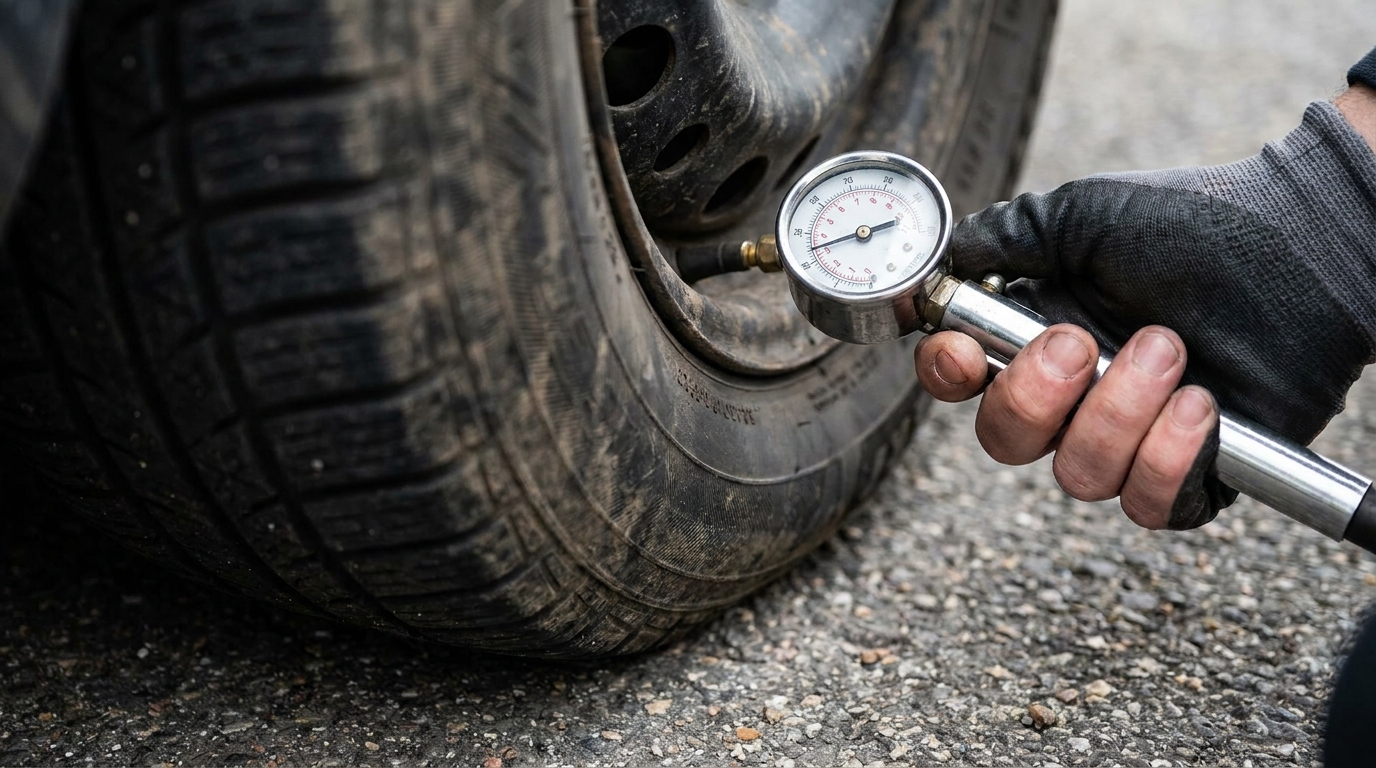
Before your first drive after weeks of sitting, use a quality gauge and inflate to the vehicle’s recommended pressures (found on the driver’s door jamb placard). Don’t rely on how the tire looks—modern sidewalls can mask low pressure. If one tire is significantly lower than the others, treat it as a possible leak and inspect it before driving far.
3) Rubber aging doesn’t stop: cracking, dry rot, and ozone exposure
Tires are made of rubber compounds that age over time due to oxygen, ozone, heat, and UV exposure. Sitting doesn’t prevent aging; in some cases, it can make certain aging effects more noticeable because the tire isn’t being flexed and warmed evenly during regular driving. Over weeks, you may not see dramatic changes, but storage conditions can accelerate the process—especially if the car sits outdoors.
Ozone cracking is a common culprit. Ozone in the air can react with rubber and create fine cracks, often visible on sidewalls. UV rays from sunlight can also degrade rubber compounds. If a vehicle is parked in direct sun for long periods, especially in hot climates, tire aging accelerates. Even in cooler climates, repeated exposure to sun and weather can cause sidewall checking over time.
It’s important to distinguish between superficial “weather checking” and deeper cracking that compromises safety. Small surface lines may not be an immediate emergency, but deeper cracks—especially those that expose fabric or appear near the bead or tread shoulder—should be inspected by a professional promptly.
Where to look for early signs of dry rot
Start with the sidewalls, especially near the lettering and around the shoulder area where the tread meets the sidewall. Then check between tread blocks and around the bead area (where the tire meets the wheel). Use a flashlight and look for cracks that widen when you press gently on the rubber.
If the vehicle sits in a garage, aging is usually slower, but electric motors, furnaces, and some appliances can generate ozone. Parking near such equipment for long periods can contribute to cracking in sensitive rubber compounds.
Real example: the outdoor daily driver that becomes “occasional”
Many vehicles transition from daily use to occasional use—think of a second car that sits most of the month. When parked outdoors, tires may age faster than the mileage suggests. Owners are sometimes surprised to fail an inspection due to sidewall cracking even though the tread depth is still good. That’s a classic sign of time- and environment-driven aging rather than wear from driving.
4) Moisture, corrosion, and how storage surfaces affect tires
Where a car sits matters. Moisture and temperature swings can affect both the tire and the wheel. While the rubber itself doesn’t “rust,” wheels can corrode, and the tire-to-wheel sealing area (the bead) can be compromised over time—especially if the vehicle sits in damp environments or near salt air.
If the car is parked on bare ground, grass, or gravel, moisture can collect around the tire, and temperature changes can create condensation. This can contribute to wheel corrosion and slow leaks at the bead. In coastal areas, salt-laden air accelerates corrosion, and in winter climates, road salt residue left on wheels can continue to work even while the car is parked.
Concrete is generally fine, but in some cases, prolonged contact with certain surfaces and contaminants (oil, solvents, or chemicals) can affect rubber. If a tire sits on a surface contaminated with petroleum products, the rubber can soften or degrade. Garages with chemical spills, old oil stains, or solvent residues can quietly shorten tire life.
How bead leaks show up after sitting
A bead leak often presents as a tire that loses air slowly and repeatedly, even after you inflate it. After weeks of sitting, you might find one tire down 5–10 psi while others are only down 1–2 psi. That imbalance is a clue. Another sign is bubbling when soapy water is applied around the bead area, though proper diagnosis is best done at a tire shop.
Bead leaks are more common on older wheels, wheels with corrosion, or vehicles stored in humid or salty environments. Addressing it may involve cleaning the bead seat, resealing, or in some cases replacing a damaged wheel.
Actionable tip: clean before storage
If you know the car will sit, wash the wheels and tires, especially after winter driving or coastal exposure. Removing salt and grime reduces corrosion risk and helps you spot damage or cracking before it becomes serious.
5) Hidden structural risks: belt separation, internal damage, and uneven wear
Most tire problems from sitting are minor and reversible, but there are structural risks worth taking seriously. Tires are complex assemblies of rubber, steel belts, fabric plies, and adhesives. Over time, heat cycles, age, and prior damage can weaken internal bonds. When a car sits, you may not cause belt separation directly—but you can reveal or worsen conditions that make it more likely once you start driving again.
For example, a tire that was already run underinflated, hit a pothole hard, or has an internal bruise may be more vulnerable. Sitting under load with low pressure can stress the damaged area. When you return to driving—especially at highway speeds—the tire heats up and the weakened structure may fail. Belt separation can show up as a bulge, a wobble, or a vibration that doesn’t go away.
Uneven wear can also become more noticeable after sitting. If your tires already had cupping from worn shocks, feathering from alignment issues, or irregular tread wear, the first drive after storage may feel rougher. The tire hasn’t changed overnight, but your sensitivity to it increases when the car transitions from stationary to moving, and the flat spot effect can compound the sensation.
Warning signs you should not ignore
After a car has been parked for weeks, pay attention to these red flags:
- A bulge on the sidewall or tread area (possible internal cord damage)
- Cracks deep enough to catch a fingernail or that appear widespread
- Persistent vibration that does not improve after 20–30 minutes of driving
- Repeated pressure loss in one tire compared to the others
- Steering pull that wasn’t present before storage
If you see a bulge or exposed cords, do not “test drive to see if it gets better.” That’s a replace-now situation.
Real example: the airport parking lot surprise
A common real-world case is a car left in long-term airport parking for three to six weeks. The owner returns, finds the TPMS light on, inflates the tires at a nearby air station, and heads straight to the highway. If one tire was significantly underinflated during storage, it may have suffered internal stress. The safer approach is to inflate to spec, visually inspect all four tires, then drive a few miles at lower speed first to confirm the ride smooths out and pressures remain stable.
6) How to store a car to protect tires (and what to do when you return)
The good news: most tire issues from sitting are preventable with a little planning. Whether you’re storing a seasonal vehicle, traveling for work, or parking a second car for weeks at a time, small steps can dramatically reduce flat spotting, pressure loss, and aging.
Start by thinking in two phases: pre-storage (what you do before you park it) and return-to-service (what you do before and during the first drive). This approach helps you avoid the most common mistakes—like parking with low pressure or jumping straight onto the highway after a long sit.
If you store your car repeatedly (for example, a commuter car that sits most weeks), it’s worth building a simple routine. Tires reward consistency: correct pressure, clean surfaces, and occasional movement go a long way.
Pre-storage checklist (best practices)
Use this practical checklist when you know the car will sit for several weeks:
- Inflate tires to the door-placard spec (or slightly above spec if allowed by the manufacturer; avoid exceeding the tire’s max pressure on the sidewall).
- Clean tires and wheels to remove salt, brake dust, and grime.
- Park on a clean, dry surface away from oils, solvents, and standing water.
- Avoid direct sunlight if possible; use a garage or shade to reduce UV exposure.
- Move the car periodically (even a few feet) every 1–2 weeks to change the contact patch.
For longer storage (multiple months), consider using tire cradles designed to reduce flat spotting, or store the vehicle with reduced load on the tires (properly using jack stands at manufacturer-recommended lift points). If you choose to lift the vehicle, do it safely and correctly—improper lifting can damage the car and create safety hazards.
Return-to-service checklist (before your first drive)
When you’re ready to drive again, take five minutes to reduce risk:
- Check tire pressure with a gauge and set all tires to the recommended PSI.
- Inspect sidewalls and tread for cracks, bulges, nails, or visible damage.
- Look at the contact patch area for obvious flat spotting or deformation.
- Drive gently at first for a few miles before highway speeds, listening and feeling for vibration.
If you experience vibration, give the tires time to warm up. If it improves steadily, it’s likely temporary flat spotting. If it remains unchanged after multiple trips, schedule a tire inspection and balance check. A professional can identify whether the issue is tire-related or caused by suspension, brakes, or wheel damage.
Actionable advice for different “sitting” scenarios
Not all storage is the same. Here’s how to adapt based on your situation:
- Sits 2–4 weeks: Keep pressures correct and try to move the car once or twice. Expect mild temporary flat spotting in cooler temps.
- Sits 1–3 months: Use tire cradles or move it regularly. Store indoors if possible. Inspect carefully before returning to highway driving.
- Sits all winter: Clean thoroughly, inflate properly, avoid sun/ozone sources, and consider lifting the vehicle or using cradles. Plan for a cautious first drive and a full inspection in spring.
Also consider tire age. If your tires are already older (based on the DOT date code), sitting won’t help. Even with good tread, older tires are more prone to cracking and structural issues. If you’re unsure about age, a tire professional can decode the DOT stamp and advise whether replacement is prudent.
Conclusion: what sitting for weeks really does to tires
Tires are not “set-and-forget” parts, even when your car isn’t moving. When a vehicle sits for weeks, the tires can develop flat spots from constant load, lose pressure through permeation and temperature swings, and continue to age from ozone, UV, and environmental exposure. Storage conditions—like moisture, salt, and contaminated surfaces—can also contribute to slow leaks and corrosion at the bead and wheel.
The most important takeaway is that many of these problems are preventable. Maintain proper tire pressure, store the car in a clean and protected environment when possible, and move it periodically to change the contact patch. When you return, inspect the tires and inflate them before driving far, and treat persistent vibration, visible cracking, bulges, or repeated pressure loss as signals to get professional help.
With a simple routine, you can protect your tires during downtime, extend their life, and make sure the first drive after weeks of sitting feels normal—smooth, stable, and safe.