
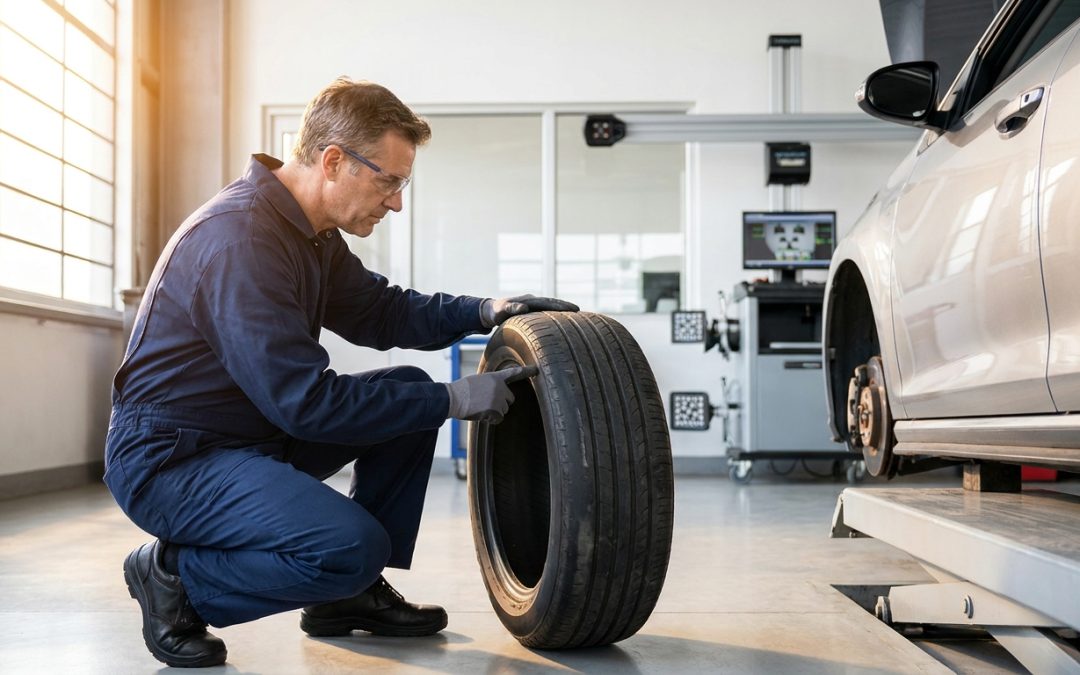
Uneven tire wear that shows up on the inside edge or outside edge is one of the most useful “early warning” signs your vehicle can give you. It’s also one of the easiest to ignore—until a tire fails inspection, starts vibrating on the highway, or needs replacement far sooner than expected. The good news is that edge wear patterns are usually predictable, diagnosable, and preventable once you understand what’s happening between your tires, suspension, steering, and driving habits.
In this guide, we’ll break down the most common causes of inside and outside edge tire wear, how to read the wear pattern like a mechanic, and what you can do (today and over the long term) to protect your tires. You’ll also find practical examples, quick checks you can perform at home, and clear “fix-first” priorities so you’re not guessing or replacing parts unnecessarily.
How to Read Inside vs. Outside Edge Tire Wear
Before you can fix uneven wear, you need to identify it correctly. “Inside edge wear” means the tread is wearing down faster on the side of the tire closest to the vehicle’s centerline (the inboard shoulder). “Outside edge wear” means the outer shoulder—closest to the curb side of the vehicle—is wearing faster. These patterns can appear on one tire, both tires on one axle, or all four tires, and each scenario points to different likely causes.
A simple way to check is to turn the steering wheel fully left or right (for front tires) and visually compare the tread depth across the tire: outside shoulder, center, and inside shoulder. For rear tires, use a flashlight and look behind the tire or crawl slightly to see the inboard edge. If you can, run your hand lightly across the tread (with the vehicle parked and secure). A noticeably sharper “step” or edge on one side can indicate alignment or suspension issues.
It’s also important to distinguish edge wear from other patterns. Center wear often suggests overinflation; both-shoulder wear can indicate underinflation; cupping or scalloping may point to worn shocks/struts or balance problems. Edge wear, however, tends to be most strongly linked to alignment angles (camber and toe) and to components that allow those angles to drift under load.
Quick At-Home Checks That Help You Diagnose Faster
You don’t need a lift to gather useful clues. Start with tire pressure (cold), because incorrect inflation can exaggerate existing alignment issues and change how the shoulders carry load. Next, check whether the wear is isolated to one wheel position or mirrored on both sides of the axle. Finally, note any drivability symptoms—pulling, steering wheel off-center, vibration, or clunking over bumps—because they often correlate directly with the root cause.
- One tire only: Often a localized suspension/steering component issue, or a past impact (pothole/curb) affecting that corner.
- Both front tires: Commonly alignment (toe) or driving style (aggressive cornering), sometimes combined with worn front-end parts.
- Both rear tires: Rear alignment (on vehicles with adjustable rear toe/camber), worn bushings, or a load/ride-height issue.
Document what you see. A few photos of the tread—especially the inside edge—can help a tire shop or alignment tech confirm the pattern and avoid a “replace tires and hope” approach.
Alignment Problems: The #1 Cause of Edge Wear
Wheel alignment is the most common reason tires wear on the inside or outside edge. Alignment isn’t one single setting; it’s a set of angles that determine how the tire meets the road. When those angles are off, the tire scrubs as it rolls, and the shoulders can get chewed up quickly—even if the tire is properly inflated and balanced.
The two alignment angles most associated with edge wear are camber and toe. Camber is the inward or outward tilt of the tire when viewed from the front of the vehicle. Toe is the direction the tires point relative to the vehicle centerline when viewed from above (like looking down at your feet). Small deviations can be normal, but when camber or toe moves out of spec, shoulder wear accelerates.
Alignment issues often develop gradually, which is why many drivers don’t notice until the tire is already damaged. Normal bushing wear, repeated pothole hits, or even a minor curb tap can nudge an angle out of spec. And once wear starts, it tends to get worse: the uneven tread can cause noise and vibration, which can further stress suspension components.
Negative Camber vs. Positive Camber (Inside vs. Outside Wear)
Negative camber (top of the tire tilted inward) is a frequent cause of inside edge wear. Many vehicles use a small amount of negative camber for handling stability, but too much concentrates load on the inner shoulder. You’ll often see this on lowered vehicles, vehicles with sagging springs, or cars with worn control arm bushings.
Positive camber (top of the tire tilted outward) can contribute to outside edge wear, though it’s less common on modern passenger vehicles. When it does occur, it may be related to damage, incorrect parts, or severe wear in suspension components that allow the wheel to tip outward under load.
Real example: A driver installs lowering springs and notices the rear tires are bald on the inside edge after 8,000–12,000 miles. The lowering changed rear camber beyond factory specs. The fix typically requires a proper alignment plus camber correction hardware (such as adjustable arms or camber bolts) rather than just rotating tires more often.
Toe Wear: The “Scrubbing” That Destroys Shoulders Fast
If camber is about tilt, toe is about direction. Toe-in means the fronts of the tires point slightly toward each other; toe-out means they point away. Incorrect toe causes the tire to scrub sideways as it rolls. This can wear either shoulder, and it often creates a feathered feel—like the tread is sharp in one direction and smooth in the other.
Toe problems can destroy tires quickly—sometimes in a few thousand miles—because scrubbing generates heat and friction. If you see rapid edge wear plus a steering wheel that’s off-center or a car that feels “darty” on the highway, toe is a prime suspect.
Actionable tip: If you replace any steering or suspension part (tie rod, control arm, ball joint, strut), schedule an alignment immediately. Driving “just a few weeks” can be enough to permanently ruin the new tires.

Worn Suspension and Steering Parts That Change Tire Angles
Alignment specs don’t exist in a vacuum. Your vehicle relies on bushings, joints, and links to hold the wheels at the correct angles while driving, braking, and turning. When these components wear, the wheel may look “aligned” on the rack but shift out of position on the road—especially during braking, acceleration, or cornering. That dynamic change is a major reason edge wear returns soon after an alignment.
Common culprits include worn ball joints, tie rod ends, control arm bushings, struts/shocks, wheel bearings, and sagging springs. A worn component can allow the wheel to tilt (camber change), steer itself (toe change), or bounce (cupping/scalloping that can accompany edge wear). If you hear clunks over bumps, feel looseness in the steering, or notice wandering at speed, don’t assume it’s “just alignment.”
Suspension wear is especially relevant for vehicles driven on rough roads, vehicles that frequently haul cargo, and higher-mileage cars where rubber bushings have hardened or cracked. Even if the tires are rotated regularly, the underlying geometry problem will keep attacking the shoulders.
Key Parts to Inspect When You See Edge Wear
When a tire shop points out inside or outside wear, ask whether the vehicle was checked for play in the front and rear suspension. A thorough inspection typically involves lifting the vehicle and checking for movement at the wheel, joints, and bushings.
- Ball joints: Excess play can change camber and toe, especially under braking.
- Tie rod ends (inner/outer): Worn tie rods are a classic cause of toe drift and rapid edge wear.
- Control arm bushings: Cracked or soft bushings let the wheel move fore/aft and side-to-side, altering toe during driving.
- Struts/shocks: Weak damping can cause bouncing and uneven contact, often paired with scalloping.
- Wheel bearings: Play can mimic alignment issues and cause irregular wear and noise.
Real example: A vehicle gets an alignment to fix outside edge wear, but the wear returns within 5,000 miles. The root cause is a worn lower control arm bushing that allows toe to change under braking. Replacing the bushing/control arm and then aligning the vehicle typically stops the pattern.
Why “It Aligns Fine” Isn’t Always the Final Answer
Alignment machines measure angles with the vehicle stationary. But worn parts can shift once the car is moving and loaded. That’s why a good shop pairs alignment with a mechanical inspection and may recommend repairs before finalizing settings. If a shop can’t keep toe within spec because the adjustment won’t hold, that’s a sign something is loose or bent.
Actionable tip: If you’re told your alignment is “within spec” but you have obvious inside-edge wear, ask for the printout and discuss whether the readings are near the edge of the acceptable range. “Green” on a screen doesn’t always mean optimal for tire life, especially if the vehicle is modified or heavily loaded.
Improper Tire Pressure, Loads, and Rotation Habits
While alignment and worn parts are the most common causes of inside/outside edge wear, inflation and load management can either prevent or accelerate the problem. Tires are designed to carry load across the tread when inflated to the vehicle manufacturer’s recommended pressure (found on the driver’s door jamb placard). When pressure is off, the contact patch changes and the shoulders may work harder than intended.
Underinflation usually wears both shoulders, but it can also make existing camber/toe issues show up as more severe edge wear—especially on the outside shoulder during cornering. Overinflation tends to wear the center, but it can reduce shoulder contact and traction, which may change how the tire scrubs during turns and braking. The key point: wrong pressure rarely causes only one edge to wear by itself, but it often makes a small alignment issue become a tire-killing problem.
Loads matter too. Carrying heavy cargo, towing, or routinely driving with a packed vehicle compresses suspension components, changing ride height and alignment angles. A sagging rear end can increase negative camber or toe conditions and lead to inside-edge wear on rear tires. If your vehicle frequently hauls tools, equipment, or passengers, you may need more frequent alignment checks and rotations.
Rotation Patterns: Why Skipping Rotations Shows Up as Edge Wear
Rotations don’t “fix” alignment, but they spread wear across positions so one tire doesn’t take all the damage. Front tires typically wear faster due to steering forces, and many vehicles have different wear characteristics front vs. rear. If rotations are skipped, the most stressed position can develop shoulder wear that looks like a mechanical fault.
Follow a practical rotation interval of about every 5,000–7,500 miles (or at every oil change), unless your tire manufacturer specifies otherwise. Use the correct pattern for your drivetrain and tire type (directional, staggered, etc.). If you’re unsure, a reputable tire shop can confirm the proper pattern.
Actionable tip: After rotating, re-check tire pressures and reset TPMS (if applicable). A rotated tire that’s underinflated can develop shoulder wear surprisingly quickly, especially in hot weather or at highway speeds.
Simple Pressure and Load Best Practices
- Check cold tire pressure monthly and before long trips.
- Use the door placard pressure—not the maximum pressure on the tire sidewall.
- If you tow or haul often, confirm whether your vehicle recommends different pressures for heavy loads.
- Don’t ignore a slow leak; chronic underinflation can mask the real issue by changing the wear pattern.
When edge wear is present, correct pressure is still essential. It won’t reverse existing wear, but it helps prevent the new tires from repeating the same fate while you address alignment or parts.
Driving Habits and Road Conditions That Wear One Edge Faster
How and where you drive can strongly influence outside vs. inside shoulder wear. Even with perfect alignment, aggressive cornering, frequent hard braking, and high-speed on-ramps increase shoulder loading—most often on the outside edge of the front tires. That’s because during a turn, weight transfers and the tire’s outer shoulder can bear more force, especially if the tire is underinflated or the vehicle has a higher center of gravity.
Road design also plays a role. Many roads are crowned for drainage, and some neighborhoods have consistent right-hand turns, roundabouts, or tight ramps that load the same shoulder repeatedly. Over time, the “favored” shoulder can wear faster, and this can be more noticeable on vehicles with softer suspension setups or higher-profile tires.
Potholes and curb impacts are another big factor. A single hard hit can bend a wheel, tweak a tie rod, or shift alignment just enough to start inside-edge wear. If you notice a new pull, vibration, or steering wheel change after an impact, it’s wise to get an alignment check sooner rather than waiting for the next service interval.
Outside Edge Wear from Cornering and Sloppy Technique
Outside edge wear is commonly associated with fast cornering and late braking into turns. The tire’s outer shoulder takes the brunt of the force, and if the tread compound is softer (as in many performance or all-season touring tires), it can show visible rounding and wear on that shoulder.
Real example: A commuter takes the same cloverleaf ramp daily at speed. The front-right tire develops noticeable outside shoulder wear compared to the other tires. An alignment check shows settings are fine, and pressures are slightly low. Correcting pressure and moderating ramp speed reduces the wear rate significantly.
Actionable tip: If you can’t change your route, focus on tire pressure discipline and rotations. Those two habits can offset the asymmetry created by repetitive turns.
Inside Edge Wear Triggered by Impacts and “Invisible” Damage
Inside edge wear often feels mysterious because it’s harder to see until it’s severe. A pothole strike can bend a component slightly or create bushing damage that doesn’t clunk immediately but allows alignment angles to drift. The tire then wears on the inside shoulder quietly until cords are exposed.
If you’ve recently hit a pothole, curb, or debris, watch for these signs: steering wheel off-center, pull to one side, new vibration, or a tire that suddenly loses pressure. Any of these warrants a prompt inspection. Catching a small alignment shift early is far cheaper than replacing a tire that’s worn through on the inside edge.
How to Fix Uneven Edge Wear (and Keep It From Coming Back)
Once a tire has uneven shoulder wear, you can’t “unwear” it—rotations and alignments won’t restore lost tread. The goal is to stop the cause immediately so the remaining tread wears evenly and your next set of tires lasts its full life. The most effective approach is to prioritize safety first, then address root causes in a logical order.
Start by evaluating whether the tire is still safe. If the inside edge is worn to cords, has exposed belts, or is below the legal tread depth, replace it. Unevenly worn tires also have reduced wet traction and can be more prone to blowouts, especially at highway speeds. If you’re unsure, have a professional inspect it—inside shoulder damage is easy to underestimate.
Next, correct the underlying issue: alignment, worn parts, pressure, or driving habits. In many cases, the best outcome comes from doing a suspension/steering inspection first, repairing any loose or worn components, and then performing a precise four-wheel alignment. Skipping the mechanical inspection can lead to repeated alignments that don’t hold and tires that keep wearing out early.
A Practical “Fix-First” Checklist
- 1) Check safety: Replace any tire with cords, bulges, or dangerously low tread—especially on the inside edge.
- 2) Set correct pressures: Inflate to the door placard spec (cold) and fix leaks.
- 3) Inspect suspension/steering: Look for play in ball joints, tie rods, bushings, bearings, and signs of leaking struts/shocks.
- 4) Align after repairs: Get a four-wheel alignment and request the before/after printout.
- 5) Rotate on schedule: Every 5,000–7,500 miles, using the correct pattern.
Actionable tip: If you install new tires, don’t wait to align “if it feels fine.” New tires can mask pull or vibration temporarily, while the underlying misalignment starts damaging the fresh tread immediately.
When You May Need Additional Hardware or Adjustments
Some vehicles—especially those that are lowered, lifted, or have aftermarket suspension parts—may require adjustable components to bring camber/toe back into an ideal range. If your alignment tech tells you an angle can’t be adjusted into spec, ask what options exist (camber bolts, adjustable arms, subframe adjustment). This is common on modified cars and some factory setups where rear camber is not easily adjustable without additional parts.
Also consider ride height. Sagging springs or overloaded cargo can keep your suspension compressed, effectively changing camber and toe. If the rear of the vehicle sits low and the rear tires are wearing on the inside edge, restoring proper ride height can be part of the real fix.
How to Monitor Results After the Repair
After an alignment or suspension repair, re-check your tires after a few weeks of normal driving. You’re not expecting the worn area to improve—but you are looking for the wear pattern to stop getting worse. A quick way to monitor is to measure tread depth across the tire (inside/center/outside) with an inexpensive tread gauge and record the numbers.
If wear continues rapidly, return to the shop with your documentation. Persistent edge wear often means either (1) a worn part was missed, (2) the alignment settings are not optimal for your vehicle’s condition/use, or (3) there is bent damage that needs correction.
Conclusion: Key Takeaways on Inside and Outside Edge Tire Wear
Uneven tire wear on the inside or outside edge is rarely “just the tire.” Most of the time, it’s a symptom of alignment angles drifting out of spec—especially camber and toe—or of worn suspension and steering components that allow those angles to change while driving. Improper tire pressure, heavy loads, skipped rotations, and aggressive cornering can accelerate the damage and make a small issue become an expensive one.
The most reliable path to a lasting fix is straightforward: confirm the tire is safe, set correct pressures, inspect for worn or loose parts, complete a quality four-wheel alignment (with a printout), and maintain a consistent rotation schedule. If your vehicle is modified or frequently loaded, you may need additional adjustments or hardware to keep alignment in a tire-friendly range.
When you treat edge wear as an early warning instead of an inconvenience, you protect more than your tires—you improve braking, handling, fuel economy, and overall safety. A few minutes of monthly checks and timely alignment inspections can easily add thousands of miles to your tire life and help you avoid the surprise of cords showing on the inside edge.