
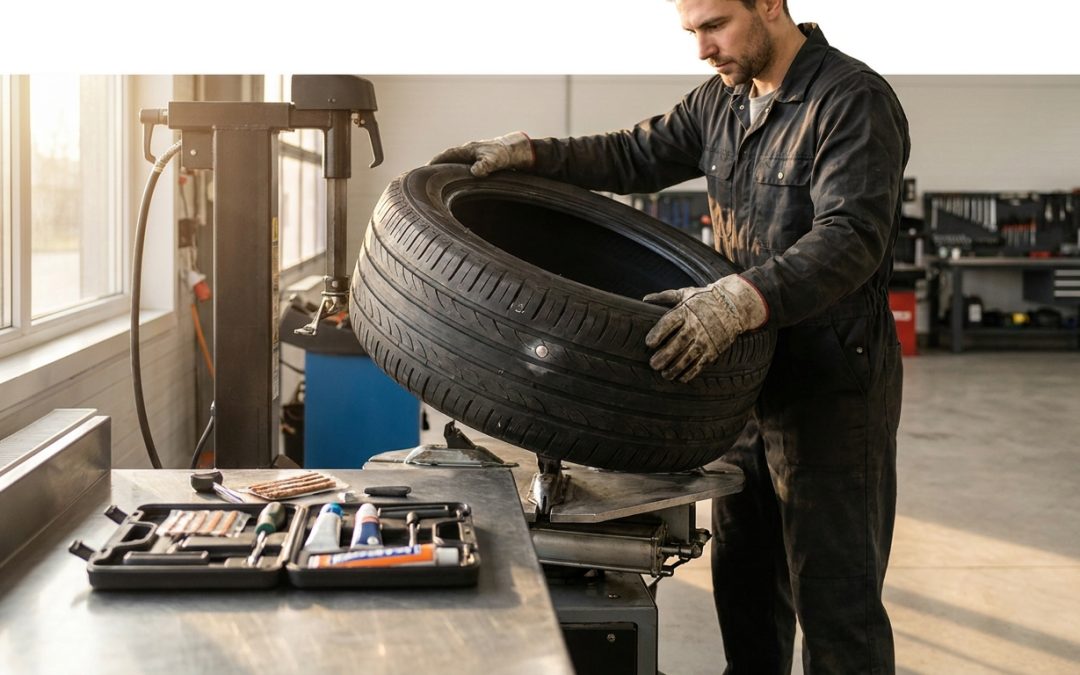
A nail in the tread can turn a normal commute into an urgent question: “Can this tire be safely repaired, and if so, how?” Two common answers—tire plugs and tire patches—sound similar, but they work differently, carry different risks, and are appropriate in different situations. Understanding the difference can save you money, prevent repeat flats, and most importantly, keep your vehicle safe at highway speeds.
In this guide, we’ll break down what a tire plug and a tire patch actually do, when each method makes sense, and why many professionals recommend a specific approach for long-term reliability. You’ll also learn how to evaluate puncture location and size, what “repairable” really means, and how to avoid common mistakes that lead to slow leaks or sudden air loss.
1) What a Tire Plug Is (and How It Works)
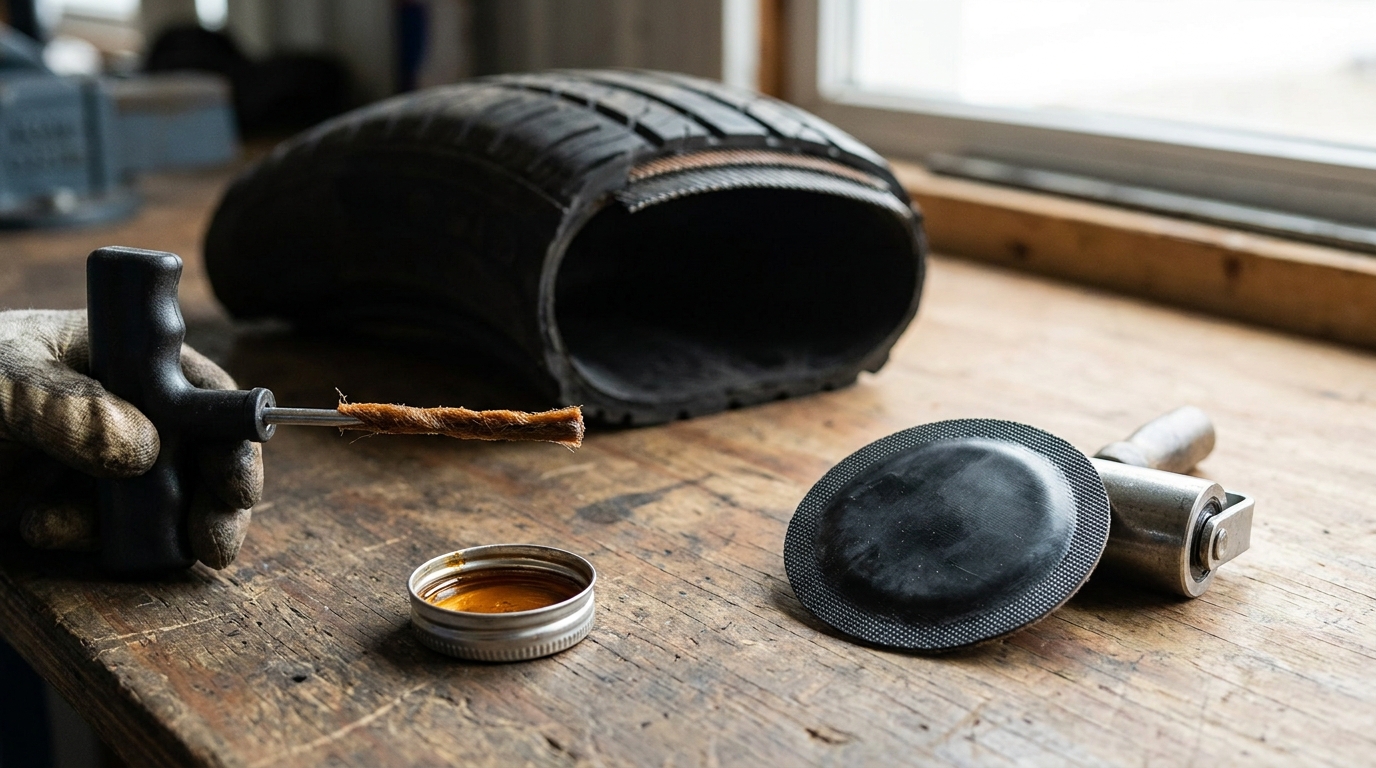
A tire plug is a repair method that seals a puncture from the outside of the tire. The most common “string plug” looks like a sticky, rubberized cord that’s pushed into the puncture channel with a plug insertion tool. When installed correctly, the plug fills the hole and helps prevent air from escaping.
Plugs are popular because they’re fast and can often be done without removing the wheel from the vehicle. Many roadside kits include a reamer (to clean and widen the puncture path), insertion tool, plugs, and rubber cement. In a best-case scenario—like a clean nail hole in the center of the tread—a plug can get you rolling again quickly.
However, it’s important to understand what a plug does not do. It typically does not address internal tire damage, and it doesn’t restore the inner liner (the airtight layer inside modern tires) the way an internal patch does. If the puncture caused internal fraying, belt damage, or a widened injury channel, a plug alone may not provide a durable seal.
Common Types of Tire Plugs
Most drivers think of the classic string plug, but there are a few plug styles on the market. String plugs are the most common DIY option. There are also “mushroom plugs” that insert through the puncture and anchor inside, but these are less common in basic kits and are often installed with specialized tools.
Regardless of type, plugs are still fundamentally an external repair. They rely on friction, adhesive, and compression to hold. That can work well for some punctures—but it also means the quality of the repair is highly dependent on the installer’s technique and the condition of the puncture channel.
When a Plug Is Typically Used
Plugs are often used as an emergency or short-term solution, especially when you’re away from a shop. For example, if you pick up a screw on a road trip and your spare is unavailable or unsafe to use, a plug kit may get you to a service center without calling a tow.
Plugs can also be used in some professional settings for certain applications, but many tire shops prefer internal repairs for passenger vehicles. That’s because the goal is not just “holding air today,” but maintaining safety and durability over thousands of miles.
Actionable tip: If you use a plug to get back on the road, treat it as a “get-you-there” repair. Plan to have the tire inspected internally as soon as possible to confirm the puncture is truly repairable and to consider a more robust repair method.
2) What a Tire Patch Is (and How It Works)
A tire patch is an internal repair applied to the inside of the tire after the tire is removed from the wheel. The technician locates the puncture, prepares the inner liner by cleaning and buffing the area, applies vulcanizing cement, and then bonds a patch over the injury. This creates a sealed barrier that restores the tire’s ability to hold air.
Because it’s installed from the inside, a patch addresses the inner liner directly. That matters because the inner liner is the tire’s airtight layer—similar to an inner tube, but integrated into the tire. When that liner is compromised, air migrates through the puncture path. A properly installed patch seals that pathway at the source.
Another key advantage is inspection. Removing the tire allows the technician to check for hidden damage: internal cracking, belt separation, sidewall scuffs from driving underinflated, or an injury that’s larger than it appears from the outside. Many “small” punctures look harmless until you see the inside.
Patch-Only vs. Patch-and-Plug Combination Repairs
Some shops use a patch-only repair for certain punctures, but many industry best practices favor a combination repair (often called a “plug-patch” or “patch-plug”). This is a single, integrated unit: a stem fills the puncture channel, while a patch seals the inner liner. The result is a more complete repair than a patch alone or a plug alone.
Why does filling the channel matter? The puncture channel can allow moisture to reach the tire’s belts and steel components. Over time, moisture intrusion can contribute to corrosion and separation. A patch-plug helps seal both the channel and the liner, reducing the chance of a future leak or internal degradation.
Actionable tip: If you’re paying for a professional repair, ask what method they use. A reputable shop should be able to explain whether they’re using an internal patch, a patch-plug combination, or another approved repair procedure—along with why it’s appropriate for your specific puncture.
When a Patch Is the Better Choice
For most everyday passenger vehicles, an internal patch or patch-plug combination is typically considered the more reliable long-term repair—especially for tires that will see highway speeds, heavy loads, or long commutes. It’s also the preferred approach when you want confidence that the tire’s condition has been properly assessed.
For example, imagine you drive 70 miles per day on the freeway. A quick plug might hold air, but if the puncture channel is irregular or the tire was driven low on air, the risk of a future failure is higher. A patch repair—paired with an internal inspection—reduces uncertainty.
Another common scenario: slow leaks that keep returning. A patch can often solve what looks like a simple puncture but is actually a slightly larger injury or an imperfect seal from a previous external repair.
3) Tire Plug vs. Tire Patch: The Real Differences That Matter
At a glance, both plugs and patches aim to do the same thing: stop air loss. The real difference is where they seal, how they seal, and what they allow you to verify. Those details matter because tires are safety-critical components that experience heat, flex, vibration, and impact every time you drive.
A plug seals from the outside-in. A patch seals from the inside-out. That might sound like a minor distinction, but it affects durability. Tires flex constantly as they roll; the tread area compresses and releases thousands of times per mile. A repair that doesn’t bond correctly—or that allows moisture or air migration—can fail over time.
Another difference is accountability. A patch repair requires dismounting the tire, which forces an inspection. A plug repair can be done quickly, but it may skip the step of checking internal damage caused by driving on a low tire, which is one of the most common reasons a “simple puncture” turns into a tire that should be replaced.
Speed and Convenience vs. Long-Term Reliability
Plugs often win on speed. In an emergency, a plug kit can be a lifesaver, especially if you’re far from a tire shop. But speed is not the same as safety margin. For a daily driver, the “best” repair is usually the one that remains stable for the remaining life of the tire.
Patches (or patch-plug repairs) take longer and typically cost more because of labor. The tire must be removed, prepped, and rebalanced if needed. But you’re also paying for professional evaluation and a repair that’s bonded to the inner liner.
Practical advice: Consider your use case. If you’re repairing a tire on a work truck that carries loads or tows, prioritize the most robust repair method available. If you’re temporarily fixing a puncture on a weekend trip, a plug can be appropriate to reach a shop—then upgrade to a professional internal repair if the tire is deemed repairable.
Leak Risk and Repeat Repairs
One of the most common frustrations drivers face is a “repaired” tire that still loses a few PSI every week. This often happens when the puncture channel isn’t properly sealed or when the injury is slightly larger than assumed. External plugs can be more sensitive to installation quality: too much reaming, not enough adhesive, or an irregular puncture path can all lead to slow leaks.
Patches generally provide a more consistent seal because they cover a larger area of the inner liner and bond to it. That said, a patch is not magic—if installed on a contaminated surface or if the injury is outside the repairable area, it can also fail. The difference is that patch repairs are typically done with controlled preparation steps that reduce variables.
Real example: A driver picks up a screw and installs a plug at home. It holds for a month, then starts leaking again during a heat wave. Heat increases tire pressure and can stress a marginal seal. When the tire is dismounted, the shop finds the injury channel was widened by the reamer and the plug never fully sealed the liner. A patch-plug repair (if the tire is still repairable) often resolves the issue.
Safety Considerations at Highway Speeds
Tires build heat as they roll, and heat is the enemy of weak repairs. A repair that seems fine at 35 mph around town may be stressed differently at 75 mph on a hot day. While many plugs do hold, the concern is not only air loss—it’s the possibility of internal damage that went unnoticed.
Driving on a punctured tire while it’s underinflated can damage sidewalls and internal cords quickly. Even a short distance can create internal “run-flat” damage. A plug won’t reveal that. A patch repair requires internal inspection, which helps prevent putting a compromised tire back into service.
Actionable tip: If your tire pressure dropped significantly (for example, below 20 PSI) or you drove on it while it was visibly low, assume internal damage is possible. Get the tire dismounted and inspected rather than relying on an external plug.
4) When Each Repair Is Appropriate (and When to Replace the Tire)
Not every puncture is repairable, and the most important decision isn’t “plug or patch?”—it’s “repair or replace?” The location, size, and type of damage determine whether a safe repair is possible. A professional inspection is ideal, but you can still learn the basics to make better decisions when you’re stressed on the roadside.
Most repair guidelines focus on punctures in the tread area. The tread has thicker rubber and is designed to handle road hazards. Sidewalls and shoulders flex more and contain different structural components; repairs there are far more risky and are commonly not recommended for passenger tires.
The type of object matters too. A clean nail hole is different from a jagged piece of metal that tears cords. Similarly, a puncture that’s been driven on while flat may have internal damage even if the hole itself is small.
Repairable Zone: Tread Center vs. Shoulder and Sidewall
As a rule of thumb, punctures in the center tread area are the best candidates for repair. If the injury is near the shoulder (the transition area between tread and sidewall) or in the sidewall, replacement is often the safest option. The shoulder flexes more and experiences different stresses, and sidewall injuries can compromise structural integrity.
Practical check: Look at where the object entered. If it’s clearly on the flat tread surface (not on the curved edge), you may be in the repairable zone. If it’s on the side, bulging area, or close to the tire’s edge, assume it may not be safely repairable.
Real example: A screw in the middle of the tread on a relatively new tire is often repairable with an internal patch-plug. A puncture 1 inch from the sidewall on a low-profile tire is much more likely to require replacement, even if it seems “small.”
Puncture Size, Shape, and Number of Injuries
Size matters because larger holes are harder to seal and may indicate more structural damage. Many shops follow industry standards that limit repairable puncture diameter (often around 1/4 inch / 6 mm for passenger tires, depending on the guideline and tire construction). Anything larger, or anything that looks like a tear rather than a round hole, may be a replacement situation.
Multiple punctures can also complicate repairs. Two small holes far apart in the tread may be repairable in some cases, but punctures that are close together can weaken the area and increase the risk of failure. If you see more than one object or suspect you drove over debris, get a thorough inspection.
Actionable tip: If you pull out a screw and the hole looks “oval” or shredded, don’t plug it and hope. That shape suggests tearing, and a proper internal inspection is critical to determine if replacement is required.
When Replacement Is the Smart (and Sometimes Cheaper) Choice
Replacing a tire can feel like the expensive option, but it can be the most cost-effective decision when you consider repeat repairs, downtime, and safety. If the tire has sidewall damage, a bulge, exposed cords, or signs of internal breakdown, no repair method is truly safe.
Tread depth also matters. If the tire is already near the end of its usable life, paying for a repair may not be worth it. Additionally, for vehicles with AWD or certain traction-control systems, mismatched tire diameters can cause drivetrain stress. In those cases, you may need to replace tires in pairs or even all four, depending on manufacturer recommendations and current tread differences.
Practical advice: Before repairing, ask the shop to measure tread depth and check for uneven wear. A repair on a severely worn tire might hold air, but you could be investing in a tire that will need replacement soon anyway.
5) Practical Tips: What to Do After a Puncture (Step-by-Step)
When you discover a puncture, the goal is to minimize damage and make safe choices under pressure. The steps you take in the first 10 minutes can determine whether the tire can be repaired or must be replaced. Even if you plan to visit a shop, handling the situation correctly reduces risk and cost.
Start by checking tire pressure as soon as it’s safe. If the tire is rapidly losing air, avoid driving on it. Driving on a low tire can destroy the sidewall internally, turning a repairable puncture into a mandatory replacement. If you have a spare, install it. If you have a tire inflator, add air and monitor the pressure to see how quickly it drops.
If you decide to use a plug kit, treat it as a temporary measure and follow the kit instructions carefully. Poor technique—like over-reaming the hole or failing to use adhesive properly—can make a professional repair harder later. When in doubt, use the spare and let a shop handle the repair.
DIY Plug Kit: Best Practices (If You Must Use One)
If you’re stranded and a plug is your only option, do it carefully. First, mark the puncture location and remove the object. Use the reamer only as needed to clean the channel—aggressive reaming can enlarge the injury. Apply rubber cement if your kit includes it, then insert the plug to the recommended depth and pull the tool out cleanly.
After plugging, inflate the tire to the vehicle’s recommended PSI (found on the driver’s door jamb placard, not the tire sidewall). Then check for leaks using soapy water: bubbles indicate air escaping. If it bubbles, don’t assume it will “seal later”—it likely needs to be redone or professionally repaired.
Actionable tip: After a plug repair, drive conservatively and recheck pressure within 10–15 minutes, then again the next morning. Any noticeable drop means you should stop relying on that repair and get the tire inspected.
What to Ask for at the Tire Shop
When you arrive at a shop, ask for an internal inspection and an approved internal repair method (often a patch-plug combination) if the tire is repairable. A good shop will explain whether the puncture is in the repairable zone, whether there’s internal damage, and what repair they plan to install.
Also ask whether the tire will be rebalanced. Dismounting and remounting can change balance slightly, and a small imbalance can cause vibration at highway speeds. Many shops include balancing in the service; others may charge separately.
Real example: If you felt a vibration after the puncture occurred, mention it. The shop may check for a bent wheel, internal tire damage, or a shifted belt—issues that a simple “plug and go” approach could miss.
How to Monitor a Repaired Tire Over Time
Even a quality repair should be monitored. Check tire pressure weekly for the next month, then return to your normal routine (many drivers check monthly, but weekly is better). Watch for slow leaks, recurring TPMS warnings, or changes in handling.
Inspect the tread area occasionally for unusual wear or a dark ring around the repair site (which can indicate leakage or contamination). If you notice repeated pressure loss, don’t keep topping it off—get it rechecked. A slow leak can become a rapid failure under heat and speed.
Actionable tip: Keep a small digital tire gauge in your glovebox. TPMS is helpful, but it often alerts only after pressure drops below a threshold. A gauge helps you catch issues early, especially after a repair.
6) Cost, Longevity, and Professional Recommendations
Cost is often the deciding factor for drivers choosing between a plug and a patch. A DIY plug kit is inexpensive, while a professional internal repair costs more due to labor and equipment. But the true cost includes reliability, safety, and the chance of needing to redo the repair—or replace the tire prematurely.
In many cases, a professional patch or patch-plug repair offers better value over time. It’s not just about sealing the hole; it’s about restoring the tire’s airtight liner and preventing moisture intrusion. That can mean fewer repeat visits, less pressure loss, and more confidence on long drives.
Professional recommendations often favor internal repairs because they align with established repair standards and because they require inspection. While some external plugs hold for the remaining life of the tire, the variability is higher. A patch-plug repair reduces that variability by controlling preparation and sealing both the liner and the puncture channel.
Typical Price Ranges and What You’re Paying For
Prices vary by region and vehicle type, but generally a professional repair costs more than a DIY plug because it includes dismounting the tire, inspecting the interior, preparing the surface, applying the repair unit, remounting, and often balancing. That process is what increases the odds of a long-lasting repair.
Be cautious of “too-cheap” repairs that skip steps. If a shop claims to fix a puncture in a couple of minutes without removing the tire, they may be using an external plug only. That can be fine in some circumstances, but you’re missing the internal inspection that can catch hidden damage.
Actionable tip: Ask for a clear invoice description (e.g., “internal patch-plug repair” and “balance”). Transparency is a good sign that the shop follows consistent procedures.
How Long Repairs Last (Realistic Expectations)
A properly installed internal repair in a repairable tread puncture can last for the remaining life of the tire. That said, longevity depends on factors like the size and angle of the puncture, the tire’s condition, and whether the tire was driven while underinflated.
External plugs can also last a long time, but they’re more sensitive to installation quality and puncture characteristics. If the puncture is angled, the channel may be harder to seal from the outside. If the hole is contaminated (water, debris, or sealant products), adhesion can suffer.
Practical advice: If you’ve used tire sealant (“fix-a-flat” style), tell the shop. Sealants can complicate repairs and TPMS sensors, and the technician may need extra time to clean the tire and evaluate whether a safe repair is still possible.
Choosing the Right Option for Your Driving Style
Your driving habits should influence your repair decision. If you frequently drive at highway speeds, carry passengers, or take long trips, prioritize a professional internal repair whenever possible. If you tow, haul, or drive in extreme heat, the added safety margin matters even more.
If you’re a city driver doing short trips and you discover a small puncture early, you may have more flexibility—but safety still comes first. A plug might get you to work tomorrow, but an internal inspection is still the best way to confirm the tire isn’t compromised.
Actionable tip: Build a “puncture plan” before you need it—know where your spare and tools are, keep a gauge and inflator in the car, and identify a reputable tire shop near your home or along common travel routes.
Conclusion: The Best Repair Is the One That’s Safe and Verified
Tire plugs and tire patches both aim to stop air loss, but they’re not interchangeable. A plug is an external repair that’s fast and convenient—often useful as an emergency measure. A patch is an internal repair that seals the tire’s inner liner and requires dismounting the tire, which enables a critical internal inspection. For long-term reliability, many professionals prefer an internal patch or an integrated patch-plug repair because it seals both the puncture channel and the liner.
Key takeaways to remember:
- Location is everything: center tread punctures are most repairable; shoulder and sidewall damage often requires replacement.
- Inspection matters: driving on a low tire can cause hidden internal damage that an external plug won’t reveal.
- Plugs are often temporary: great for getting back on the road, but follow up with a professional inspection.
- Patches (or patch-plugs) are typically more durable: they restore the inner liner seal and reduce repeat leak risk.
- When in doubt, replace: if the injury is large, irregular, near the sidewall, or the tire was driven flat, replacement is often the safest choice.
If you’re unsure whether your tire should be plugged, patched, or replaced, the safest next step is a professional internal inspection. A few minutes of evaluation can prevent a recurring leak—or a dangerous failure—later on.