

Tire cracks can look minor—like faint lines in the rubber—until you realize they may be warning signs of a much bigger problem. The tricky part is that not all cracks mean the same thing. A few superficial lines in the tread might be cosmetic, while cracks on the sidewall can signal structural damage that makes a tire unsafe at highway speeds. Knowing the difference between sidewall cracks and tread cracks helps you decide whether you can keep driving, need an inspection, or should replace the tire immediately.
In this guide, we’ll break down what sidewall cracks vs. tread cracks typically mean, what causes them, how to check your tires correctly, and how to make a confident replacement decision. You’ll also find practical examples, safety-focused thresholds, and tips to prevent cracking from happening again.
1) Why Tire Cracks Happen (And Why Location Matters)
Tires are engineered to flex thousands of times per mile while carrying weight, absorbing impacts, and gripping the road in heat, cold, rain, and sun. Over time, rubber compounds lose elasticity, and the tire’s protective ingredients (like anti-ozonants and waxes) can’t keep up with environmental stress. Cracks are often the visible result of aging, chemical exposure, UV damage, or repeated mechanical strain.
Where the cracks appear matters because different parts of the tire do different jobs. The sidewall is designed to flex and protect the internal structure (plies and cords) from impacts and abrasion. The tread, by contrast, is thicker and built to provide traction and resist wear. A crack in a highly stressed, thinner, flexing area (sidewall) is more concerning than a shallow crack in a thick tread block—though there are exceptions.
It also matters because a tire’s failure modes differ by location. Sidewall problems can lead to sudden air loss or a blowout due to compromised structure. Tread-area issues more often show up as traction loss, chunking, or separation, which can still be dangerous—especially at speed or in wet conditions—but may provide more warning signs before catastrophic failure.
Common causes of cracking
Cracking usually comes from a combination of time, environment, and usage. Common contributors include long periods of parking outdoors, extreme heat cycles, underinflation (excess flexing), overinflation (stress concentration), and exposure to ozone and petroleum-based chemicals. Even “low-mileage” tires can crack if they’ve spent years baking in the sun or sitting unused.
Another overlooked factor is storage and seasonal use. Vehicles that sit for months (classic cars, RVs, trailers, second vehicles) often develop cracking sooner because the rubber doesn’t flex regularly, which helps distribute protective waxes to the surface. When the tire finally goes back into service, the rubber may already be hardened and prone to cracking under load.
2) Sidewall Cracks: What They Mean and When They’re Dangerous
Sidewall cracks are the ones to treat most seriously. The sidewall is thinner than the tread and constantly flexes as the tire rolls. That flexing is normal—until the rubber becomes dry, brittle, or damaged. When cracks form, they can deepen quickly and expose internal cords. Once the tire’s structure is compromised, the risk of rapid air loss increases significantly.
Sidewall cracking often shows up as fine “spiderweb” lines near the rim area, around lettering, or in the mid-sidewall. Sometimes it’s uniform around the tire; other times it appears in one area due to curb scrapes, impact damage, or chemical exposure. Even if the tire still holds air, sidewall cracking can be a sign that the rubber has aged to the point where it may fail under heat and speed.
It’s important to understand that the sidewall doesn’t have the same “extra rubber” buffer that the tread does. A crack that looks shallow can be closer to the tire’s structural layers than you’d expect. That’s why many tire professionals recommend replacing tires with notable sidewall cracking rather than trying to “monitor it” for months.
How to assess sidewall cracks at home
Start with a clean, well-lit inspection. Turn the steering wheel outward (front tires) to expose the inner sidewall, or move the vehicle slightly to view the full circumference. Look for cracks that are:
- Deep enough to catch a fingernail when you drag it across the crack
- Widespread across multiple areas of the sidewall
- Near bulges, blisters, or waves (which can indicate internal damage)
- Exposing cords (you may see fabric/steel-like threads or a different colored layer)
If you see cords or a bulge, treat it as an immediate replacement situation. A bulge indicates the internal structure has been damaged and the tire is no longer containing pressure safely. Cracks plus a bulge is a strong warning sign.
Real-world examples of sidewall crack scenarios
Example 1: The “garage queen” SUV. A three-row SUV driven only 3,000 miles per year sits outside in a sunny driveway. After five years, the tread looks great, but fine sidewall cracks appear around the lettering. Within another season, the cracks deepen and spread. Even with plenty of tread depth, the tire is aging out, and replacement is the safer choice—especially for highway family trips.
Example 2: Underinflation and heat. A commuter car runs 6–8 PSI under the recommended pressure for months. The sidewalls flex more than designed, generating heat and accelerating rubber fatigue. Sidewall cracking may appear earlier than expected, and the tire may be more prone to a sudden failure when temperatures rise in summer.
Example 3: Chemical exposure. Tires stored near electric motors (ozone), solvents, or petroleum products (like certain degreasers) can crack prematurely. If a tire dressing leaves the sidewall shiny but contains harsh chemicals, it may worsen cracking over time. Sidewall cracks from chemical damage often look uneven or unusually aggressive for the tire’s age.
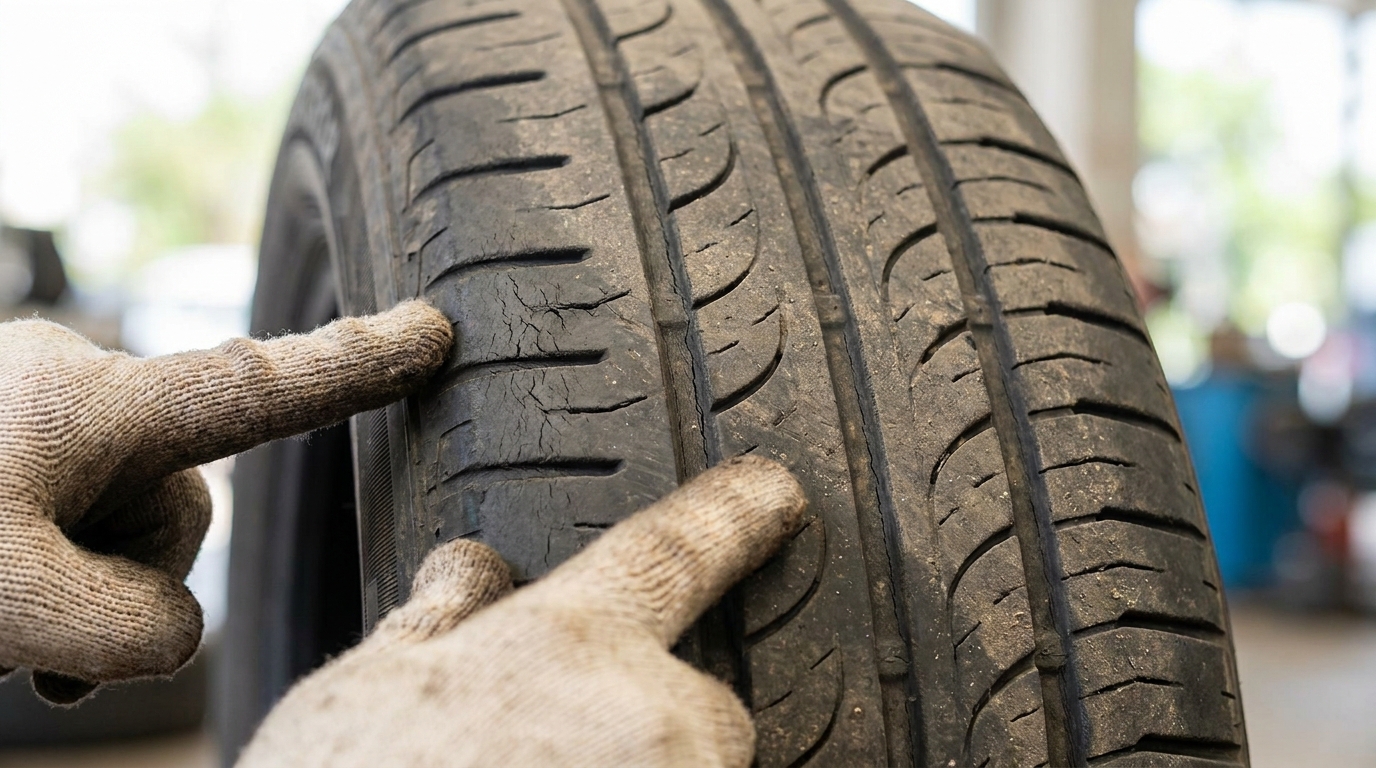
3) Tread Cracks: Cosmetic, Age-Related, or a Traction Warning?
Tread cracks can be confusing because they range from harmless surface checking to serious signs of aging or separation risk. The tread area is thicker and reinforced, so tiny surface cracks between tread blocks aren’t automatically an emergency. However, tread cracking can indicate the rubber is hardening, which reduces grip—especially in wet or cold conditions—even if the tire still has legal tread depth.
Many drivers assume “more tread equals more safety,” but traction depends on both tread depth and rubber flexibility. As tires age, the compound can stiffen and lose its ability to conform to the road surface. That’s why an older tire with 7/32″ tread can sometimes perform worse in rain than a newer tire with 5/32″—the newer rubber may simply grip better.
Tread cracking can also appear from severe heat cycling, aggressive driving, or long periods of inactivity. In some cases, cracks form at the base of tread grooves and expand into chunking or missing pieces. In more serious cases, cracks can be associated with belt or tread separation, especially if accompanied by vibration, noise changes, or visible irregularities.
Where tread cracks show up—and what it suggests
Between tread blocks: Fine lines in the grooves often suggest age-related dry rot or surface checking. If shallow and limited, it may be monitored, but it’s still a sign the tire is aging.
At the base of grooves (deep channels): Cracks here can become stress risers. If they’re deep or widespread, replacement becomes more likely, especially if the tire is older.
On the tread blocks themselves: Cracks across the blocks can indicate heat damage, compound hardening, or repeated high-load use (towing, heavy cargo, aggressive cornering).
Shoulder area (edge of tread): Cracking and wear here can point to underinflation, alignment issues, or frequent cornering loads. If shoulder cracks are paired with uneven wear, fix the underlying cause before installing new tires—or you may ruin the next set early.
Real-world examples of tread crack scenarios
Example 1: Older tires with “good” tread depth. A driver buys a used vehicle with tires showing 8/32″ tread. After a rainy day, they notice longer stopping distances and occasional slip in turns. On inspection, there are fine cracks in the grooves—an age clue. The tire may pass a tread-depth test but still be past its best performance window.
Example 2: Work truck heat cycling. A pickup used for hauling runs hot on summer highways. The tread shows cracking and small chunks missing near the shoulders. Even if the tire isn’t bald, chunking and deeper cracks suggest the tread compound is breaking down. Replacement is recommended, and the driver should verify correct load rating and inflation for towing.
Example 3: Seasonal storage on a trailer. A boat trailer sits all winter. In spring, the tread has surface cracks, and one tire develops a slight hop. Trailer tires often age out before they wear out. Tread cracking plus vibration is a reason to replace before a long tow.
4) How to Decide: Monitor, Inspect, or Replace?
When cracks appear, the safest approach is to decide based on (1) location, (2) depth and spread, (3) tire age, and (4) how the vehicle is used. Sidewall cracks generally push the decision toward replacement sooner. Tread cracks may be monitored if they’re shallow and the tire is relatively young—but age and driving conditions can quickly change that recommendation.
Start with the assumption that cracks are a symptom, not the root cause. If the tire is old, the root cause may be time and environment. If the tire is newer, the root cause could be chronic underinflation, overload, misalignment, harsh chemicals, or storage conditions. Fixing the cause matters; otherwise the next tire can crack prematurely too.
Also consider risk tolerance. A vehicle used for short, low-speed city trips has different risk exposure than one used for highway commuting, long road trips, or towing. If you regularly drive at 65–80 mph, tire integrity matters more because heat builds quickly and failures are more severe.
A practical decision checklist
- Replace immediately if you see sidewall bulges, exposed cords, deep sidewall cracks, or any crack that appears to be splitting open.
- Schedule a professional inspection soon if cracks are widespread, you’re unsure of depth, the tire is older, or you notice vibration, thumping, or new road noise.
- Monitor carefully only if cracks are superficial, limited to the tread surface, and the tire is within a reasonable age range with no other symptoms.
If you choose to monitor, re-check every couple of weeks and before long trips. Cracking can accelerate quickly with temperature swings and long highway drives.
Don’t ignore tire age: how to read the DOT date code
Even without visible cracking, tire age is a major replacement factor. Look for the DOT code on the sidewall; the last four digits indicate the week and year of manufacture. For example, “2321” means the 23rd week of 2021. If you’re approaching the later years of a tire’s service life, cracks become more meaningful because they confirm the rubber is aging.
Practical rule: if your tires are several years old and you’re seeing cracking—especially on the sidewalls—plan for replacement rather than stretching them through another season. For drivers who face extreme heat, intense sun exposure, or heavy loads, aging can show up earlier.
Why patching, sealing, or “tire dressing” won’t fix cracks
Cracks are not like a nail puncture. They’re the result of rubber degradation or structural stress, and the damage is often deeper than what you can see. Sealants and dressings may temporarily improve appearance but won’t restore flexibility or structural strength. In some cases, using the wrong products can accelerate deterioration.
If you’re tempted to “treat” sidewall cracks cosmetically, treat that as a signal to get a professional evaluation instead. The goal is safety and reliability, not hiding symptoms.
5) Safety, Performance, and Legal Considerations (What’s at Stake)
Cracked tires affect more than blowout risk. As rubber hardens, grip decreases, braking distances increase, and stability control systems may intervene more often because the tire can’t generate the expected traction. In wet weather, older, cracked tires can hydroplane sooner—especially if cracks are paired with shallow tread depth or uneven wear.
Sidewall integrity is especially critical because it supports load and absorbs impacts. A tire with compromised sidewall rubber is less able to handle potholes, curb taps, or sudden load changes. Even if the tire doesn’t fail immediately, it may be more vulnerable to damage from everyday road hazards.
There’s also a practical, financial angle: a tire failure can damage wheels, fenders, suspension components, and underbody panels—costs that often exceed the price of replacing the tire proactively. For drivers who travel with family, commute long distances, or tow, prevention is usually the most cost-effective and least stressful option.
How cracking can change vehicle behavior
Drivers often describe older, cracked tires as feeling “skittish” in rain, less stable in crosswinds, or harsher over bumps. You might notice:
- Longer stopping distances on wet pavement
- More wheelspin on acceleration
- Increased ABS activation during braking
- Vibration at certain speeds (sometimes linked to internal separation)
These symptoms don’t prove cracking is the cause, but when paired with visible cracks, they strengthen the case for replacement and inspection.
Why “it still holds air” isn’t a safety test
A tire can hold air right up until it doesn’t. Many failures happen after heat builds during extended driving. A cracked sidewall may appear stable during short trips but become dangerous on a long highway drive in summer. Think of air retention as only one factor; structural integrity and rubber condition are equally important.
If you’re planning a road trip, towing, or driving in extreme temperatures, cracked tires deserve a higher level of caution. Replacing before the trip is often the safer decision than gambling on “one more season.”
6) Preventing Sidewall and Tread Cracks on Your Next Set of Tires
While no tire lasts forever, you can significantly slow down cracking by controlling the biggest contributors: heat, ozone/UV exposure, improper inflation, and long periods of inactivity. Prevention starts with choosing the right tire for your driving needs and maintaining it consistently.
Many cracking issues are compounded by neglect—especially underinflation. Underinflated tires flex more, run hotter, and age faster. Over time, that extra heat accelerates oxidation and breaks down the rubber’s protective chemistry. Maintaining proper pressure is one of the simplest, highest-impact habits for extending tire life and reducing cracking risk.
Storage and cleaning habits also matter. Tires don’t like harsh chemicals, prolonged sunlight, or sitting in one position for months. If you store a vehicle, taking steps to reduce UV exposure and maintain pressure can pay off when you put it back on the road.
Actionable maintenance tips that reduce cracking
- Check tire pressure monthly and before long trips; use the vehicle placard pressure (door jamb), not the maximum on the tire sidewall.
- Fix alignment and suspension issues if you notice uneven wear—uneven stress can speed up cracking and compound breakdown.
- Wash tires with mild soap and water; avoid petroleum-based cleaners or unknown “shiny” dressings that may dry out rubber.
- Park in shade or a garage when possible; UV exposure is a major driver of surface checking.
- Drive the vehicle regularly; periodic flexing helps protective compounds migrate to the surface.
Tips for seasonal vehicles, RVs, and trailers
If your vehicle sits for long periods, cracking prevention becomes even more important. Keep tires inflated to the recommended pressure (or storage guidance from the manufacturer), and consider using tire covers to reduce UV exposure. Moving the vehicle periodically can help avoid flat-spotting and reduce stress concentration in one area of the tire.
For trailers and RVs, confirm you’re using the correct tire type and load range for the weight you carry. Under-rated or underinflated tires are prone to heat damage, which can show up as tread cracking, chunking, or separation. Before a long tow, inspect sidewalls closely—trailer tires commonly age out before the tread wears down.
What to do when you replace cracked tires
When it’s time to replace, don’t just swap rubber and move on. Use the opportunity to prevent repeat problems:
- Replace tires in pairs or full sets when appropriate for your drivetrain and wear pattern.
- Get a professional inspection of suspension and alignment if wear or cracking was uneven.
- Verify correct size and load rating for your vehicle and usage (commuting vs towing vs off-road).
- Set a baseline pressure routine and keep a quality gauge in the vehicle.
If you’re unsure whether your cracks are cosmetic or critical, bring the vehicle in for an evaluation. A trained technician can assess crack depth, check for internal damage, and help you choose a replacement that matches your driving conditions.
Conclusion: Key Takeaways on Sidewall vs. Tread Cracks
Sidewall cracks and tread cracks may look similar at a glance, but they don’t carry the same level of risk. Sidewall cracks are more likely to indicate structural vulnerability because the sidewall is thinner and constantly flexes; if cracks are deep, widespread, or paired with bulges or exposed cords, replacement should be immediate. Tread cracks can sometimes be superficial, but they still matter because they often signal aging rubber and reduced traction—especially in wet conditions—even when tread depth looks “fine.”
The safest way to decide is to evaluate crack location, depth, spread, tire age (via the DOT date code), and how you use the vehicle. If you’re planning highway travel, towing, or driving in extreme heat, be more conservative—cracked tires are more likely to fail when they’re hot and under load.
Finally, once you replace cracked tires, protect your next set with the basics that make the biggest difference: correct inflation, regular inspections, alignment checks, gentle cleaning products, and reduced UV exposure. Cracks are often preventable—or at least delayable—and a small maintenance routine can save you from a costly and dangerous surprise on the road.