
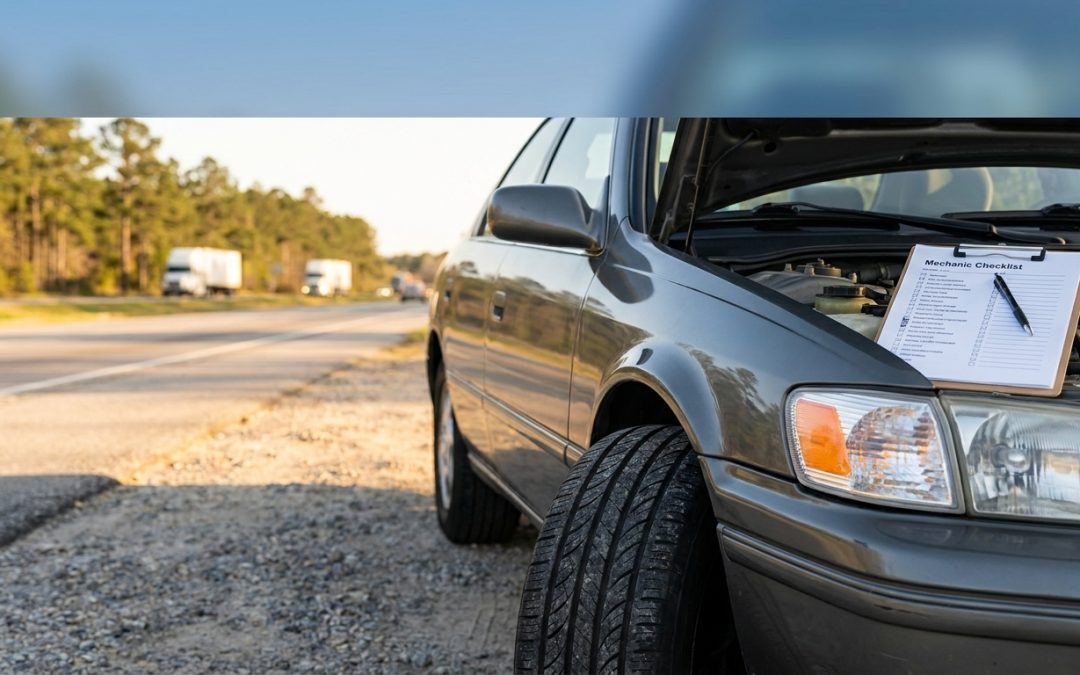
High-mileage cars are everywhere in Georgia—from Atlanta commuters logging miles on I-285 to coastal drivers dealing with salt air and weekend road trips. The good news: a vehicle with 100,000, 150,000, or even 200,000+ miles can still be dependable. The bad news: once mileage climbs, small neglected items (like worn tires, aging fluids, or cracked hoses) can snowball into expensive repairs—often at the worst time, like during a summer heat wave or a long drive down I-75.
This in-depth checklist is built for real Georgia driving conditions: hot summers, heavy rain, stop-and-go traffic, and long highway stretches. It’s designed to help you prioritize what matters most on high-mileage vehicles, spot early warning signs, and plan maintenance so you’re not reacting to breakdowns. Use it as a monthly walk-around, a seasonal plan, and a “before any road trip” guide.
1) Start With a High-Mileage Baseline (Records, Inspection, Plan)
Before you replace anything, establish a baseline. High-mileage maintenance works best when it’s systematic: you confirm what’s been done, inspect what’s wearing out, and set a schedule that matches your driving. If you bought your car used or you’re not sure what the previous owner did, assume nothing—especially on fluids, belts, and tires. A one-time “catch-up” service is often cheaper than repeated small repairs caused by overlooked basics.
Begin by gathering maintenance records (paper receipts, dealer history, or app logs). In Georgia, many drivers rack up miles quickly, so “recent” maintenance might still be 20,000 miles ago. Check the dates and mileages for oil changes, tire rotations, brake service, coolant, transmission service, spark plugs, and battery replacement. If you can’t verify it, treat it as due and prioritize an inspection.
Next, do a comprehensive inspection—either DIY with a checklist or at a trusted shop. Ask for a written report that includes tire tread depth, brake pad thickness, fluid condition, belt and hose condition, battery test results, and any leaks. High-mileage cars often develop slow seepage at valve cover gaskets, oil pans, or around the radiator. Catching these early can prevent a low-fluid event that damages an engine or transmission.
Finally, build a plan that matches your usage. A rideshare driver in Atlanta will wear brakes and tires faster than a rural highway commuter. Likewise, a vehicle parked outside in Savannah’s humid, salty air may need more attention to corrosion, battery terminals, and underbody components. Set reminders for monthly checks and “every 5,000 miles” items, and keep a simple log in your phone so you can prove maintenance when it’s time to sell.
Practical baseline checklist (first week)
- Confirm last service dates/miles for oil, tires, brakes, coolant, transmission, and battery.
- Scan for diagnostic codes (even if the check engine light is off).
- Inspect for leaks under the car after overnight parking.
- Check all exterior lights, wipers, and washer spray pattern.
- Set a maintenance calendar based on mileage and seasons.
2) Tires and Alignment: The High-Mileage Safety Foundation
Tires are the most important maintenance item on any car, but especially on high-mileage Georgia vehicles. Heat, rain, and fast-moving highways demand strong traction and predictable handling. Worn or mismatched tires increase stopping distances in heavy rain and make hydroplaning more likely—something Georgia drivers face regularly during sudden downpours. On older cars, suspension wear can also cause tires to wear unevenly, so tire care becomes a window into the health of the whole chassis.
Start with tread depth and condition. Use a tread depth gauge (inexpensive and accurate) and check inner, center, and outer tread on each tire. Many drivers only look at the outer edge, but alignment issues often show up on the inside shoulder first—especially on front tires. Also check for dry rot (small cracks in the sidewall), bulges, and embedded objects. In Georgia’s heat, rubber ages faster, and a tire that “still has tread” can still be unsafe if it’s old or cracked.
Next, confirm tire pressure monthly and before highway trips. Temperature swings can change pressure, and underinflation is a common cause of blowouts and poor fuel economy. High-mileage cars often have slow leaks from aging valve stems or slight rim corrosion. If you’re adding air frequently, have the tires inspected for punctures and check the valve stems—replacing stems is inexpensive and can prevent ongoing pressure loss.
Alignment and balancing are critical on older vehicles because worn suspension parts (like tie rods, control arm bushings, or struts) can knock alignment out of spec. If your steering wheel is off-center, the car pulls, or you see feathering/uneven wear, schedule an alignment. Even a small alignment issue can destroy a set of tires early—and tires are a major investment. Balancing is equally important for comfort and safety; vibration at 60–75 mph can indicate imbalance, bent wheels, or tire defects.
Finally, rotate tires consistently. For many vehicles, rotating every 5,000–7,500 miles is a solid rule, but follow your tire type and drivetrain (front-wheel drive often wears front tires faster). Rotation extends tire life and helps you spot problems early. If a high-mileage car repeatedly shows unusual wear on one corner, it’s a clue that a suspension component may be failing.
Georgia-specific tire tips
- Prioritize wet traction: Look for tires with strong rain performance ratings and good tread design for water evacuation.
- Check tire age: Find the DOT date code on the sidewall; many experts recommend replacing around 6 years even if tread remains, depending on condition.
- Watch for heat damage: Long summer highway drives can expose weak tires—inspect before trips to Macon, Valdosta, or the coast.
- Don’t ignore “minor” vibration: On older cars, vibration can accelerate wear in wheel bearings, suspension joints, and tires.
Real example: uneven wear that saved a suspension repair
Consider a 160,000-mile sedan used for a daily Atlanta commute. The owner noticed the front tires wearing faster on the inside edge, even after rotations. An alignment check showed the toe was out of spec, and the shop found a worn tie rod end. Replacing the tie rod and aligning the car prevented the new tires from being ruined in a few months and restored stable handling in rain.

3) Fluids and Filters: Preventing Heat- and Mileage-Related Failures
High mileage amplifies the importance of clean fluids. Oil, coolant, transmission fluid, brake fluid, and power steering fluid (if equipped) all degrade over time and heat cycles. In Georgia, summer temperatures and traffic can push operating temps higher, which accelerates fluid breakdown. Many major failures on older cars start as fluid issues: overheating from neglected coolant, transmission slipping from old fluid, or brake fade from moisture-contaminated brake fluid.
Engine oil is the obvious starting point. High-mileage engines may consume oil slowly, so checking level between changes is non-negotiable. If you’re topping off regularly, track how much and how often. A quart every 1,500–2,000 miles might be manageable; a quart every few hundred miles needs diagnosis. Use the oil viscosity recommended by your manufacturer unless a trusted technician suggests an adjustment for wear. Also replace the oil filter every change—cheap filters can collapse or bypass early, especially with extended intervals.
Coolant deserves extra attention in Georgia. Overheating can end an older engine quickly, and cooling systems age: hoses soften, plastic radiator tanks crack, thermostats stick, and water pumps wear. If you can’t confirm the last coolant service, have the system inspected and the coolant tested. A flush (done correctly) can remove corrosion and restore protection. Just as important: inspect hoses for swelling and clamps for seepage, and make sure the radiator cap holds proper pressure. Pressure is what raises the boiling point—critical in summer traffic.
Transmission fluid is often neglected because it’s out of sight. Yet on high-mileage cars, gentle preventative service can extend life dramatically. The right approach depends on the vehicle and fluid condition. If the fluid is dark and burnt and the transmission already slips, a flush may not be appropriate; a qualified shop can advise whether a drain-and-fill is safer. If the transmission is operating normally and the fluid is simply old, servicing it at the correct interval can prevent harsh shifts and overheating.
Brake fluid and filters round out the essentials. Brake fluid absorbs moisture over time, lowering boiling point and increasing corrosion risk in brake components—especially in humid climates. A brake fluid exchange every 2–3 years is a strong preventive step. For filters: replace the engine air filter to protect the engine and maintain fuel economy, and replace the cabin air filter for HVAC performance—important when your A/C is working hard for months.
Fluid and filter checklist (high-mileage focus)
- Engine oil: change on schedule; check level monthly; address leaks/consumption early.
- Coolant: test condition; inspect hoses, thermostat, radiator, and cap; service if history is unknown.
- Transmission: inspect fluid color/odor; service per manufacturer and vehicle condition.
- Brake fluid: exchange every 2–3 years; inspect for leaks and soft pedal feel.
- Air filters: replace engine and cabin filters; more often if you drive dusty roads or sit in traffic.
Actionable tip: create a “fluid snapshot”
Once a year, take five minutes to note fluid condition and levels: oil level, coolant level, brake fluid color, and transmission behavior (shift quality). Write it in your phone. Trends—like coolant slowly dropping—often reveal a small leak before it becomes an overheating event.
4) Brakes, Suspension, and Steering: Control and Confidence at 100K+
High-mileage cars can still drive beautifully, but only if the wear items underneath are kept in check. Georgia roads can be rough in places, and potholes plus highway speeds amplify suspension wear. Add in the stop-and-go reality of metro areas, and brakes become a frequent maintenance item. This section is about maintaining control: stopping power, stable steering, and predictable handling in rain.
Start with brakes. Don’t wait for grinding—by then, you may be replacing rotors and possibly calipers. Instead, pay attention to early signs: squealing, longer stopping distances, a pulsating pedal, or a steering wheel shake under braking. Have pad thickness measured and rotors inspected for heat spots and runout. High-mileage brake systems also benefit from regular brake hardware service: cleaning and lubricating slide pins, ensuring caliper movement is smooth, and replacing worn clips. This prevents uneven pad wear and sticking calipers.
Suspension components wear gradually, so many drivers get used to a “looser” feel without realizing it. Worn struts and shocks reduce tire contact with the road, especially on wet surfaces, and can increase stopping distance. Common signs include excessive bouncing after bumps, nose-diving when braking, or a floating feeling at highway speed. Control arm bushings, ball joints, and sway bar links can clunk over bumps or cause wandering. On high-mileage vehicles, replacing these parts can feel like a transformation—steering becomes tighter and tire wear becomes more even.
Steering systems also deserve attention. If your vehicle uses hydraulic power steering, fluid condition matters, and leaks can develop at hoses or the rack. Electric power steering systems can have different failure modes, but you should still watch for stiff steering, intermittent assist, or warning lights. Wheel bearings are another high-mileage concern; a humming noise that changes with speed or when turning can indicate bearing wear. Addressing a bearing early can prevent collateral damage and reduce the risk of a wheel-related failure.
Finally, don’t overlook the parking brake. On older cars, a parking brake that doesn’t hold can be a safety issue—especially on sloped driveways. If it’s rarely used, cables can seize. Test it periodically and have it adjusted or repaired if needed.
Quick “feel test” you can do on any drive
- Braking: Does the car stop straight? Any vibration or squeal?
- Steering: Any pull, wandering, or off-center wheel?
- Ride control: Excessive bounce after bumps or uneven tire wear?
- Noises: Clunks over bumps (bushings/links), hums at speed (bearings), grinding (brakes).
Real example: brake fluid and caliper maintenance
A 140,000-mile crossover in suburban Georgia had “new brakes” but still pulled slightly when stopping in rain. Inspection showed one caliper slide pin was sticking and the brake fluid was dark. Cleaning/lubricating the slides and exchanging fluid restored smooth braking and reduced uneven pad wear—without replacing major parts.
5) Engine, Cooling, and A/C: Georgia Heat Makes This Non-Negotiable
Georgia heat is a stress test for high-mileage vehicles. Extended idle time in traffic, long highway drives, and high humidity all push the cooling system and A/C to work harder. Many older-car breakdowns in summer are preventable: a weak battery that fails after repeated hot starts, an aging radiator that cracks, or an A/C system that slowly leaked refrigerant until it can’t keep up.
Cooling system health is priority #1. Beyond coolant condition, inspect the radiator fins for blockage (bugs, debris), ensure the electric fans operate correctly, and confirm the thermostat opens at the right temperature. If your temperature gauge ever creeps above normal, don’t ignore it. One overheating event can warp cylinder heads or damage head gaskets—repairs that often exceed the value of an older vehicle. If you notice coolant smell, steam, or frequent top-offs, get pressure-tested sooner rather than later.
Belts and hoses are the supporting cast. High-mileage engines often have original or very old hoses that become soft, brittle, or swollen. A small hose failure can dump coolant quickly. Serpentine belts can crack and glaze; if the belt fails, you may lose the alternator, water pump (on many cars), and power steering assist. If you don’t know the belt age, inspect it closely or replace it proactively—especially before summer road trips.
A/C performance is more than comfort in Georgia—it’s driver alertness and safety. If your A/C takes longer to cool, blows warm at idle, or has a musty smell, address it early. Warm-at-idle can indicate low refrigerant, poor condenser airflow (fan issues), or compressor wear. Musty odor often means mold on the evaporator or a clogged drain. Also consider cabin air filter replacement as the first step; a restricted filter can reduce airflow dramatically and make the system seem weaker than it is.
Finally, pay attention to engine performance items that become due around 100,000+ miles: spark plugs, ignition coils, PCV valves, and vacuum lines. A subtle misfire can reduce fuel economy, strain the catalytic converter, and make the engine run hotter. If acceleration feels sluggish or the engine runs rough at idle, don’t just “live with it.” A simple tune-up or targeted repair can restore reliability and prevent more expensive emissions-related repairs later.
Heat-ready checklist before summer or long trips
- Confirm cooling fans run and the temperature stays stable at idle with A/C on.
- Inspect radiator, hoses, and clamps for seepage or crusty residue.
- Replace old belts and questionable hoses proactively.
- Check A/C cooling at idle and at highway speed; replace cabin air filter.
- Carry emergency basics: water, coolant (correct type), and a flashlight.
6) Electrical, Battery, and Road-Trip Readiness (The “Don’t Get Stranded” Section)
High-mileage reliability isn’t just mechanical—electrical issues are a common reason older cars leave drivers stranded. Batteries weaken faster in heat, and Georgia summers can shorten battery life even if the car starts “fine” most days. Add corroded terminals, aging alternators, and worn starter components, and the risk of a no-start situation increases—often with little warning.
Start with the battery and charging system. If your battery is 3–5 years old (sometimes less in high heat), have it tested under load. Many auto parts stores and shops can test battery health and alternator output. Inspect terminals for corrosion and ensure the battery is securely mounted; vibration can damage internal plates over time. If you notice slow cranking, flickering lights, or repeated jump starts, don’t wait—these are classic signs the system is near failure.
Next, check lights, wipers, and visibility items. High-mileage cars often have cloudy headlight lenses, which reduces night visibility and can be dangerous in heavy rain. Restoring or replacing headlights can make a dramatic difference. Replace wiper blades at least once a year (often twice in Georgia due to sun exposure), and confirm your washer nozzles spray properly. Visibility is a safety system—treat it like one.
Pay attention to warning lights and small drivability changes. A check engine light on a high-mileage car might be something minor (like an EVAP leak), but it can also indicate misfires or sensor issues that impact emissions and fuel economy. Use an OBD-II scan to read codes and address them methodically. Ignoring a flashing check engine light is especially risky; it often indicates a misfire that can overheat and damage the catalytic converter.
Finally, prepare for Georgia road trips—whether it’s a drive to the mountains, a beach weekend, or visiting family across the state. High-mileage cars can handle long drives well if you do a pre-trip check: tire pressure and tread, spare tire condition (or repair kit), fluids topped off, and a quick brake and light check. Keep a small kit in the trunk: tire inflator, plug kit (if you know how to use it), jumper pack, basic tools, and reflective triangles. These basics turn a potential roadside emergency into a manageable inconvenience.
Monthly “no-start prevention” routine
- Visually inspect battery terminals for corrosion.
- Listen for changes in cranking speed.
- Check that headlights are bright and steady at idle.
- Scan for codes if the check engine light appears (or if the car feels different).
Real example: a simple battery test prevented a tow
A 180,000-mile compact car used for daily commuting started fine in the morning but struggled after sitting in afternoon heat. A quick load test showed the battery was near the end of its life. Replacing it proactively avoided a no-start in a parking lot and reduced stress on the starter and alternator.
Conclusion: Keep High-Mileage Georgia Cars Reliable With a System
High mileage doesn’t have to mean high stress. In Georgia, the combination of heat, humidity, heavy rain, and traffic makes preventive maintenance more important—not less—once your odometer crosses 100,000 miles. The most reliable high-mileage cars aren’t the ones with “perfect luck”; they’re the ones with consistent basics: safe tires, healthy fluids, strong brakes, stable suspension, and a cooling system that’s ready for summer.
Key takeaways to put into action this week: check tire tread and pressure, schedule an alignment if wear is uneven, confirm your coolant and transmission service history, and have your battery tested before it fails. If you do nothing else, build a simple maintenance log and follow it—because the biggest enemy of older vehicles is uncertainty.
With a clear checklist and a realistic plan, your high-mileage Georgia car can stay comfortable, safe, and road-trip ready for years to come—while saving you money by preventing the big repairs that often start as small, fixable issues.