
New tires can make your vehicle feel smoother, quieter, and more confident—so it’s natural to assume the job is done once the fresh rubber is mounted and balanced. But many drivers notice something unexpected shortly after: the steering wheel sits slightly off-center, the car drifts on a straight road, or the new tires start showing uneven wear far sooner than they should. That’s where wheel alignment enters the conversation, and it’s why the question “Do you need an alignment after getting new tires?” is one of the most important (and cost-saving) questions you can ask.
The truth is: you don’t always need an alignment immediately after installing new tires, but you often should get one—especially if you want your new tires to last, your vehicle to handle correctly, and your fuel economy to stay on track. Alignment isn’t just a “nice to have” service; it’s a tire-protection strategy and a safety factor.
In this guide, we’ll break down exactly what alignment does, when it’s necessary after new tires, what warning signs to watch for, and how to make a smart decision based on your vehicle, driving conditions, and tire investment. You’ll also get practical tips, real-world examples, and clear next steps to protect your tires from day one.
What Wheel Alignment Really Is (and Why New Tires Don’t Fix It)
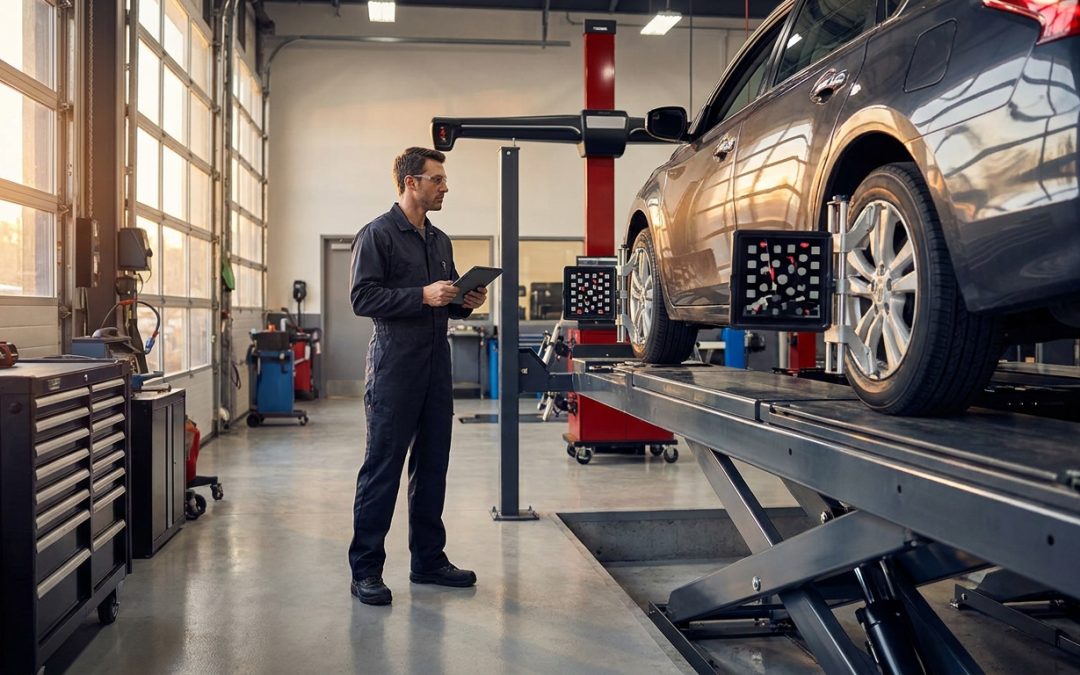
Wheel alignment is the process of adjusting your vehicle’s suspension angles so your tires meet the road at the correct orientation. It’s not about the tires themselves—it’s about the geometry of how your wheels are positioned relative to the vehicle and the road. Installing new tires replaces worn tread, but it doesn’t correct the underlying angles that may have caused the old tires to wear unevenly in the first place.
Many drivers confuse alignment with tire balancing. Balancing addresses vibration by ensuring the tire and wheel assembly spins evenly. Alignment addresses direction and contact patch—how the tire sits and rolls on the road. You can have perfectly balanced tires that still wear out quickly if the alignment is off.
Think of it like replacing shoes on someone with a limp. New shoes may feel better at first, but if the limp remains, the shoes will still wear unevenly. Similarly, if your vehicle’s alignment is out of spec, your new tires can develop feathering, edge wear, or cupping long before their expected mileage.
The Three Main Alignment Angles: Toe, Camber, and Caster
Toe describes whether the fronts of the tires point slightly inward (toe-in) or outward (toe-out) when viewed from above. Incorrect toe is one of the fastest ways to scrub tread off new tires because the tires are effectively being dragged slightly sideways as they roll.
Camber is the inward or outward tilt of the tire when viewed from the front. Too much negative camber (top of the tire leaning inward) can wear the inside shoulder quickly; too much positive camber can wear the outside shoulder. Camber issues are common after suspension wear or impacts.
Caster is the angle of the steering axis when viewed from the side. Caster affects straight-line stability and steering return. While caster typically doesn’t cause rapid tire wear on its own, it can contribute to pulling and steering feel issues—important considerations right after a new tire install.
Why Alignment Matters More with Modern Tires
Modern tire compounds and tread designs are engineered for efficiency, comfort, and precise handling. That precision cuts both ways: when alignment is correct, you get excellent performance and long tread life; when it’s off, the tire can wear in very specific (and expensive) patterns. Low rolling resistance tires, performance tires, and many EV-rated tires can be especially sensitive to misalignment because they are built to tight tolerances.
In practical terms, a small toe error that might have been “tolerable” years ago can now shave thousands of miles off a premium tire set. If you’ve invested in quality tires, alignment is often the best insurance you can buy.
Do You Need an Alignment After New Tires? The Real Answer
There’s no universal rule that says you must align your vehicle every time you buy tires. However, it’s frequently recommended because it protects your investment and verifies that your vehicle’s suspension geometry won’t ruin the new tread. Many tire shops strongly suggest alignment at installation for this reason: it’s easier to start a new tire life with known-good settings than to “wait and see” and risk uneven wear.
A good way to think about it is risk management. If your previous tires wore evenly, your car tracks straight, and you haven’t had impacts or suspension work, you may be able to skip an immediate alignment. But if you see any symptoms, have unknown maintenance history, or your old tires show uneven wear, alignment becomes a high-priority step—often immediately.
Also consider the cost comparison. An alignment typically costs a fraction of what you paid for four new tires. If alignment helps you get the full mileage out of the tires, it can easily pay for itself many times over.
When an Alignment Is Strongly Recommended (Nearly “Yes”)
You should strongly consider getting an alignment with new tires if any of the following are true:
- Your old tires show uneven wear (inside edge, outside edge, feathering, or bald spots).
- The steering wheel is off-center when driving straight.
- The vehicle pulls to one side on a level road.
- You recently hit a pothole, curb, or road debris hard enough to jolt the steering.
- You’ve replaced suspension or steering components (tie rods, ball joints, control arms, struts).
- You drive in areas with rough roads, frequent construction, or severe weather impacts.
If you’re nodding along to any of these, aligning after new tires is less about “optional service” and more about preventing immediate damage to the tire tread.
When You Might Be Able to Wait
There are cases where you can reasonably delay alignment—though it’s still smart to monitor closely. If your old tires wore evenly across all four corners, the vehicle drives straight, and you haven’t had any recent impacts or suspension changes, you may choose to skip alignment at install and reassess later.
In this scenario, a practical approach is to check your tire wear early. After 500–1,000 miles, inspect the tread across the width of each tire. If you see early shoulder wear or feathering, schedule an alignment immediately. Catching it early can prevent permanent wear patterns from forming.
That said, many drivers don’t routinely inspect tread, so “waiting” only works if you commit to checking and responding quickly.
How Misalignment Destroys New Tires (and What It Feels Like)
Misalignment is one of the leading causes of premature tire wear because it changes how the tire contacts the road. Instead of rolling smoothly with an even footprint, the tire may be forced to scrub or lean. That extra friction generates heat, increases rolling resistance, and grinds away rubber where it shouldn’t.
The frustrating part is that misalignment damage can happen quietly. Your car may feel “mostly fine,” yet the tires can lose thousands of miles of life without any dramatic warning. By the time you notice road noise or handling changes, the wear pattern may already be established.
Understanding the common wear patterns and driving symptoms helps you act before the damage is irreversible.
Common Wear Patterns Caused by Alignment Issues
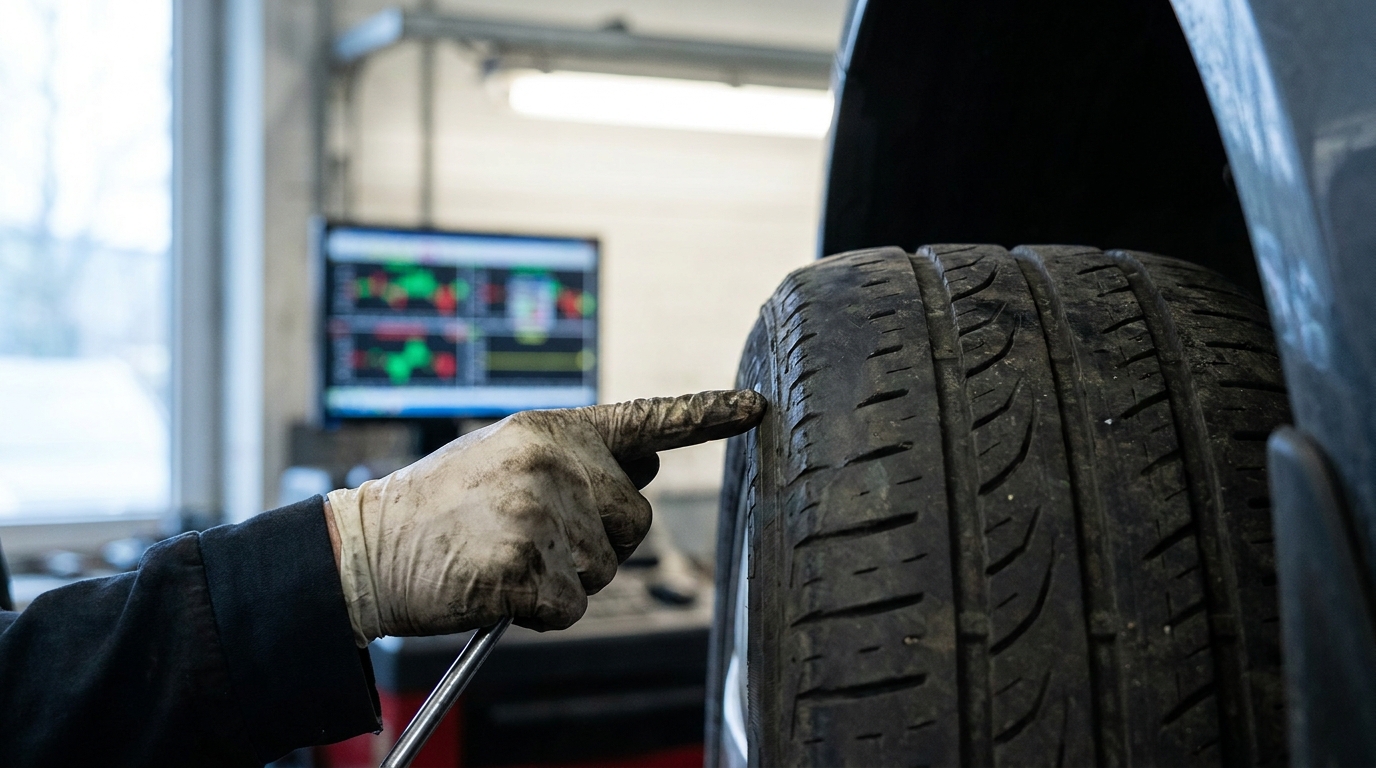
Inside or outside edge wear often points to camber problems. You’ll see one shoulder wearing faster than the rest, sometimes down to cords while the center tread still looks acceptable.
Feathering (tread blocks that feel sharp in one direction and smooth in the other) commonly indicates toe issues. You can sometimes feel it by running your hand lightly across the tread—carefully and only when the car is parked and the tire is cool.
Diagonal wear or irregular patches can occur when alignment issues combine with worn suspension components. In these cases, an alignment alone may not hold until the underlying parts are repaired.
Driving Symptoms You Shouldn’t Ignore
A vehicle that drifts or pulls can indicate misalignment, but it’s important to rule out road crown and tire pressure first. Many roads slope slightly for drainage, which can create a mild drift. However, if the pull is consistent across different roads, or the steering wheel is visibly off-center, alignment becomes more likely.
Another sign is steering that feels “twitchy” or unstable at highway speeds. Misalignment can reduce straight-line stability and make the vehicle require constant small corrections—fatiguing on long drives and potentially unsafe in wet or windy conditions.
Finally, pay attention to new vibrations or unusual tire noise after installing new tires. While vibration is often balance-related, irregular alignment wear can create a humming or growling sound as the tread develops uneven high and low spots.
Real-World Example: The Cost of Skipping Alignment
Imagine you replace a worn set of tires on a front-wheel-drive sedan. The old front tires are more worn on the inside edges, but the wear is subtle, so you don’t think much of it. You install four new tires and skip alignment to save money.
Within 6,000–8,000 miles, you notice the new front tires look “more worn than expected.” By 12,000 miles, the inside shoulders are significantly thinner, and the tires start to get noisy. An alignment check shows toe and camber are out of spec. Even if you align now, the damage pattern is already established, and the tires may never wear evenly again.
In many cases, that means replacing tires far earlier than planned—turning a small upfront service into a major long-term cost.
When Alignment After New Tires Is Non-Negotiable
Some situations make alignment after new tires essentially mandatory, because the likelihood of rapid, uneven wear is high. These scenarios involve known triggers that change suspension geometry or indicate the vehicle has been operating out of spec.
If you’re unsure whether your situation qualifies, use a simple rule: if anything has happened that could have changed the relationship between the suspension components and the wheels, schedule an alignment. It’s a verification step that prevents “mystery wear” later.
Below are the most common non-negotiable cases where alignment should be done immediately after tire installation (or even before, if possible).
1) Uneven Wear on the Old Tires
Old tires tell a story. If the previous set shows edge wear, feathering, or inconsistent tread depth across the tire, it’s a strong indicator the alignment was off. Installing new tires without correcting the cause is one of the fastest ways to waste a new set.
Ask the installer to show you the old tires and point out the wear pattern. If the wear is clearly uneven, alignment should be part of the same visit. This is especially important if you’re upgrading to a more expensive tire, where premature wear is a bigger financial hit.
Even if only two tires are being replaced, uneven wear on the old pair is a warning sign. Alignment affects all four corners, and a problem at one end of the vehicle can still influence overall handling and tire life.
2) Recent Suspension or Steering Repairs
Replacing tie rods, ball joints, control arms, struts, or other steering/suspension components can change alignment angles. In many cases, alignment is required to complete the repair properly. Skipping it can lead to pulling, off-center steering, and rapid tire wear.
Even small changes—like replacing a worn bushing—can alter geometry enough to matter. If you’ve had any front-end work done in the last few months and are now installing new tires, align the vehicle to ensure those new parts and new tires work together correctly.
Also note: if a shop performs suspension repairs and does not recommend alignment afterward, ask why. There may be exceptions, but most steering/suspension work warrants a follow-up alignment check.
3) Impact Events: Potholes, Curbs, and Road Hazards
Hitting a pothole at speed or clipping a curb can knock alignment out of spec instantly. The vehicle may still drive “okay,” but that doesn’t mean the angles are correct. Impacts can bend components slightly or shift adjustment points, especially on vehicles with lower-profile tires.
If you remember a specific impact event in the last year—particularly if it caused a jolt, bent a wheel, or triggered a tire bubble—assume alignment may be affected. New tires deserve a clean baseline.
For drivers in areas with rough winters, freeze-thaw potholes are a major alignment killer. It’s common for alignment to drift out of spec seasonally, even without a single dramatic impact.
4) Lift Kits, Lowering Springs, or Ride Height Changes
Any change to ride height changes suspension angles. Trucks and SUVs with leveling kits or lifts often require alignment to bring caster and camber back into acceptable ranges. Lowered cars can also experience increased negative camber, which may look “sporty” but can shred inner shoulders if not managed properly.
If you’ve modified suspension height and you’re installing new tires, alignment is essential. In some cases, you may also need additional hardware (like camber bolts or adjustable control arms) to achieve proper specs.
This is a scenario where a basic “toe and go” alignment isn’t enough. You want a thorough alignment from a shop experienced with modified vehicles, and you should ask for a printout of before-and-after measurements.
How to Decide: A Practical Checklist Before You Leave the Tire Shop
It’s easy to feel pressured at the counter: you came in for tires, and suddenly you’re being asked about alignment, road hazard protection, rotations, and more. The goal isn’t to say yes to everything—it’s to make the right decision based on evidence and risk.
Use the checklist below to make a confident call. If you can’t answer a question, that’s often a sign you should at least get an alignment inspection or measurement check.
Most importantly, remember that alignment is not just a “repair”; it’s a calibration. Starting your new tires with verified settings is one of the simplest ways to protect tread life.
Ask These Questions (and Look for These Clues)
- How did my old tires wear? Ask to see them. Uneven wear patterns are your strongest clue.
- Is the steering wheel centered on the test drive? If not, alignment is likely needed.
- Does the car pull on a flat road? A consistent pull is a red flag (after confirming tire pressure is correct).
- Have I hit a pothole or curb recently? If yes, alignment should be checked.
- Have I replaced any suspension parts? If yes, align.
- Do I do mostly highway driving? Highway miles magnify small alignment errors into big wear over time.
Quick At-Home Checks You Can Do in Minutes
Tire pressure check: Before blaming alignment, verify pressures match the door-jamb placard. Uneven pressure can mimic pull and cause uneven wear.
Visual tread inspection: Look at each tire’s inner and outer shoulders. If one side looks noticeably more worn—even early—schedule alignment.
Steering wheel position: On a straight, level road, the steering wheel should be centered. If it’s off, alignment is often the fix (though some vehicles may also need a steering angle sensor recalibration after alignment).
Alignment “Types” and What to Request
Not all alignments are equal. A four-wheel alignment checks and adjusts all wheels that are adjustable, and it’s the right choice for most modern vehicles. A front-end alignment (or “two-wheel”) may be insufficient on vehicles where rear alignment affects thrust angle and steering wheel centering.
When you buy new tires, request a four-wheel alignment check and ask for the before-and-after printout. This gives you proof of what was out of spec and what was corrected.
If the shop says certain angles are “not adjustable,” ask whether worn parts may be preventing adjustment. Sometimes the correct next step is replacing a bent component or worn bushing so the alignment can be set properly.
Best Practices to Protect New Tires After Alignment (or If You Skip It)
Alignment is a major piece of tire longevity, but it’s not the only one. To get the most from your new tires, you’ll want a simple maintenance routine that keeps wear even and catches problems early. This matters whether you align immediately or decide to wait.
Many premature tire replacements come down to preventable issues: underinflation, skipped rotations, ignored suspension wear, or driving for months with a pull. A few small habits can preserve tread life and keep your vehicle driving the way it should.
Use the strategies below as a practical roadmap for the first 1,000 miles and beyond.
1) Rotate on Schedule (and Don’t Guess the Interval)
Regular tire rotation helps even out wear differences between the front and rear axles. As a general guideline, rotate every 5,000–7,500 miles, or follow your vehicle manufacturer and tire maker recommendations.
If you drive a front-wheel-drive vehicle, the front tires often wear faster due to steering and power delivery. Rotations are especially important here to avoid replacing fronts early while rears still have plenty of tread.
Actionable tip: pair rotations with oil changes if your intervals align, and keep records. Documentation can also help with tire warranty claims if uneven wear occurs.
2) Keep Tire Pressure Consistent (Monthly, Not “When It Looks Low”)
Tire pressure changes with temperature, and being even a few PSI low can increase shoulder wear and heat buildup. Underinflation can also make a vehicle feel less stable, which some drivers mistakenly attribute to alignment.
Check pressure monthly and before long trips, using the door-jamb placard (not the tire sidewall) for the correct PSI. If you frequently haul loads or tow, ask your shop about appropriate pressure adjustments within safe limits.
Real example: a driver who runs 28 PSI instead of the recommended 35 PSI may see accelerated outer shoulder wear and reduced fuel economy—problems that can look like alignment issues but won’t be fixed by alignment alone.
3) Recheck Alignment if You Notice Any Change
Alignment isn’t “set it and forget it” forever. Road conditions, impacts, and component wear can gradually move angles out of spec. If your steering wheel becomes off-center again, the vehicle starts pulling, or you notice uneven wear developing, schedule a recheck.
If you purchased an alignment package or warranty from a reputable shop, use it. Many drivers forget they have free or discounted rechecks, which can save real money over the life of the tires.
Actionable tip: after any major pothole hit, do a quick visual inspection and pay attention to steering feel over the next few drives. If anything feels different, don’t wait months to investigate.
4) Don’t Ignore Worn Suspension Parts
Alignment adjustments won’t hold if suspension components are loose or worn. For example, worn tie rod ends can allow toe to change while driving, creating inconsistent handling and irregular wear even after a “successful” alignment.
If a shop recommends replacing parts before alignment, ask them to show you the play or wear. A good shop can demonstrate looseness and explain how it affects tire wear.
It’s often more cost-effective to fix the underlying parts now than to sacrifice a set of new tires to a problem that was already present.
Conclusion: The Smart Move After New Tires
So, do you need an alignment after getting new tires? Not always—but often enough that it should be a serious consideration, not an afterthought. New tires don’t correct misalignment, and if your vehicle’s angles are off, you can wear out a brand-new set far earlier than expected. Alignment protects your investment, improves handling, and helps ensure your tires deliver the mileage and performance you paid for.
The most reliable way to decide is to look at evidence: uneven wear on the old tires, pulling or off-center steering, recent pothole impacts, or any suspension repairs are strong indicators that alignment should be done immediately. Even if everything feels fine, a four-wheel alignment check and a before-and-after printout provide peace of mind and a clean baseline for your new tires.
Key takeaways:
- New tires don’t fix alignment—alignment fixes the angles that determine how tires wear.
- If your old tires wore unevenly or your car pulls, an alignment after new tires is highly recommended.
- Impacts and suspension work make alignment close to non-negotiable.
- Ask for a four-wheel alignment check and a before-and-after spec sheet.
- Protect your tires long-term with rotations, correct tire pressure, and prompt rechecks after impacts.
If you’re investing in new tires, aligning your vehicle is one of the simplest ways to make sure they last—and to keep your car driving straight, stable, and safe for every mile ahead.