You probably don’t think about brake fluid until a warning light appears, the pedal feels “off,” or a shop recommends a flush and you wonder if it’s just an upsell. Unlike brake pads—which give obvious clues when they’re worn—brake fluid quietly degrades over time. And because it’s hidden inside sealed lines and components, it’s easy to assume it lasts forever. The truth is more nuanced: a brake fluid flush isn’t always urgent, but it is often necessary if you want consistent braking, long component life, and protection against expensive hydraulic failures.
In this guide, we’ll break down what brake fluid actually does, why it deteriorates, what “flush” really means, and how to decide based on your driving, climate, and vehicle. You’ll also learn warning signs to watch for, how to read service intervals, what the process should include, and how to avoid paying for a flush you don’t need—or skipping one that could save your ABS module and calipers.
What Brake Fluid Does (and Why It Matters More Than You Think)
Brake fluid is the lifeblood of your braking system. When you press the brake pedal, you’re not directly clamping pads to rotors. Instead, you’re pushing a piston in the master cylinder that pressurizes brake fluid. That pressurized fluid travels through brake lines to calipers (or wheel cylinders in drum brakes), forcing pistons to apply the brakes at each wheel. The key point: braking relies on fluid being incompressible and stable under heat.
During normal driving, brakes generate significant heat—especially during highway exits, mountain descents, towing, or stop-and-go traffic. That heat transfers into the calipers and fluid. Brake fluid must maintain a high boiling point so it doesn’t vaporize. If it boils, gas bubbles form, and gas is compressible. The result can be a spongy pedal or, in severe cases, a pedal that goes to the floor with little stopping power.
Brake fluid also protects internal components. Modern braking systems include tight-tolerance parts: ABS hydraulic control units, solenoids, valves, and seals. Fluid contains corrosion inhibitors and additives designed to protect metal surfaces and rubber components. As the fluid ages, those protective properties diminish, increasing the risk of internal corrosion and sticking valves—issues that can be far more expensive than routine maintenance.
DOT 3, DOT 4, DOT 5.1: What the Ratings Mean
Most passenger vehicles use DOT 3 or DOT 4 brake fluid (sometimes DOT 5.1). These are glycol-based fluids that are hygroscopic, meaning they absorb moisture from the air over time. DOT 4 generally has a higher boiling point than DOT 3, which can be beneficial for heavier vehicles, performance driving, or frequent braking on hills. DOT 5 (silicone-based) is different and typically not used in ABS-equipped daily drivers; it’s not compatible with many systems designed for glycol-based fluids.
The important takeaway isn’t just the label—it’s that glycol-based fluids inevitably take on moisture, and moisture is the main reason flushes exist.
Why Brake Fluid Degrades: Moisture, Heat, and Contamination
If your brake system is “sealed,” how does moisture get in? It’s not perfectly sealed. Brake fluid reservoirs are vented to allow fluid level changes as pads wear. Rubber hoses are also slightly permeable over time. Even normal service—like opening the reservoir cap—can introduce humidity. That moisture becomes mixed into the fluid, lowering its boiling point and increasing corrosion risk.
As water content rises, the fluid’s wet boiling point drops. That matters because real-world brake fluid is rarely “dry.” A typical fluid may reach 2–3% water content after a few years depending on climate and driving conditions. At that point, the fluid can boil under heavy braking where it otherwise wouldn’t. This is why some drivers experience brake fade on a mountain descent even with good pads and rotors.
Heat accelerates degradation. Repeated high-temperature cycles can break down additives and oxidize the fluid. In addition, microscopic rubber particles from seals and hoses can contaminate the fluid. Metal wear particles can also circulate. Over time, the fluid can darken—though color alone isn’t a perfect indicator because some fluids darken naturally and some contamination is not visible.
Real-World Example: The “Spongy Pedal” After a Long Descent
Consider a common scenario: a family SUV heads into the mountains for a weekend trip. Brakes feel normal around town. But after a long downhill stretch using the brakes frequently, the pedal starts to feel soft, requiring more travel to slow down. The driver pulls over; after cooling, the brakes feel better again. That’s a classic sign that the fluid’s boiling point may be too low—often due to moisture-laden fluid—allowing localized boiling at the calipers. A flush doesn’t just “refresh” fluid; it restores boiling point safety margin.
Corrosion: The Slow, Expensive Problem
Moisture doesn’t only affect boiling point. It also promotes corrosion inside steel lines, calipers, and the ABS hydraulic unit. Corrosion can lead to stuck caliper pistons, uneven braking, dragging brakes, or internal leaks. ABS modules can develop sticky valves or pump issues. These failures may show up years later and can be costly—often hundreds to thousands of dollars—compared with the cost of periodic fluid service.

Brake Fluid Flush vs. Brake Bleed: What You’re Actually Paying For
Not all “brake fluid services” are the same. A brake bleed typically refers to removing air from the system—often after a repair such as replacing a caliper, brake hose, or master cylinder. During a bleed, some fluid is exchanged, but the primary goal is eliminating air bubbles that cause a soft pedal.
A brake fluid flush is a more complete fluid exchange. The goal is to replace old, moisture-contaminated fluid throughout the system with fresh fluid. A proper flush removes most of the old fluid from the lines, calipers, and ABS unit (as much as practical), not just what’s in the reservoir. When done correctly, it restores corrosion inhibitors and raises the boiling point closer to the fluid’s “dry” specification.
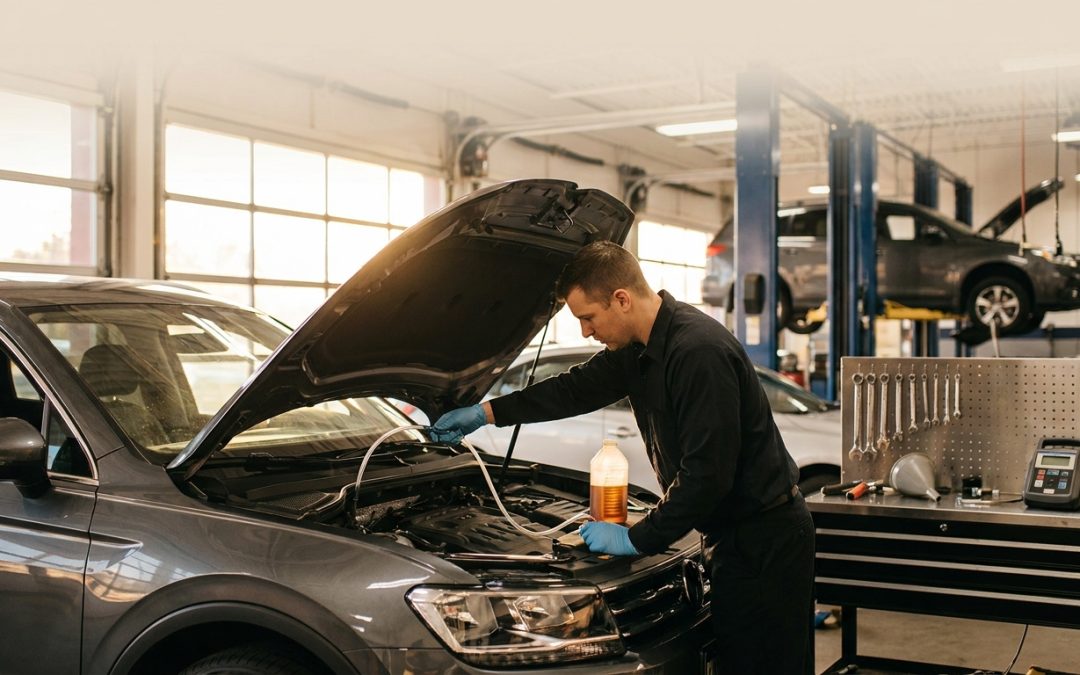
Because terminology varies by shop, it’s smart to ask what the service includes. A quality flush should involve extracting old fluid, refilling with new fluid of the correct DOT rating, and bleeding each wheel until clean fluid runs through—often measured by color change, volume, or moisture reading.
What a Proper Brake Fluid Flush Should Include
While exact procedures vary by vehicle, a professional flush typically includes:
- Verification of correct fluid type (DOT 3, DOT 4, etc.) per manufacturer specification.
- Inspection for leaks and checking brake hose condition before pressurizing or bleeding.
- Removal of old reservoir fluid (often with a vacuum tool) to reduce immediate contamination.
- Systematic bleeding at each wheel in the correct order until fresh fluid appears.
- ABS considerations: some vehicles require scan-tool activation to cycle ABS valves for a complete exchange after certain repairs or if air is suspected in the ABS unit.
- Pedal feel and road test to confirm consistent braking and proper pedal height.
If a shop simply “tops off” the reservoir or swaps a small amount of fluid without bleeding at the wheels, that’s not a flush. It may slightly improve the reservoir’s fluid condition, but it won’t meaningfully replace the degraded fluid in the calipers—where heat and moisture effects are often greatest.
How Much Fluid Should Be Exchanged?
Most vehicles require roughly 1–2 quarts (about 1–2 liters) for a thorough flush, though it varies by system size. If you’re quoted a flush that uses only a few ounces, ask questions. The goal is to push enough new fluid through each bleeder to ensure the old fluid is displaced. Some shops use moisture meters and document readings before and after, which is a good sign of a process-driven service rather than a generic add-on.
Is a Brake Fluid Flush Really Necessary? How to Decide
For many drivers, the honest answer is: yes, eventually—and often sooner than you expect. Brake fluid doesn’t “wear out” like pads, but it does absorb moisture and lose protective additives. Most manufacturers treat brake fluid as a time-based maintenance item, not mileage-based. It’s common to see recommendations around every 2–3 years, though some brands specify longer intervals and some driving conditions warrant shorter ones.
The best decision is based on three factors: manufacturer interval, measured fluid condition, and your real-world driving environment. If your owner’s manual specifies a brake fluid replacement interval, treat it like you would engine oil intervals—there’s engineering behind it. If there’s no clear interval, testing the fluid’s moisture content or boiling point provides objective data.
Climate plays a major role. Humid regions tend to accelerate moisture absorption. Vehicles that sit for long periods can also accumulate moisture, because the fluid has time to equalize with humidity through venting and hose permeability. On the other hand, a garage-kept vehicle in a dry climate that’s driven gently may go longer while still maintaining acceptable moisture levels—though it’s still not “lifetime.”
Common Manufacturer Recommendations (General Guidelines)
While you should always defer to your specific vehicle’s maintenance schedule, many modern vehicles fall into these general patterns:
- Every 2 years: common for European brands and performance-oriented systems.
- Every 3 years: a frequent recommendation for many daily drivers.
- Every 30,000–60,000 miles: sometimes listed as an alternative guideline, though time is usually the more important factor.
If you tow, drive in mountains, commute in heavy traffic, or drive a heavier vehicle (large SUV, truck, EV with higher curb weight), you’re generating more brake heat and often benefit from staying on the conservative end of the interval.
When You Can Be Confident It’s Not Needed (Yet)
There are situations where a flush may not be immediately necessary. If your vehicle is relatively new, you’re within the manufacturer’s recommended interval, and a moisture test shows low water content, you can reasonably defer. Likewise, if you recently had major brake work performed and the shop documented a full fluid exchange with fresh DOT-spec fluid, another flush soon after would be redundant.
That said, “the fluid looks fine” is not strong evidence by itself. Moisture contamination isn’t always visible. If you’re deciding whether to postpone, ask for a moisture reading or boiling point test and keep the results with your maintenance records.
Warning Signs of Old Brake Fluid (and What They Mean)
Brake fluid degradation often has subtle symptoms, and many drivers attribute them to pads or rotors. Recognizing the difference can save time and money. A flush won’t fix every brake issue, but it can address specific complaints—especially those related to pedal feel under heat or inconsistent braking performance.
One classic sign is a brake pedal that feels spongy or requires more travel than it used to, especially after repeated braking. Air in the system can cause similar symptoms, but moisture-laden fluid can mimic it under heat because boiling creates compressible vapor. Another sign is braking performance that seems fine most of the time but degrades during long downhill braking or aggressive stop-and-go driving.
In some cases, old fluid contributes to uneven braking or caliper issues. Corrosion and contamination can cause caliper pistons to retract poorly or stick, leading to dragging brakes, premature pad wear, or pulling to one side. While these issues can also be caused by hardware problems, old fluid increases the likelihood of internal sticking and seal wear.
Symptoms Checklist
- Spongy or soft pedal that worsens with repeated braking
- Longer stopping distances under heavy braking conditions
- Brake fade on hills (pedal travel increases; braking weakens)
- ABS activation feels unusual or occurs more easily than expected (not always fluid-related, but worth investigating)
- Dark, cloudy fluid in the reservoir (a clue, not a definitive test)
- Recent brake component replacement without a full fluid exchange (air/moisture may remain)
Practical Tip: Ask for a Moisture Test
Many shops can test brake fluid moisture content with an electronic tester. As a rough guideline, fluid above about 3% water content is often considered due for replacement, because boiling point reduction becomes significant and corrosion risk increases. If a shop recommends a flush, requesting a test result makes the decision more objective and helps you track trends over time.
If you’re a “data person,” ask the shop to note the reading on your invoice. That way, you can compare at your next service and see how quickly your fluid absorbs moisture in your environment.
What a Flush Costs, How Often to Do It, and How to Avoid Common Mistakes
Brake fluid flush pricing varies by region and vehicle complexity, but it’s typically far less than the cost of replacing an ABS module, master cylinder, or multiple calipers damaged by corrosion. Think of it as low-cost insurance for a high-stakes system. The key is ensuring you’re paying for a complete, correct procedure—not a partial exchange marketed as a flush.
As a general planning number, many drivers can expect a professional brake fluid flush to be in the neighborhood of a routine maintenance service (often comparable to a mid-tier oil service), with higher costs possible for vehicles requiring scan-tool ABS cycling or more labor-intensive bleeding procedures. The exact number matters less than the value: restoring boiling point margin, improving pedal consistency, and reducing long-term corrosion risk.
Frequency should be guided by your owner’s manual first, then adjusted for your driving. If you frequently drive in wet/humid conditions, tow, or descend long grades, consider a shorter interval. If you drive gently in a dry climate and testing shows low moisture content, you may be able to extend—while still treating brake fluid as a scheduled maintenance item rather than a “forever fluid.”
DIY vs. Professional: What to Know Before You Decide
Some experienced DIYers flush brake fluid at home using a pressure bleeder, vacuum bleeder, or the two-person pedal method. It can be done safely, but it requires attention to detail. Brake fluid damages paint, absorbs moisture quickly when exposed to air, and must be kept clean. Introducing air into the system can create a dangerous pedal feel and may require additional bleeding or scan-tool procedures on some vehicles.
For many drivers, professional service is worth it because the shop can ensure correct bleeding order, manage ABS requirements, dispose of old fluid properly, and verify pedal feel and braking performance. If you do choose DIY, use only fresh, sealed fluid of the correct DOT rating and avoid mixing types unless the manufacturer explicitly allows it.
Common Mistakes to Avoid
- Mixing incompatible fluids: Never add DOT 5 silicone fluid to a DOT 3/4 system.
- Using old, opened fluid: Brake fluid absorbs moisture from the air; an opened bottle may already be compromised.
- Only changing reservoir fluid: This doesn’t replace the old fluid in calipers and lines where it matters most.
- Letting the reservoir run low during bleeding: This can introduce air into the master cylinder and ABS unit.
- Overlooking leaks: If fluid is low due to a leak, a flush won’t fix the underlying safety issue.
Actionable Advice: Build a Simple Brake Fluid Plan
If you want an easy, practical approach that works for most vehicles:
- Check your owner’s manual for a brake fluid replacement interval.
- At every tire rotation or oil service, ask for a quick brake inspection and have the shop visually check the fluid level and condition.
- Every 2–3 years, either replace the fluid or test moisture content and decide based on results.
- After major brake work (calipers, hoses, master cylinder), confirm whether a full fluid exchange was performed and documented.
Conclusion: The Real Value of a Brake Fluid Flush
A brake fluid flush isn’t a gimmick, but it also shouldn’t be a mystery service that gets sold without evidence. Brake fluid is critical to safe, consistent braking, and it naturally degrades as it absorbs moisture and cycles through heat. Over time, that reduces boiling point, increases the risk of brake fade, and accelerates internal corrosion—especially in expensive components like ABS hydraulic units and calipers.
The best way to answer “Is it really necessary?” is to combine your manufacturer’s interval with real-world conditions and, when possible, a moisture test. If you drive in humid climates, tow, travel in mountains, or keep vehicles for many years, staying on schedule with brake fluid service is one of the smartest ways to reduce long-term repair costs and maintain confident pedal feel.
Key takeaways: brake fluid doesn’t last forever; a true flush replaces fluid throughout the system (not just the reservoir); moisture is the enemy; and a simple maintenance plan—based on time, testing, and driving conditions—helps you avoid both unnecessary services and preventable brake system failures. If you’re unsure where your vehicle stands, schedule a brake inspection and ask for a documented brake fluid condition check so you can make a clear, informed decision.