

A tire bulge can look like a small cosmetic flaw—until it becomes a sudden blowout on the highway. Those “bubbles” on the sidewall or tread aren’t harmless: they’re usually a sign that the tire’s internal structure has been damaged, and that the tire is no longer able to safely contain pressure under real-world driving loads. If you’ve ever noticed a lump on your tire and wondered whether you can “just drive on it for a while,” this guide explains what’s happening, why it’s risky, and exactly what to do next.
What a Tire Bulge or Bubble Really Means
A tire is not just a rubber ring filled with air. Modern tires are engineered structures made of multiple layers—rubber compounds, steel belts, fabric plies, and reinforcing cords—bonded together to hold shape, carry vehicle weight, and manage heat. A bulge or bubble typically indicates that one or more of those internal layers has been compromised, allowing air pressure to push outward where the tire is no longer properly supported.
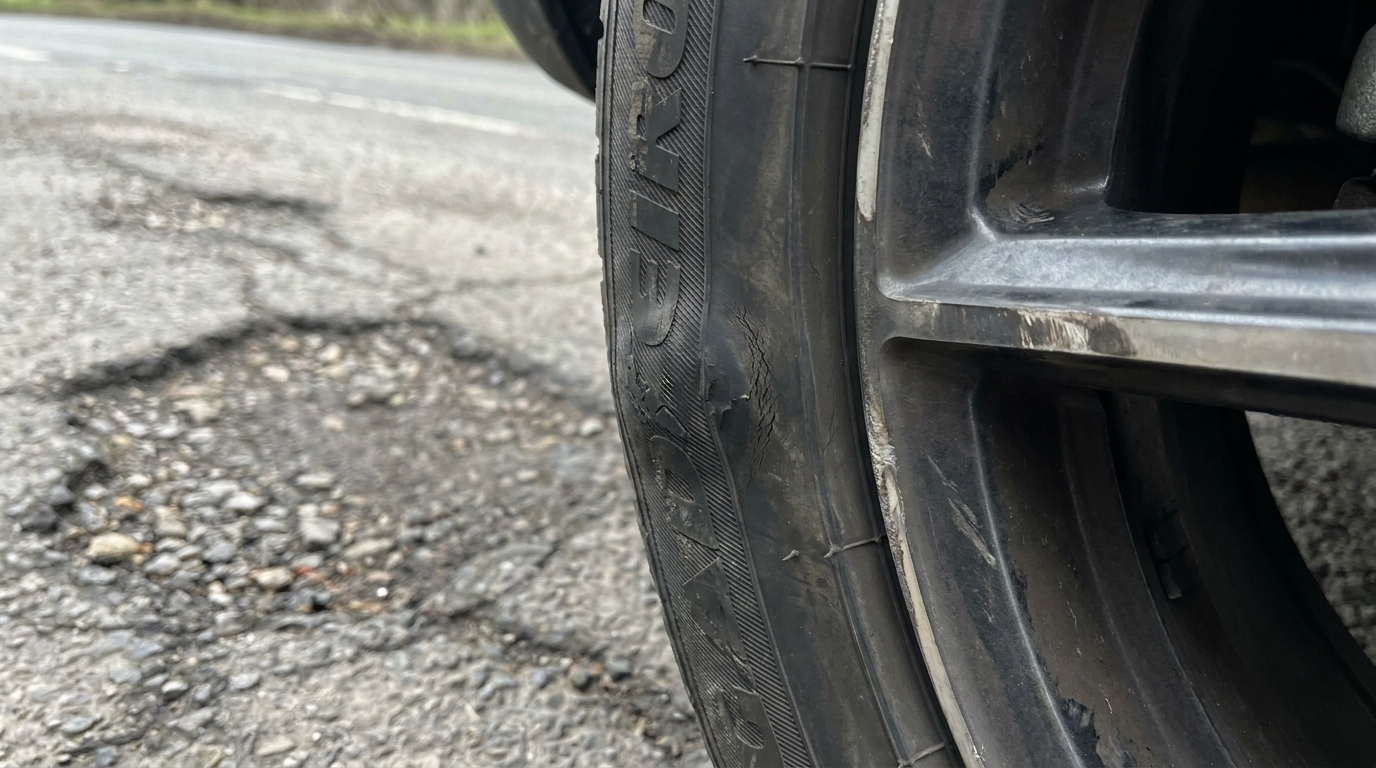
Most bulges appear on the sidewall because the sidewall is more flexible and has fewer reinforcing belts than the tread area. When an internal cord breaks or separates, the sidewall becomes a weak spot. The air pressure inside the tire forces the rubber outward, creating a visible lump. This is not “extra rubber”—it’s the tire failing from the inside out.
It’s important to distinguish between a normal tire shape variation and a true bulge. Some tires may show minor molding marks, slight waviness, or cosmetic irregularities that don’t change over time. A dangerous bulge, on the other hand, is usually localized (a single spot), protrudes noticeably, and may seem to grow. If you can see it clearly from a few feet away, treat it as a serious warning.
Real example: a driver clips a deep pothole at 45 mph. The wheel survives, but the tire sidewall takes a sharp pinch between the rim and the pothole edge. The tire looks “fine” that day. A week later, a bubble appears. That delayed symptom is common—internal cords can break instantly, while the visible bulge develops as the damaged area flexes and the materials separate further.
Bulge vs. Bubble: Is There a Difference?
People use “bulge” and “bubble” interchangeably. In practice, both describe an outward deformation caused by internal structural damage. “Bubble” is often used for round, balloon-like protrusions; “bulge” can describe a longer or more irregular swelling. Either way, the underlying concern is the same: the tire’s integrity is compromised.
Another term you may hear is sidewall separation or belt separation. Sidewall separation typically produces a sidewall bubble; belt separation can create tread-area distortions, vibrations, or a raised area in the tread. Both conditions can lead to rapid failure.
Why Tire Bulges and Bubbles Are Dangerous
A bulging tire is dangerous because it concentrates stress into a weakened area that wasn’t designed to handle it. Every rotation of the wheel flexes the sidewall. Under normal conditions, that flexing is controlled and distributed. With a bulge, flexing becomes excessive at the damaged spot, generating heat and accelerating the breakdown of the surrounding materials.
The most serious risk is a sudden blowout. When the weakened area can no longer contain pressure, the tire can rupture quickly—especially at higher speeds where heat and centrifugal forces increase. A blowout can cause an abrupt loss of control, particularly on the front tires (loss of steering) or during cornering and braking. Even with modern stability systems, a high-speed blowout is a hazardous event.
Bulges also compromise handling and braking. The tire’s contact patch becomes inconsistent, which can reduce grip and create unpredictable behavior. You may notice pulling, wandering, or a “thumping” sensation. In emergency maneuvers—avoiding debris, braking hard, or changing lanes—the tire may not respond as expected.
There’s also a secondary danger: damage to the wheel and suspension. If the tire fails and the rim contacts the road, you can destroy the wheel, damage brake components, and potentially harm suspension parts. That turns a tire replacement into a far more expensive repair.
Heat, Speed, and Load Make It Worse
Three factors dramatically increase the risk of a bulged tire failing: heat, speed, and load. Heat builds in a tire through flexing, friction, and ambient temperature. A damaged sidewall flexes more, generating more heat, which weakens rubber bonds and accelerates separation.
Speed matters because the tire cycles through flexing more times per minute and because centrifugal forces can exacerbate separations. A bubble that “seems fine” at 25 mph around town may fail at 70 mph on the freeway.
Load matters because the tire’s sidewall carries more stress when you have passengers, cargo, or are towing. A bulge is already a weak point; added load pushes it closer to failure. This is why a bulge discovered before a road trip should be treated as a “do not drive” situation.
Real-World Scenario: The Highway Blowout
Consider a common scenario: a driver notices a small sidewall bubble but decides to “watch it” and keep driving for a few days. During a highway commute, the tire heats up. The bubble grows slightly with temperature and pressure changes. A sudden lane change increases sidewall flex. The weakened area ruptures, the tire deflates rapidly, and the vehicle swerves. Even if the driver regains control, the tire and wheel are often destroyed.
This is why professionals treat sidewall bulges as urgent. Unlike a slow leak or worn tread, a bulge can fail without much warning.
Common Causes: How Bulges and Bubbles Form
Most tire bulges are caused by impact damage. When a tire hits something hard—potholes, curbs, road debris, expansion joints—the sidewall can be pinched between the obstacle and the wheel rim. That pinch can break internal cords or cause ply separation. The outside rubber may look intact, but the internal structure is compromised.
Potholes are the number-one culprit in many areas, especially after winter freeze-thaw cycles. A deep pothole hit at speed can damage both the tire and the wheel. Sometimes the wheel bends; other times it doesn’t, and the tire takes the brunt of the impact. Curbs are another frequent cause, particularly during parking maneuvers where the sidewall is scraped and pinched.
Manufacturing defects are less common but possible. A tire may have a weak bond between layers or a flaw in the cord structure. In those cases, a bulge can appear without a clear impact event. If a tire bulges early in its life and you can’t recall a major hit, it’s worth discussing with the tire retailer or manufacturer, as warranties may apply.
Underinflation can contribute indirectly. A low tire flexes more, heats up more, and is more vulnerable to pinch damage during impacts. Overloading the vehicle can have a similar effect by increasing sidewall stress. While underinflation alone doesn’t usually “create” a bubble, it makes the tire more susceptible to the kind of internal damage that leads to one.
Impact Damage: The “Pinch” That Breaks Cords
Think of the tire sidewall as a reinforced membrane. When it’s pinched sharply, the cords can snap like strands in a rope. Once cords break, the remaining cords must carry the load, and the damaged area begins to deform. Over time, that deformation becomes visible as a bulge.
A key detail: you may not see immediate external damage. The sidewall rubber can rebound, hiding the injury. That’s why it’s smart to inspect tires after a hard pothole hit, even if the tire didn’t go flat.
Road Hazards and Debris
Not all hazards are potholes. Hitting a chunk of metal, a sharp-edged rock, or even a broken piece of concrete can create a localized impact that damages internal layers. In some cases, the hazard can cut the tire and also weaken the internal structure, leading to a bulge near the injury.
If you feel a sudden jolt followed by vibration or noise, pull over when safe and inspect the tires. Driving “just a few more miles” on a newly damaged tire can worsen the separation and increase the chance of failure.
How to Identify a Bulge Early (Before It Fails)
Early detection can prevent a dangerous situation. The challenge is that tire bubbles can start small and may be on the inner sidewall, where you won’t see them during casual walk-bys. Building a quick tire inspection into your routine—especially before long drives—can help you catch issues before they become emergencies.
Start with a visual check. Turn the steering wheel fully left and right to expose more of the front tire sidewalls. Look for any localized swelling, a spot that looks “puffed out,” or an area where the sidewall lettering appears distorted. For rear tires, you may need to crouch and look along the sidewall line to spot an abnormal protrusion.
Next, pay attention to driving symptoms. A bulge can cause vibrations, a rhythmic thumping, or a steering wheel shimmy—often mistaken for an out-of-balance tire. The key difference is that balancing won’t fix a structural defect. If you feel a new vibration after hitting a pothole, inspect immediately.
Finally, consider tactile inspection with caution. If the tire is cool and the vehicle is safely parked, you can gently run your hand along the sidewall to feel for a lump. Do not kneel close to a bulging tire for long periods, and do not press hard on the bulge. If the tire is severely compromised, you want to minimize time near it and get professional help.
Where to Look: Inner Sidewalls Matter
Many drivers only see the “outer” sidewall. But impacts can damage either side, and inner-side bulges are common—especially if the pothole hit occurred near the centerline of the vehicle. If you suspect damage, a shop can lift the vehicle and inspect the inner sidewall properly.
Actionable tip: during routine oil changes or tire rotations, ask the technician to specifically check for sidewall bubbles on the inner faces. It takes seconds and can catch a problem you’d never see.
Signs That Demand Immediate Attention
- Any sidewall bulge, even small
- Bulge that appears to be growing over days
- New vibration after a pothole/curb impact
- Visible cracking near the bulge
- Repeated air loss plus a lump or deformation
If you see any of these, treat the tire as unsafe for normal driving.
What to Do If You Find a Bulge or Bubble
The safest response to a tire bulge is simple: replace the tire as soon as possible. A bulge indicates internal structural damage, and that damage cannot be reliably repaired. Sidewall repairs are not considered safe for passenger vehicles because the sidewall flexes constantly, and patched areas can’t restore original strength.
If you discover a bulge at home or in a parking lot, avoid highway speeds. Ideally, do not drive on it at all—especially if the bulge is large, the tire is losing pressure, or you’re carrying passengers. If you must move the vehicle a short distance to a safer location or a nearby shop, drive slowly, avoid sharp turns and hard braking, and keep the distance minimal.
If the bulge is severe or you’re uncertain, use roadside assistance. A tow is cheaper than the consequences of a blowout. This is particularly true if the bulge is on a front tire, where a sudden failure can have a bigger impact on steering control.
At the tire shop, ask for a full inspection of the wheel and suspension as well. The same impact that damaged the tire may have bent the wheel, affected alignment, or damaged a strut, control arm, or tie rod. Replacing the tire without checking alignment can lead to rapid, uneven wear on the new tire.
Can You Repair a Tire Bubble?
In almost all cases, no. A proper tire repair is generally limited to certain tread-area punctures (like a nail) within the repairable zone and with no internal structural damage. A sidewall bubble is structural damage by definition. Plugs, patches, sealants, and “sidewall repair kits” do not restore the tire’s integrity and can create a false sense of safety.
If someone offers to “patch the bubble,” treat that as a red flag. Reputable tire professionals follow industry repair standards that do not allow sidewall structural repairs for regular road use.
Do You Need to Replace One Tire or Two (or All Four)?
It depends on your vehicle type, drivetrain, and tread depth. For a typical front-wheel-drive or rear-wheel-drive vehicle, you can often replace just the damaged tire if the remaining tires have similar tread depth and are in good condition. However, if the other tire on the same axle is significantly more worn, replacing in pairs can help maintain balanced handling and traction.
For all-wheel-drive (AWD) vehicles, tread depth differences can matter more. Many AWD systems are sensitive to mismatched tire diameters, which can stress the drivetrain. If one tire is replaced and its tread depth is much greater than the others, you may need to replace multiple tires or have the new tire shaved to match. Check your owner’s manual and ask a trusted tire shop for guidance.
Actionable tip: measure tread depth before buying. If the difference between the new tire and existing tires is large (often around 2/32″ to 4/32″ depending on vehicle recommendations), consider replacing more than one tire to protect drivetrain and ensure predictable handling.
Prevention: How to Reduce the Risk of Bulges and Blowouts
While you can’t control every road hazard, you can dramatically reduce your risk of tire bulges by focusing on three areas: proper inflation, cautious driving around impacts, and routine inspection. Most bulges come from a single event—one hard hit—so prevention is about reducing both the likelihood and the severity of those impacts.
Start with tire pressure. Underinflated tires are more vulnerable to pinch damage because the sidewall flexes more and the tire compresses more easily against the rim. Check pressure at least monthly and before long trips, using the vehicle’s door-jamb placard pressure (not the maximum pressure printed on the tire sidewall). Temperature swings can change pressure significantly, so seasonal checks matter.
Driving habits also play a major role. If you see a pothole, slow down safely before impact if you can’t avoid it. Avoid braking hard at the last moment right as you hit a pothole—hard braking shifts weight forward and can increase the force on the front tires. If you must hit a pothole, it’s generally safer to reduce speed in advance and maintain a steady path rather than swerving suddenly into another lane.
Finally, keep your suspension and alignment in good condition. Worn shocks or struts allow the tire to bounce more, increasing impact forces. Poor alignment can cause uneven wear and make the tire more susceptible to damage. Regular rotations help as well, because they even out wear patterns and keep tires performing consistently.
Practical Habits That Help
- Check pressure monthly and before road trips
- Slow down for rough roads and construction zones
- Avoid curb impacts when parking (take wider turns, go slowly)
- Inspect tires after a hard hit—don’t wait for symptoms
- Rotate tires on schedule to maintain consistent wear
Choosing Tires and Wheels for Your Roads
If you regularly drive on pothole-prone streets, tire selection can make a difference. Low-profile tires (short sidewalls) often provide sharper handling, but they have less cushioning and can be more vulnerable to impact damage. A slightly taller sidewall can offer more protection against pothole pinches, depending on your vehicle’s fitment options.
Wheel size matters too. Upsizing wheels for aesthetics can reduce sidewall height and increase risk on rough roads. If you’re considering a wheel upgrade, balance looks with durability. For many daily drivers, a modest wheel size with a healthier sidewall is a practical choice.
Actionable tip: if you’ve had repeated sidewall bubbles in your area, ask a tire professional about moving to a more robust tire model (stronger sidewall construction) or adjusting wheel/tire sizing within safe, manufacturer-appropriate limits.
Conclusion: Treat Tire Bulges as a Safety Emergency
A tire bulge or bubble is not a cosmetic issue—it’s a visible sign of internal structural damage. The weakened area can overheat, grow, and fail suddenly, especially at highway speeds or under heavy load. That’s why sidewall bulges are strongly associated with blowouts and loss of control incidents.
The most important takeaway is simple: if you see a bulge, plan to replace the tire immediately. Do not rely on patches, plugs, or sealants, and don’t assume you can “drive on it for a while.” If you must move the vehicle, keep speeds low and distance short, and consider towing for maximum safety.
Prevention is also within reach. Maintain correct tire pressure, slow down for rough surfaces, avoid curb strikes, and inspect your tires after impacts. Pair that with regular rotations and alignment checks, and you’ll reduce the odds of ever seeing a bubble in the first place.
Key takeaways:
- A bulge usually means broken cords or separation inside the tire.
- Bulges can lead to sudden blowouts—especially with heat, speed, and load.
- Sidewall bubbles are not safely repairable; replacement is the right fix.
- Inspect after pothole hits and keep tires properly inflated to prevent damage.
If you’re unsure whether what you’re seeing is a true bulge, err on the side of caution and have the tire inspected right away. When it comes to tire structure, “maybe” is not a safe place to live.