

You can usually “feel” when a tire is low or a brake pad is worn, but oil problems often stay quiet—until they get expensive. Waiting too long for an oil change doesn’t just mean dirtier oil; it can trigger a chain reaction inside your engine that affects performance, fuel economy, reliability, and even safety. The tricky part is that modern engines can still run smoothly for a while on neglected oil, which makes it easy to assume everything is fine—right up to the moment it isn’t.
Engine oil is more than a lubricant. It’s a cooling aid, a cleaning agent, a corrosion inhibitor, and a hydraulic fluid that supports systems like variable valve timing. When oil breaks down, those jobs don’t get done properly. The result can range from minor annoyances like rough idle to major failures like seized bearings or a clogged oil pickup that starves the engine.
In this guide, we’ll break down what actually happens when you push oil changes too far, why it happens, what warning signs to watch for, and how to build a realistic maintenance plan. You’ll also get practical tips and real-world examples so you can make decisions that protect your engine—and your wallet.
1) What engine oil does—and why time and miles matter
Oil’s primary job is to form a thin film between moving metal surfaces—like crankshaft bearings, cam lobes, and piston rings—so they don’t grind against each other. That film prevents wear, reduces heat from friction, and helps the engine operate efficiently. Without a stable oil film, parts that are designed to “float” on lubrication begin to touch, scuff, and overheat.
But oil also cleans. As the engine runs, combustion byproducts (soot, acids, fuel dilution) and tiny metal particles enter the oil. The oil carries contaminants to the filter, which traps larger particles. Over time, the filter loads up and the oil’s detergent and dispersant additives get used up. When that happens, sludge can start forming—especially in engines that do lots of short trips where moisture and fuel don’t fully evaporate.
Time matters as much as mileage because oil degrades even when you don’t drive far. Heat cycles, condensation, and oxidation slowly change the oil’s chemistry. If a vehicle sits for long stretches or only drives short distances, moisture can accumulate and acids can build, accelerating corrosion and sludge formation. That’s why many manufacturers specify both a mileage interval and a time interval (for example, “every 7,500 miles or 12 months”).
Conventional vs. synthetic oil: what’s different?
Synthetic oils generally resist heat breakdown and oxidation better than conventional oils, and they flow better in cold temperatures. That’s why many newer vehicles use synthetic or synthetic blends. However, “synthetic” isn’t a free pass to ignore intervals. Additives still deplete, filters still clog, and severe driving conditions can still shorten the safe service window.
Also, not all “synthetic” oils are the same. The correct viscosity (like 0W-20 or 5W-30) and specification (such as API SP, ILSAC GF-6, or manufacturer-specific approvals) matter. Using the wrong type can reduce protection and may affect warranty coverage on newer vehicles.
Severe driving: the hidden interval shortener
Many drivers unknowingly fall into “severe service” categories: frequent short trips, stop-and-go traffic, towing, dusty roads, extreme heat or cold, or lots of idling. These conditions raise oil temperatures, increase contamination, and can cause fuel dilution—meaning raw fuel mixes with oil, thinning it and weakening the protective film. If your driving looks like this, your safe oil-change interval may be significantly shorter than the optimistic number on a sticker or dashboard reminder.
2) What happens inside the engine when oil gets too old
When oil stays in service too long, it doesn’t simply get “dirty.” It changes physically and chemically. Viscosity can drift (either thickening from oxidation and soot or thinning from fuel dilution), additives get consumed, and the oil’s ability to hold contaminants in suspension declines. In practical terms, the oil film becomes less stable exactly where you need it most: high-load, high-heat contact points like bearings and cam surfaces.
As protection drops, friction rises. That extra friction becomes extra heat, which accelerates oil breakdown even further—creating a feedback loop. You may not notice this day-to-day, but over thousands of miles it can lead to measurable wear. Bearings can develop scoring, piston rings can lose sealing efficiency, and timing components can stretch or wear faster.
Another major issue is sludge and varnish. Sludge is a thick, gel-like buildup that can restrict oil flow. Varnish is a hard, lacquer-like deposit that can gum up small oil passages and moving parts. Modern engines often have tight tolerances and small oil galleries; deposits that might have been “tolerable” in older engines can cause real problems now, including variable valve timing solenoid issues and turbocharger oil supply restrictions.
Oil starvation: the fastest route to catastrophic damage
One of the most dangerous outcomes of neglected oil is oil starvation—when the engine doesn’t receive enough oil pressure or volume. This can happen if sludge clogs the oil pickup screen in the oil pan, if the oil thickens excessively in cold weather, or if the oil level drops due to consumption and you don’t top it off. Oil starvation can damage rod bearings and main bearings quickly, sometimes in minutes under load.
A common real-world scenario: a vehicle goes 12,000–15,000 miles between changes, the oil thickens and deposits build, then a cold morning start causes sluggish flow. The oil pump struggles to pull oil through a partially clogged pickup, pressure lags, and the top end runs dry briefly. Repeated starts like this can wear cam journals and lifters, leading to ticking noises and, eventually, serious repair bills.
Turbocharged engines: higher stakes, higher heat
If your engine is turbocharged, oil health is even more critical. Turbochargers spin at extremely high speeds and rely on a steady supply of clean oil for both lubrication and cooling. Old oil can “coke” (burn into carbon deposits) inside the turbo’s oil passages, restricting flow and causing premature turbo failure. Turbo replacement can be one of the most expensive “maintenance-preventable” repairs on modern vehicles.
3) The symptoms you’ll notice when you’ve waited too long
Engines often give hints before a major failure, but the signals can be subtle. Some symptoms are direct (like an oil pressure warning), while others are indirect (like poor fuel economy). The challenge is that many drivers attribute these changes to “normal aging” rather than maintenance. Recognizing the pattern early can prevent a small issue from turning into a tow truck situation.
One of the earliest signs is noisier operation, especially on cold starts. If you hear ticking, tapping, or a brief rattle, it can indicate delayed oil pressure or insufficient lubrication at startup. While some engines have known quirks, a change in sound—especially after you’ve gone beyond your interval—deserves attention.
Another common symptom is rough idle or sluggish acceleration. Old oil can contribute to sticky variable valve timing components, and deposits can affect how smoothly the engine breathes and responds. You may also notice the engine running hotter, particularly in hot weather or during long highway climbs, because oil helps carry heat away from internal components.
Dashboard warnings: what to do (and what not to do)
If you see an oil pressure warning light, treat it as urgent. Oil pressure warnings typically mean the engine is not being lubricated properly at that moment. Continuing to drive can cause rapid damage. Safest move: pull over as soon as it’s safe, shut the engine off, and check the oil level. If the level is low, adding the correct oil may restore pressure, but you still need to find out why it was low and schedule service immediately.
An oil life reminder or “maintenance required” message is different—it’s a calculated service reminder, not a real-time pressure indicator. You can usually drive to schedule service soon, but ignoring it for months is how many engines end up with sludge issues. If the reminder has been on for a long time, consider shortening your next few intervals to help the engine recover.
Oil appearance and smell: quick checks anyone can do
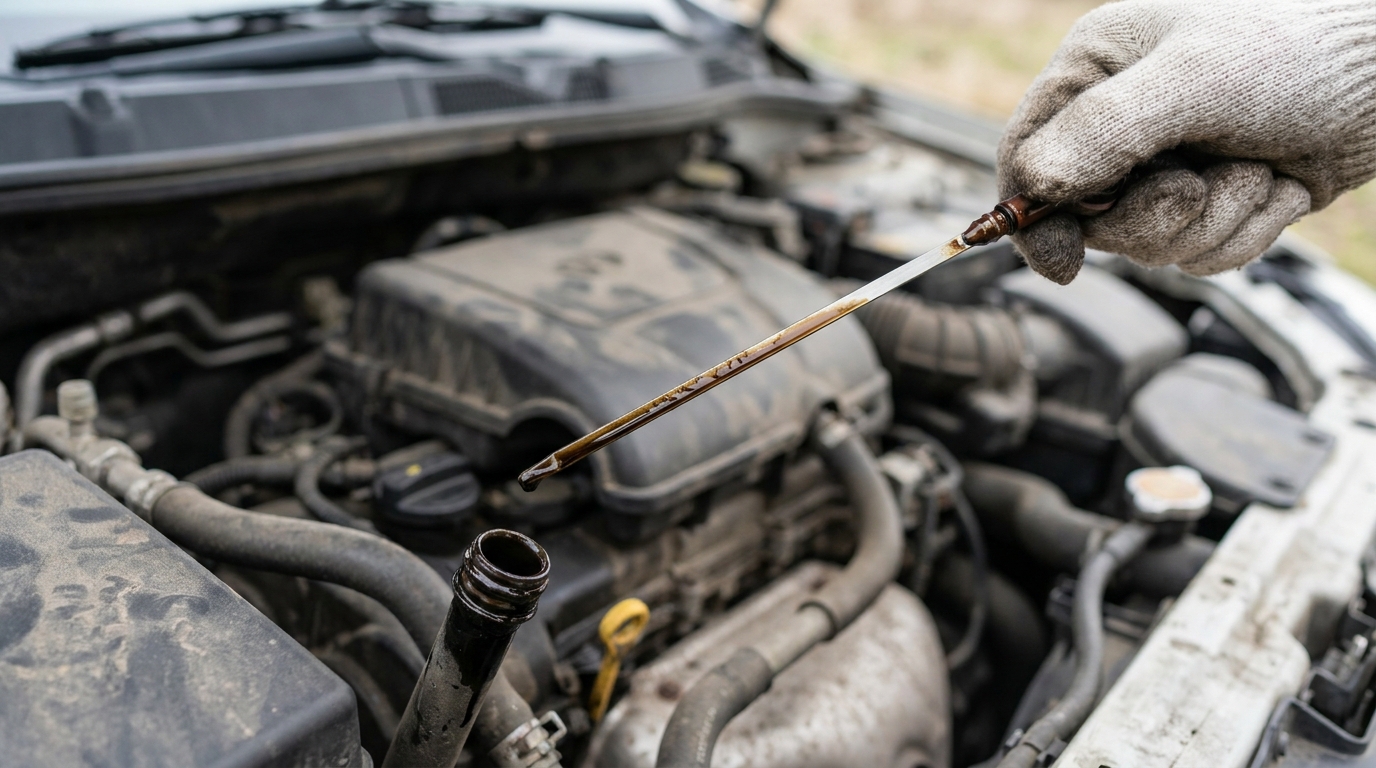
Checking the dipstick is still one of the best habits you can build. Very dark oil alone isn’t always a problem—oil darkens as it does its cleaning job. More concerning signs include a burnt smell, gritty feel between your fingers (indicating contamination), or oil that looks milky (possible coolant contamination). Also watch the level: many engines consume some oil normally, and running low is just as dangerous as running old oil.
Real example: “It ran fine…until it didn’t”
Consider a common scenario at many service shops: a driver stretches oil changes to 10,000–12,000 miles on a vehicle that does mostly short trips. The engine seems fine, but over time sludge builds in the valve cover area. Eventually, the check engine light appears for a variable valve timing fault, the engine starts idling rough, and fuel economy drops. The fix can range from a relatively modest VVT solenoid replacement and cleaning to an expensive timing component repair—costs that often dwarf the price of routine oil service.
4) The real risks: wear, sludge, and expensive repairs
Delaying oil changes increases engine wear in a way that may not show up immediately but reduces long-term reliability. Think of it like driving on underinflated tires: you can do it for a while, but you’re quietly shortening the life of expensive components. In an engine, the “expensive components” include the timing system, camshafts, bearings, and (in some vehicles) turbochargers.
Sludge is one of the biggest financial risks. Once sludge forms, it can be hard to remove safely. Aggressive chemical flushes can sometimes dislodge chunks that clog oil passages, causing sudden oil starvation. A more conservative approach—shorter oil change intervals with high-quality oil and filters—may gradually improve cleanliness, but it depends on how severe the deposits are.
Old oil can also contribute to seal issues. As additives deplete and acidity rises, seals and gaskets may harden or shrink, increasing the chance of leaks. A slow leak might not seem serious, but it can lead to low oil level between changes, which is one of the quickest routes to bearing damage.
Timing chain wear and tensioner problems
Many modern engines use timing chains with hydraulic tensioners that rely on clean oil and proper pressure. Dirty oil can clog tiny passages feeding the tensioner, causing chain slack and startup rattle. Over time, chain wear can lead to timing-related check engine codes, poor performance, and in extreme cases, engine damage if timing jumps.
Replacing timing components can be costly because it’s labor-intensive. It’s also one of the repairs that drivers often describe as coming “out of nowhere,” even though the root cause can be long-term lubrication neglect.
Fuel economy and emissions: the slow bleed
As friction increases and engine control systems struggle with sticky components, fuel economy often drops. You might not notice a 1–2 MPG decline at first, but over a year it adds up. Poor lubrication can also contribute to increased blow-by (combustion gases leaking past piston rings), which can contaminate oil further and increase emissions.
In some cases, neglected oil contributes to catalytic converter stress. For example, if oil consumption increases and more oil is burned, the converter can become contaminated. Catalytic converter replacement is another high-cost repair that can sometimes be traced back to poor maintenance habits.
Worst-case outcomes: spun bearings and seized engines
The nightmare scenario is catastrophic engine failure—spun rod bearings, seized crankshaft, or a failed turbo that sends debris into the intake. These failures can require a full engine replacement. While not every delayed oil change leads to disaster, the risk rises sharply as intervals stretch, especially under severe driving conditions or if the engine already consumes oil.
5) How long is too long? Intervals, oil-life monitors, and real-world driving
The most accurate answer comes from your owner’s manual, because it accounts for your engine design, oil specification, and operating conditions. Many vehicles list two schedules: normal and severe. If you’re unsure which applies, assume severe if you do frequent short trips, heavy traffic, towing, or extreme temperatures. It’s the safer (and often more realistic) choice.
Oil-life monitoring systems can be helpful because they estimate oil degradation based on driving conditions, temperature, idle time, and load. But they’re not perfect. They don’t directly measure oil quality; they model it. If your engine burns oil, if you’ve used the wrong oil, or if your driving includes unusual conditions (like extended idling for work), the monitor may not fully capture the risk. Treat the monitor as a guide, not a license to ignore basic checks.
Also consider the “time interval” even if you don’t drive much. If you only put 3,000–5,000 miles a year on your vehicle, you still need to change the oil periodically to remove moisture and acids. Many drivers with low mileage fall into the trap of going two years between changes, which can be hard on the engine even if the mileage looks low.
Practical interval guidelines (general, not a substitute for your manual)
While your manufacturer’s schedule is the final word, these general guidelines can help you sanity-check your plan:
- Mostly highway, mild climate, synthetic oil: Many vehicles can safely follow the factory interval (often 7,500–10,000 miles), assuming you check the level regularly.
- Short trips, stop-and-go, hot/cold extremes, towing: Consider shorter intervals (often 3,000–5,000 miles or per the severe schedule).
- Low mileage vehicles: Change oil by time (commonly every 6–12 months depending on usage and manufacturer guidance).
If you’re buying used, it’s wise to start with a fresh oil change and a high-quality filter, then set a conservative interval until you understand the engine’s condition and oil consumption habits.
Real example: two drivers, same car, very different needs
Driver A commutes 40 miles each way on the highway, the engine reaches full operating temperature daily, and the car sees mostly steady-state cruising. Driver B drives 3 miles to work, sits in traffic, and makes multiple short errands daily. Even if both cars have the same engine and use the same synthetic oil, Driver B’s oil typically degrades faster because moisture and fuel dilution don’t burn off as effectively. Following Driver A’s interval for Driver B can be a recipe for sludge.
6) What to do now: steps to recover, prevent damage, and build a simple routine
If you suspect you’ve waited too long, the best next step is straightforward: schedule an oil and filter change soon and start paying closer attention to oil level and engine behavior. In many cases, a single overdue interval won’t cause permanent damage, especially if the engine hasn’t been run low on oil. The key is to correct course before deposits and wear accumulate.
When you get service, choose the correct oil specification and a quality filter. Filters vary widely in capacity and efficiency. A bargain filter may go into bypass sooner as it loads with debris, meaning unfiltered oil circulates. A quality filter helps keep oil cleaner longer and supports better oil flow under cold-start conditions.
If the engine shows signs of sludge (visible under the oil cap or noted by a technician), ask about a cautious plan. Often, the safest approach is more frequent oil changes for a period (for example, two or three shorter intervals) rather than an aggressive flush. The goal is to gradually improve cleanliness without dislodging large deposits all at once.
Actionable checklist: protect your engine starting today
- Check oil level monthly: Especially important for higher-mileage engines or known oil-consuming models.
- Follow the severe schedule if you do short trips: If the engine rarely reaches full temperature, shorten intervals.
- Use the right oil and filter: Match viscosity and specs from the owner’s manual.
- Don’t ignore new noises: Startup rattles, ticking, or persistent tapping deserve inspection.
- Track maintenance: Use a simple note in your phone with date, mileage, and oil type.
When an overdue oil change becomes an urgent problem
Some situations require immediate action rather than “getting to it soon.” If you notice an oil pressure warning, loud knocking, heavy smoke, or the oil level is extremely low, stop driving and get the vehicle checked. Continuing to drive with low pressure or knocking can turn a manageable service visit into a major engine repair.
Also, if you’ve recently bought a used vehicle with unknown history, consider having a technician inspect for leaks, check the PCV system, and look for sludge signs. A baseline inspection can help you set a realistic maintenance plan and avoid inheriting someone else’s neglect.
How oil changes fit into a bigger reliability plan
Oil changes are one of the best “return on investment” maintenance items because they support so many systems at once. Pair them with quick checks: tire pressure, coolant level, and a look under the car for fresh leaks. If you’re already visiting a shop, it’s a great time to catch small issues early—like a seeping valve cover gasket that could otherwise lower oil level over time.
And if you drive in harsh conditions, consider discussing a tailored interval with a trusted professional. A plan that matches your driving habits is often the difference between a car that reaches 200,000 miles comfortably and one that develops expensive problems at 120,000.
Conclusion: the cost of waiting is usually higher than the cost of service
Waiting too long for an oil change isn’t just a minor maintenance delay—it’s a gradual reduction in the engine’s ability to protect itself. As oil ages, additives deplete, contaminants build, and deposits can form. The results show up as increased wear, reduced performance, poorer fuel economy, and higher risk of costly failures like timing system issues, turbo damage, or oil starvation.
The good news is that prevention is simple and affordable compared to repairs. Follow your owner’s manual, be honest about whether your driving is “severe,” and check your oil level regularly. If you’re overdue, get back on track with a quality oil and filter change and consider a short-interval plan if sludge is a concern.
Key takeaways: clean oil protects; old oil accelerates wear; low oil can destroy an engine quickly; and a consistent routine—miles, time, and monthly level checks—is the easiest way to keep your vehicle reliable for the long haul.