
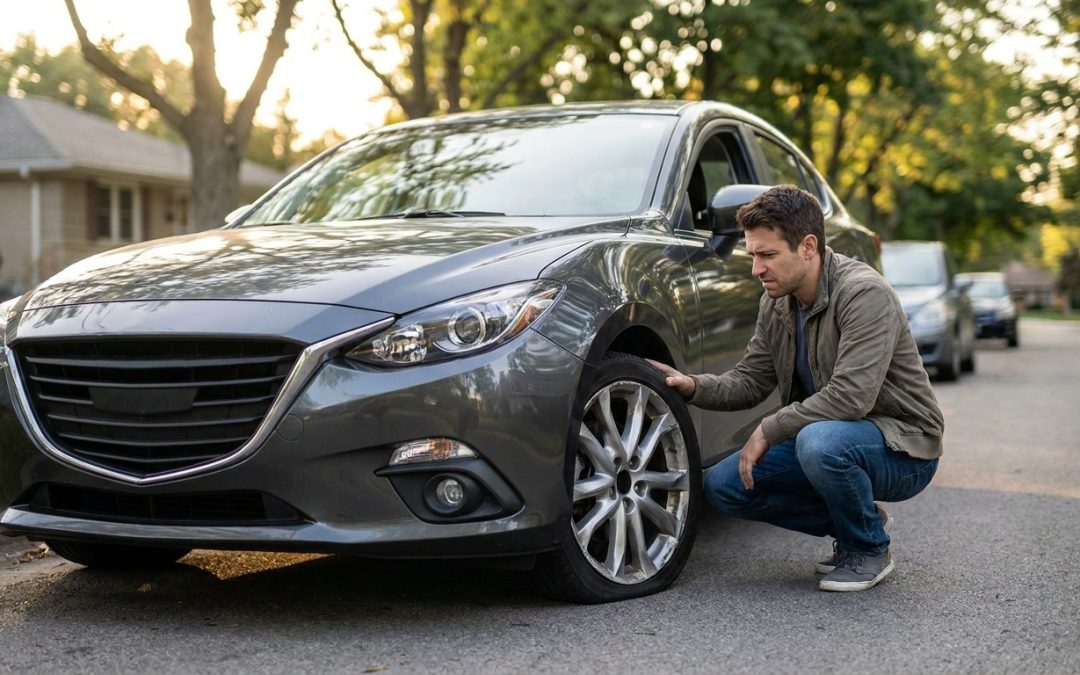
You don’t have to crash to cause real damage—sometimes a single curb strike while parking, avoiding debris, or sliding on ice is enough to knock your vehicle out of spec. The frustrating part is that the problem may not show up immediately. Your car might drive “fine” for a few days, then slowly develop a pull, a vibration, or uneven tire wear that costs far more than the original bump. Understanding what happens when your wheel hits a curb helps you spot issues early, protect your tires, and avoid expensive suspension repairs.
A curb impact is a sharp, concentrated force delivered right where your steering and suspension components are most vulnerable: the wheel, tire, and the geometry that keeps them pointed straight. Even at low speeds, the impact can bend metal, shift alignment angles, damage bushings, or create internal tire damage that isn’t visible from the outside. The result can be subtle (slight steering wheel off-center) or obvious (clunking noises, severe pull, or a visibly tilted wheel).
In this guide, we’ll break down how a curb hit affects alignment and suspension, what symptoms to look for, what you should do immediately after an impact, and how to prevent repeat damage. You’ll also get practical examples and actionable steps you can take—whether you drive a compact commuter, an SUV, or a work truck.
1) What Happens When Your Tire Hits a Curb
When a tire strikes a curb, the wheel and suspension absorb a sudden lateral load (sideways force) and sometimes a vertical load (upward force) if the tire climbs the curb. Unlike hitting a pothole straight-on—where the force is largely vertical—a curb impact often pushes the wheel backward and inward at the same time. That’s a worst-case direction for steering and suspension geometry, because it can change how components sit relative to each other.
The tire is your first “shock absorber,” but it can only do so much. The sidewall compresses and rebounds quickly. If the impact is strong enough, the force transfers to the wheel rim, then into the hub, steering knuckle, tie rod, control arm, strut, and subframe. Each part has a tolerance range, but a sharp hit can exceed it—causing bending, shifting, or cracking.
Even if nothing breaks, curb impacts can cause small changes that matter. Alignment angles are measured in fractions of a degree, and a slight bend in a tie rod or control arm can move those angles out of spec. That tiny change may not feel dramatic right away, but it can accelerate tire wear and reduce stability—especially at highway speeds or during braking.
Low-Speed Doesn’t Always Mean Low Damage
Many drivers assume curb damage only happens at high speed. In reality, low-speed impacts can be surprisingly harmful because the force is concentrated over a short time and small area. A 5–15 mph strike while turning into a parking spot can still bend a tie rod end or create a bubble in a tire sidewall.
Turning at the moment of impact increases risk. When your wheels are angled, steering components are already under load, and the curb hit can “shock” the linkage in a direction it wasn’t designed to handle. That’s why a curb strike during a tight turn often results in a steering wheel that no longer sits straight.
Real Example: The “It Drives Fine” Trap
Imagine you clip a curb with the front-right tire while parallel parking. The car feels normal afterward. Two weeks later, you notice the steering wheel is slightly off-center and the car drifts right on the highway. A month later, the inside edge of the front-right tire is noticeably more worn. In many cases, the initial impact bent a tie rod just enough to change toe angle, leading to a slow, expensive tire scrub.
2) Alignment Basics: The Angles a Curb Hit Can Change
Wheel alignment isn’t just “pointing the tires straight.” It’s a precise set of angles that determine how your tires contact the road and how your vehicle tracks, turns, and returns to center. A curb strike can push these angles out of spec instantly, or it can damage components that allow the angles to drift over time.
Most alignment measurements focus on three primary angles: toe, camber, and caster. Not every vehicle allows adjustment of all three, but all three affect tire wear and handling. When a curb hit changes one angle, it often affects another—especially on modern suspensions where components work as a system.
Alignment also isn’t just a “front end” issue. A curb hit to a rear wheel can knock the rear alignment out, causing the vehicle to “dog track” (rear wheels not following the front wheels perfectly) and forcing the steering wheel off-center to compensate.
Toe: The Fastest Way to Destroy Tires
Toe describes whether the front of the tires point inward (toe-in) or outward (toe-out) when viewed from above. Toe is highly sensitive, and it’s commonly affected by curb hits because tie rods and steering linkages control it.
When toe is off, the tires scrub sideways as they roll—like dragging a tire slightly across the pavement. This is one of the quickest ways to create feathered tread, rapid edge wear, and a steering wheel that feels unstable. Even a small toe change can shorten tire life significantly.
Camber: The “Leaning” Wheel Angle
Camber is the inward or outward tilt of the tire when viewed from the front. Negative camber means the top of the tire leans inward; positive camber means it leans outward. A curb impact can bend a control arm, strut, or knuckle, changing camber and shifting the tire’s contact patch.
Excessive camber often shows up as wear on the inside or outside edge of the tire. It can also reduce braking performance and traction in wet conditions because less tread is evenly contacting the road.
Caster: Stability and Steering Return-to-Center
Caster is the angle of the steering axis when viewed from the side. It helps the vehicle track straight and makes the steering wheel return to center after a turn. Caster is less commonly adjustable on many vehicles, but it can be affected if a curb hit shifts a subframe, control arm mounting points, or strut tower geometry.
If caster changes side-to-side, you may feel a pull that doesn’t match the road crown, or you may notice the steering feels different turning left versus right. Because caster issues can point to structural shifts, they’re important to diagnose early.

3) Suspension and Steering Parts Most Vulnerable to Curb Impacts
Your suspension is designed to absorb bumps, but it’s optimized for vertical movement—up and down over road irregularities. A curb strike is often a harsh sideways impact that can overload parts that normally guide motion rather than absorb it. That’s why curb hits frequently damage steering components, bushings, and mounting points.
Some damage is obvious (a bent wheel, a torn tire sidewall), but many issues hide underneath. A slightly bent component may look normal until it’s measured or compared side-to-side. In other cases, a bushing can tear internally and only reveal itself through clunks, wandering, or alignment that won’t stay set.
Below are the most common parts affected, what they do, and what a curb hit can do to them.
Tie Rods and Tie Rod Ends
Tie rods connect your steering rack to the steering knuckle and are a primary controller of toe. They’re relatively slender compared to other suspension parts, which makes them vulnerable to bending in a curb strike—especially when the wheel is turned.
A bent tie rod can cause immediate misalignment, uneven tire wear, and a steering wheel that’s off-center. In severe cases, it can create play in the steering, leading to a loose or vague feel.
Control Arms and Bushings
Control arms locate the wheel in the suspension and help control camber and caster. A curb impact can bend a control arm or damage its bushings. Bushings are designed to flex, but a sharp impact can tear rubber or deform hydraulic bushings.
Damaged bushings often cause clunking over bumps, wandering at highway speed, and alignment changes under braking or acceleration. If you repeatedly need alignments, worn bushings are a common underlying cause.
Struts/Shocks, Springs, and Top Mounts
Struts and shocks manage motion and keep the tire planted. A curb strike can damage a strut tube, bend a mounting ear, or stress the top mount bearing. Springs can also shift in their seats, and top mounts can develop noise or binding.
If the strut or mount is compromised, you might notice bouncing, a harsh ride, or a “popping” sound when turning. In some cases, the vehicle may sit slightly lower on the impacted corner.
Steering Knuckle, Hub, and Wheel Bearing
The steering knuckle is a robust component, but it can still bend or crack in a hard impact. The hub and wheel bearing can also be damaged, especially if the wheel takes a direct hit. A compromised bearing may not fail immediately; it can develop noise and play over time.
A classic sign of bearing damage is a humming or growling that changes with speed or when you shift weight by turning slightly left or right. If left unchecked, a failing bearing can become a safety issue.
Subframe and Alignment Pins/Slots
Many vehicles mount suspension components to a subframe. A curb strike can shift the subframe slightly if bolts loosen or if there’s impact movement at the mounts. Even a small shift can change caster and camber and make alignment difficult to keep.
Technicians may look for witness marks, shifted alignment holes, or uneven measurements side-to-side. If a subframe shift is suspected, correcting it is key before attempting a final alignment.
4) Warning Signs After Hitting a Curb (What to Check Immediately)
After a curb impact, time matters. The sooner you identify problems, the better your chances of preventing rapid tire wear and catching safety-related issues before they worsen. Some symptoms show up right away, while others appear gradually as tires wear or as a damaged component loosens further.
Start with a simple, safe inspection. You don’t need special tools to notice many red flags. Then, pay close attention to how the vehicle drives over the next few trips—especially at highway speed, during braking, and when turning.
If anything feels off, it’s wise to schedule an inspection and alignment check. A professional can measure alignment angles, inspect components on a lift, and spot problems that aren’t visible from the driveway.
Immediate Visual Checks (Driveway Walk-Around)
Look at the impacted tire and wheel closely. Check for scuffs, gouges, cracks, or a bent rim lip. Pay attention to the tire sidewall—bulges, bubbles, or cuts can indicate internal damage, and that can be dangerous at speed.
Also check whether the wheel appears to sit “square” in the wheel well. If it looks pushed back, tilted, or not centered compared to the other side, you may have bent suspension components.
- Tire sidewall bulge: Treat as urgent; replace the tire.
- Visible rim bend or crack: Avoid highway driving until assessed.
- Fluid leaks near the wheel: Could indicate strut/shock damage.
Steering and Handling Symptoms
On your next drive, note whether the steering wheel is centered when driving straight. If it’s off-center after a curb hit, that’s a strong indicator toe has changed. Also check for pulling: on a flat road, the vehicle should track straight with light steering input.
Watch for new vibrations, especially between 50–75 mph. A bent wheel, damaged tire, or shifted suspension geometry can create a shake that wasn’t there before. Vibrations that worsen with speed often point to wheel/tire issues, while vibrations during braking can indicate rotor or suspension problems exacerbated by the impact.
Noises You Shouldn’t Ignore
Clunking over bumps can indicate a damaged control arm bushing, sway bar link, or strut mount. A clicking or popping when turning can point to a stressed joint or mount. A humming that changes with speed can be a wheel bearing warning sign.
These noises are your vehicle telling you something changed mechanically. Even if the car still “drives,” noises often mean parts are loose, worn, or misaligned—and continued driving can accelerate damage.
Real Example: Curb Hit in Winter Slush
A common scenario is sliding into a curb at low speed on snowy roads. The impact may not look severe, but the combination of cold rubber and sudden side-load can create a sidewall bubble. Drivers often miss it until the tire fails or loses pressure. If you hit a curb in winter, take extra care to inspect the sidewall and monitor tire pressure closely for the next week.
5) What to Do Next: Inspection, Alignment, and Repair Options
If you suspect alignment or suspension damage, the best approach is to be systematic: verify tire safety first, then diagnose steering/suspension, then align the vehicle only after worn or bent parts are corrected. An alignment can’t “fix” a bent part—it can only adjust angles within the available range. If a component is bent, the alignment may be impossible to set correctly or it may not hold.
Start by deciding whether the vehicle is safe to drive. If there is a sidewall bubble, a cracked wheel, severe pulling, or loud grinding noises, it’s safer to limit driving and arrange service. For mild symptoms (slight pull, steering wheel off-center), you can usually drive cautiously to a shop, but avoid long highway trips until it’s checked.
At a professional shop, technicians will typically inspect the wheel/tire, check for play in joints and bearings, examine bushings, and then measure alignment angles. If the alignment readings are far out or not adjustable, that points to bent or shifted components.
Request a Post-Impact Inspection Checklist
When you bring your vehicle in, ask for a focused curb-impact inspection. A thorough check commonly includes:
- Wheel and tire inspection (including sidewall and inner barrel of the rim)
- Check tie rods, ball joints, and steering rack for play
- Inspect control arms and bushings for bends/tears
- Check struts/shocks for leaks and mounts for noise/binding
- Inspect wheel bearings and hub runout if vibration is present
- Alignment measurement printout (before and after, if aligned)
That alignment printout is especially useful. It shows which angles are out of spec and can help you understand whether the issue is a simple toe correction or a deeper component problem.
When an Alignment Is Enough (and When It Isn’t)
An alignment may be sufficient if the impact caused a minor toe shift and no parts are bent or loose. In these cases, correcting toe and centering the steering wheel can restore normal driving and prevent tire wear.
However, if a technician can’t bring camber/caster into spec, or if the alignment changes after a short drive, something is likely bent or worn. Common culprits include tie rods, control arms, struts, knuckles, or a shifted subframe. Replacing the damaged part first—and then aligning—is the correct sequence.
Tire and Wheel Considerations After a Curb Strike
Even if alignment is corrected, a damaged tire or wheel can continue to cause issues. A tire with internal belt damage may create a vibration that balancing can’t fix. A bent wheel may balance “okay” but still have runout that shakes at speed.
Actionable tip: if you feel a vibration after a curb hit, ask the shop to check wheel runout and inspect the tire for internal damage—not just perform a standard balance. This extra step often identifies problems that balancing alone misses.
Costs and Value: Preventing Bigger Repairs
Ignoring post-impact symptoms can turn a manageable service into a costly repair. Driving with incorrect toe can wear out a tire quickly, and worn tires can stress suspension parts further. Likewise, a loose or damaged bushing can allow movement that accelerates wear in other joints.
Practical advice: if you recently bought new tires, a curb-hit alignment check is especially important. Protecting a fresh set of tires often pays for the inspection many times over.
6) Preventing Future Curb Damage and Protecting Your Tires
While some curb hits are unavoidable—especially in winter or emergency maneuvers—many happen during low-speed parking, tight turns, or misjudging curb height. A few habit changes and vehicle setup choices can reduce your risk and limit damage if an impact occurs.
Prevention isn’t just about avoiding cosmetic wheel rash. It’s about protecting the mechanical geometry that keeps your car stable and your tires wearing evenly. The goal is to minimize side-load impacts and catch minor issues before they become major ones.
Consider the following strategies as practical, everyday ways to reduce curb-related alignment and suspension problems.
Parking and Turning Habits That Help
Slow down and straighten the wheel before you get close to the curb. Many curb strikes happen with the wheels turned sharply, which increases stress on tie rods and steering components. Taking an extra second to reposition can prevent a costly hit.
Use reference points: your side mirrors and backup camera lines can help you gauge distance, but remember that camera angles can be deceiving. When in doubt, stop short and adjust. For parallel parking, aim to keep a safe buffer rather than “kissing” the curb.
- Approach curbs slowly and at a shallow angle when possible
- Avoid climbing curbs unless absolutely necessary
- If you must mount a curb (driveway edge), do it straight-on and slowly
Tire Choice, Pressure, and Sidewall Protection
Low-profile tires (shorter sidewalls) generally offer less cushioning and rim protection, making wheels more susceptible to bending and tires more susceptible to sidewall damage. If you frequently drive in areas with tight parking or rough curbs, consider tire options with a bit more sidewall or models with rim-protector features.
Keep tire pressures at the manufacturer-recommended level. Underinflated tires allow more sidewall flex, which can increase the chance of sidewall pinch damage during an impact. Overinflation can reduce cushioning and make impacts harsher. Checking pressure monthly is a simple habit that supports both safety and durability.
Routine Alignment Checks and Early Intervention
Even without a curb hit, alignment can drift over time due to normal wear. If you add curb impacts to the mix, periodic alignment checks become even more valuable. Many drivers wait until tires are visibly worn, but by then the damage is already done.
Actionable rule of thumb: get an alignment check if you notice any of the following—steering wheel off-center, new pull, uneven wear, or after a significant impact (curb, pothole, road debris). Catching a small toe issue early can save a tire from premature replacement.
Know When to Stop Driving
Some post-curb conditions are unsafe to “wait and see.” If you find a sidewall bulge, a cracked wheel, rapid air loss, severe vibration, or grinding noises, stop and get the vehicle assessed. Tire failures and steering component failures can escalate quickly, especially at highway speeds.
If you’re unsure, err on the side of caution: drive slowly to a nearby shop or arrange a tow. The cost of a tow is often less than the cost of secondary damage—or the risk of a loss-of-control event.
Conclusion: Key Takeaways After a Curb Strike
Hitting a curb can do more than scuff a wheel—it can change alignment angles, damage steering and suspension components, and quietly shorten the life of your tires. The most common alignment issue after a curb impact is toe change, but camber and caster can also be affected, especially if parts bend or a subframe shifts. Even low-speed impacts can cause meaningful damage because alignment tolerances are so precise.
The smartest move after a curb hit is to inspect the tire and wheel right away, then pay attention to steering feel, pulling, vibrations, and new noises over the next few drives. If anything feels different, schedule a professional inspection and alignment measurement. Remember: an alignment can only correct angles if the underlying parts are straight and tight—bent tie rods, damaged bushings, or compromised struts must be repaired first.
Ultimately, early action protects your safety and your wallet. Addressing a curb strike promptly can prevent rapid tire wear, restore stable handling, and stop minor component damage from turning into major suspension repairs. If you’ve recently hit a curb and notice even subtle symptoms, it’s worth getting checked—your tires (and your steering) will thank you.